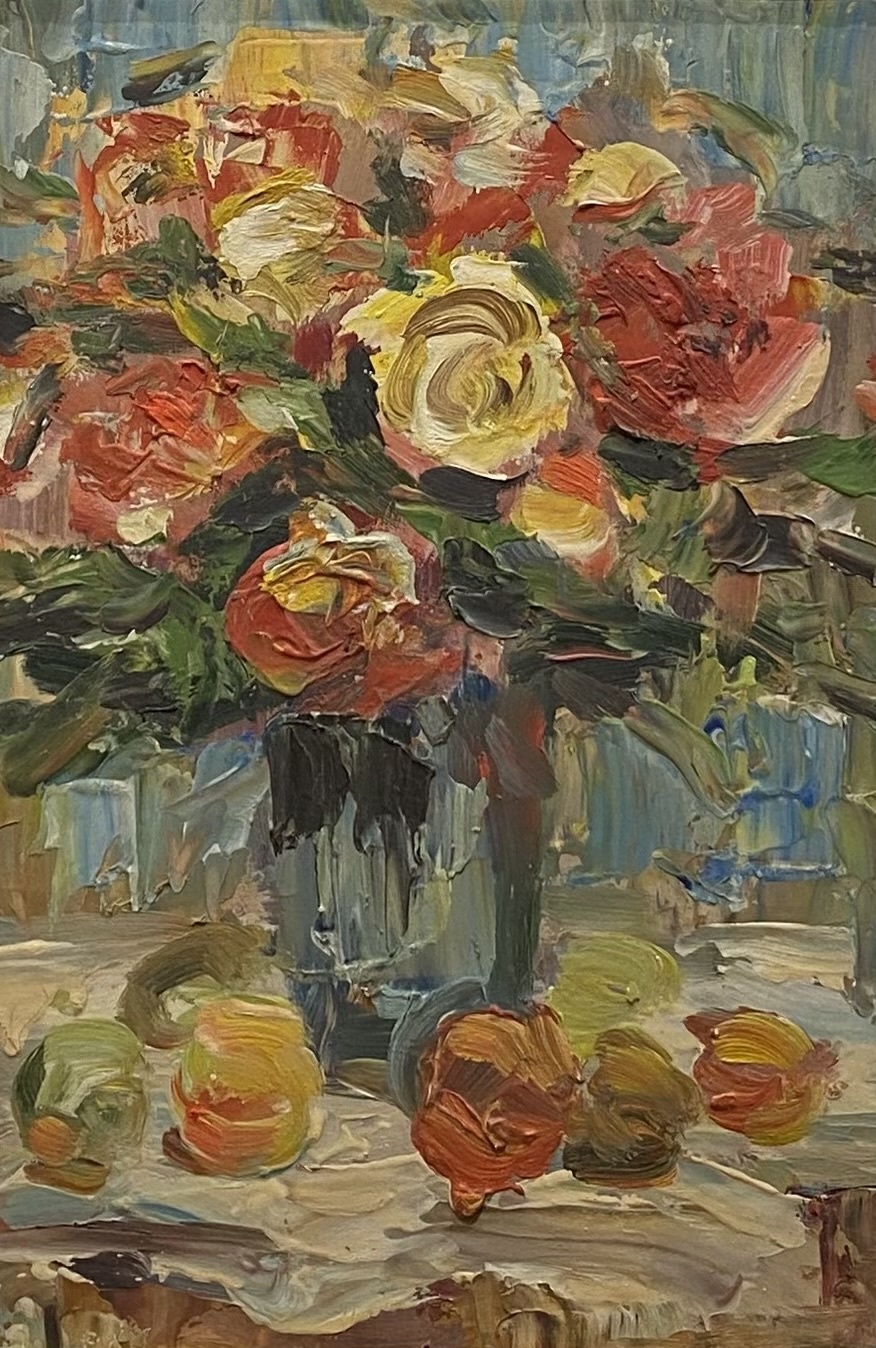
Bouquet with Fruit
Alexander IrkhaThe still life with a bouquet of roses and fruit is a vivid example of how Alexander Irkha’s key artistic principles come together in a single work. At the centre of the canvas is a lush bouquet: the flowers are painted with thick, almost sculptural brushstrokes, as if moulded from paint. This impasto technique is Irkha’s signature approach—he doesn’t so much draw as “sculpt” the form, making active use of a palette knife. Thanks to this technique, the canvas surface becomes textured, and the light falling on it creates deep shadows and bright highlights—making the flowers seem almost tangible. The colour scheme is built on a bold contrast: the warm, saturated hues of the roses—red, terracotta, yellow‑cream—sound open and intense, while the cool grey‑blue background accentuates them effectively. This approach aligns Irkha’s style with the Fauvist freedom in handling colour: the artist sacrifices naturalism for emotional impact, seeking to convey not so much an exact likeness as the power of the impression. Despite the expressiveness of the brushwork, the composition remains strict and cohesive: the bouquet is centred, the rounded shapes of the fruit in the foreground balance its mass, and the background, sketched with broad, loose strokes, doesn’t compete with the main subject. This is the essence of Irkha’s creative method: a fusion of academic discipline and “rebellious” freedom. His solid Leningrad education gave him a firm grounding in drawing and a sense of form, while his affiliation with the “quiet” wing of the Leningrad underground of the 1970s–1990s gave him the courage to experiment with texture and colour.
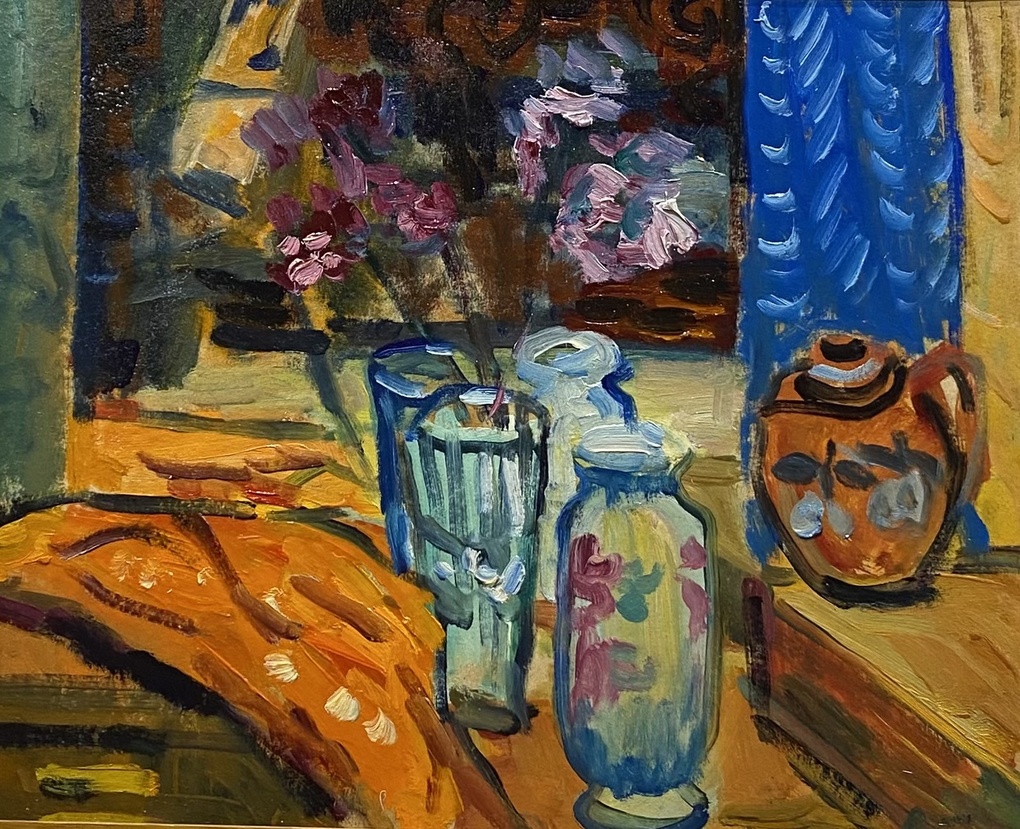
Still Life with a Blue Curtain
Alexander IrkhaThis painting features a cozy, vibrant still life. The artist boldly plays with colour: the warm orange seems to clash with the deep blue, while the pink flowers add a touch of tenderness. The objects — vases, a jug, a bouquet — aren’t rendered in fine detail; they appear to be built from colour patches and thick brushstrokes. Thanks to this approach, the painting doesn’t just show the items — it conveys a mood: lively, slightly agitated. In this way, the artist turns an ordinary still life into a little symphony of colours — and you want to keep looking at it over and over again. The style is expressionism with hints of Fauvism.
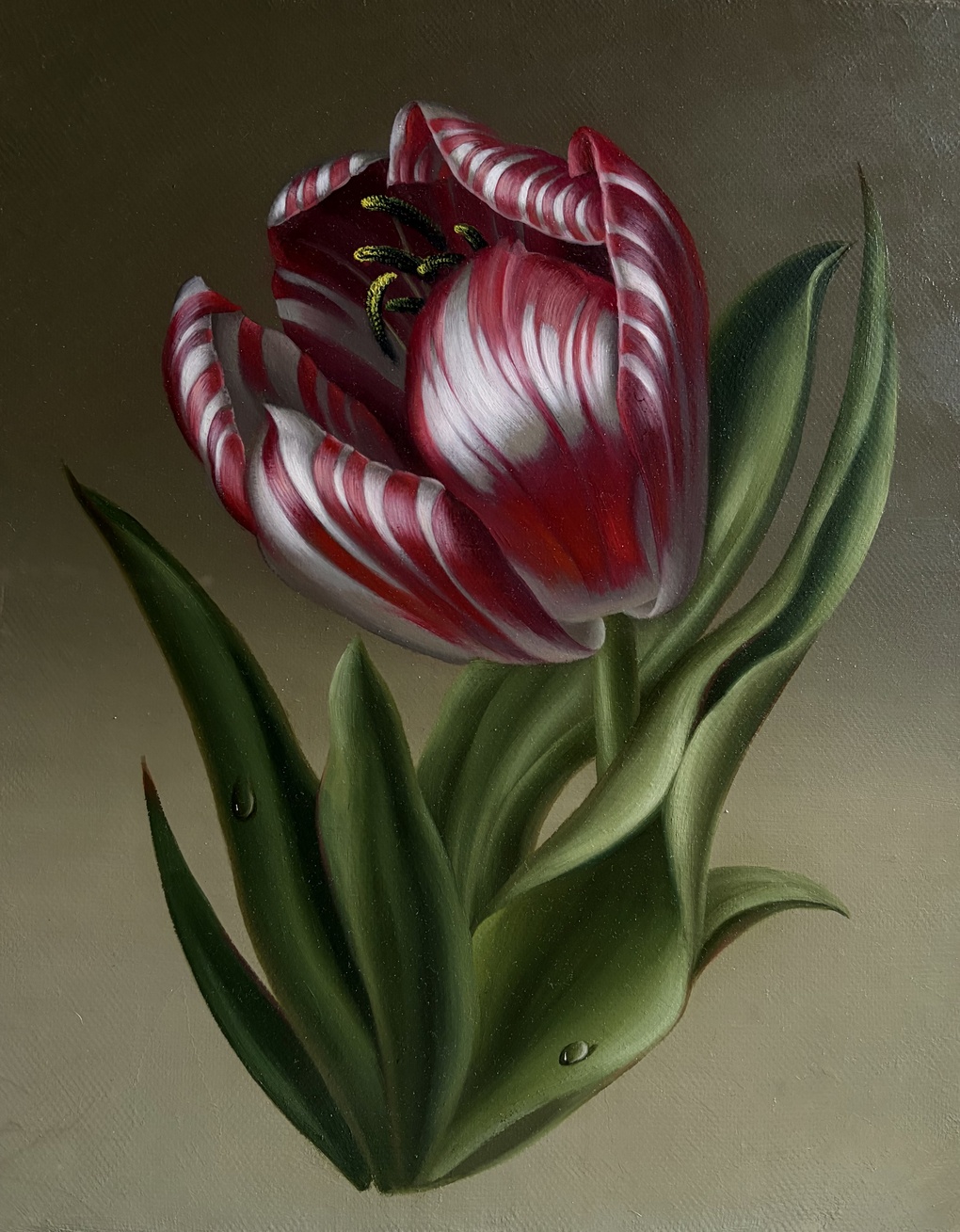
Striped Tulip
Farida KapshanovaThis is a picturesque still life painted in a realistic style. The central image is a variegated tulip: deep red‑burgundy tones contrast strikingly with winding white stripes, highlighting the flower’s natural decorative quality. The details are meticulously rendered: the expressive curves of the petals, the texture of the green foliage, and the transparent dewdrops — they give the composition a sense of freshness and the fragility of the moment. The restrained neutral background and soft chiaroscuro enhance the volume and focus attention on the main subject, evoking the traditions of classic European floral still lifes.
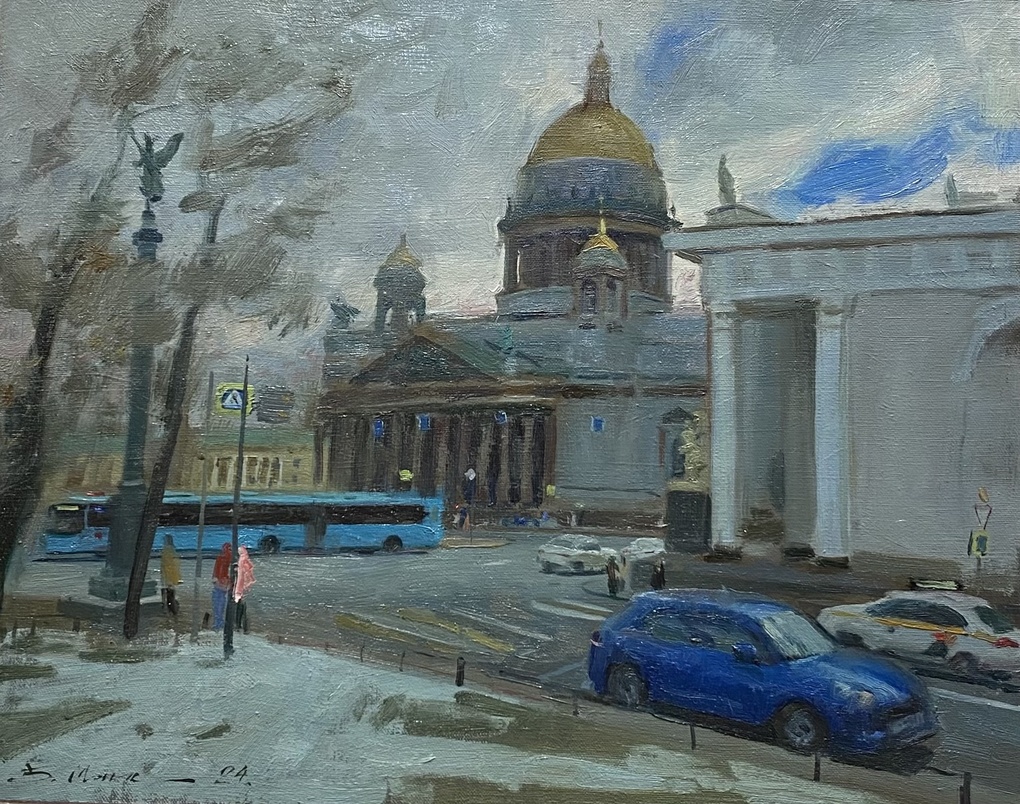
Saint-Isaac’s Cathedral
Munkh BinderyaThis is an urban landscape rendered in an impressionistic manner: the artist captures a fleeting moment of winter in St. Petersburg. The dominant element of the composition is St. Isaac’s Cathedral — its massive silhouette and gleaming golden dome set a monumental tone, while the detailed depiction of the colonnades and smaller domes emphasises the classical rigour of the architecture. The contrast between the centuries‑old architecture and modern details (a blue passenger car, a city bus, road signs) creates a dialogue between eras and lends the canvas a documentary vividness. The colour scheme is restrained, built on grey‑blue and ashen shades, through which local colour accents break through — the gold of the dome, the deep blue of the car body, and the ochre tones of the facades. Textured, loose brushstrokes enhance the sense of frosty air and the dynamism of the urban environment, echoing the traditions of the Russian landscape school of the late 19th — early 20th century.
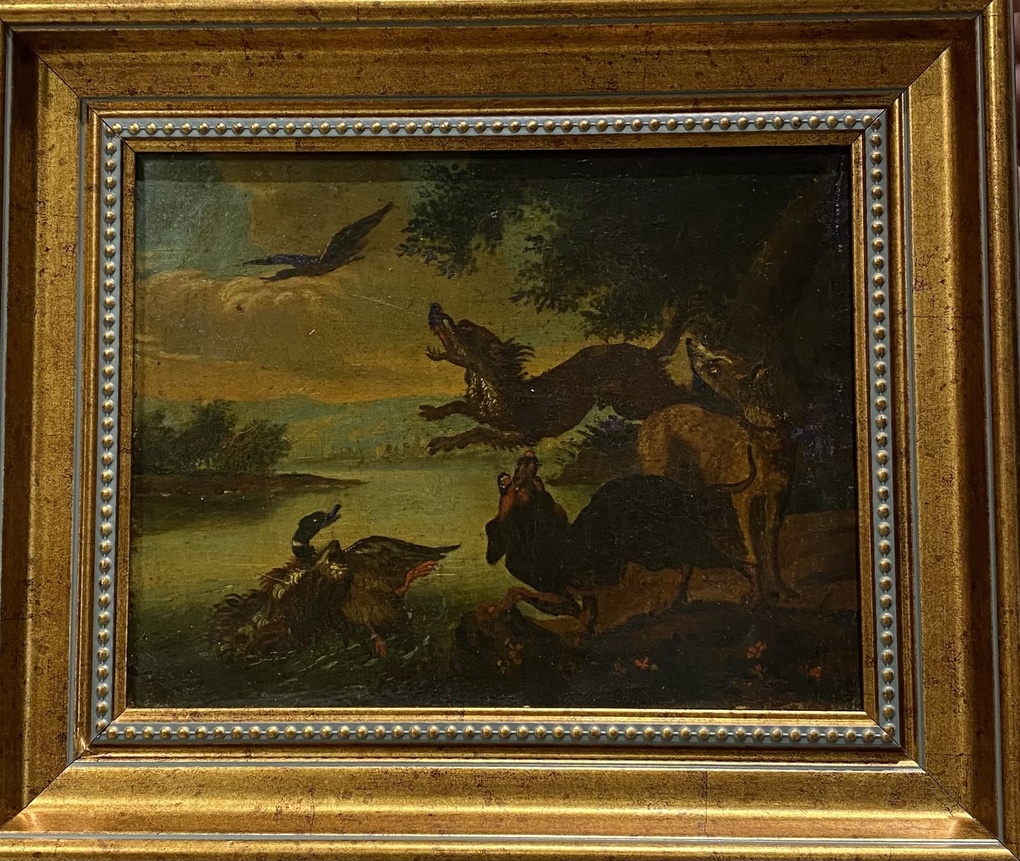
Hunting Dogs at the Water’s Edge
Unknown ArtistThe painting captures a dramatic moment: in the foreground, there is game (including waterfowl with meticulously rendered plumage); a little further back, massive figures of large animals are depicted, their poses conveying tension and dynamism. In the right part of the canvas, the silhouette of a dog is discernible — the constant companion of aristocratic hunting. The background features a tranquil landscape: a smooth expanse of water, gently sloping banks, a dense mass of dark trees, and a dramatic sky with swirling clouds. The warm ochre and olive tones of the land and water contrast with the deep, dark silhouettes of the animals and birds, while the light softly models the volume, emphasizing the texture of fur and feathers. The composition is built along diagonals — they imbue the scene with movement and guide the viewer’s gaze, leading it sequentially from the foreground to the background. The painting combines decorative expressiveness with naturalistic precision: the artist masterfully renders a variety of surfaces — from velvety fur to glossy feathers — and creates an image that is both ceremonial and emotionally charged. Dutch school, around 1700.
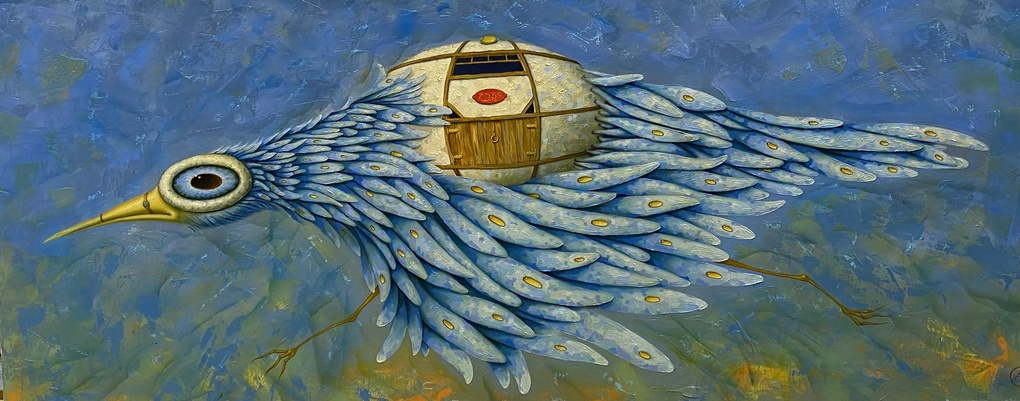
Bird with a Sky Capsule
Alexei YezhovA fantastic bird is shown in profile against a dense, textured field of blue, green, and ochre brushwork. Its elongated yellow beak and circular eye with a black center lend the silhouette an instrument-like precision. The plumage is built from dozens of overlapping silvery-blue feathers; each carries a small golden oval, establishing a rhythm akin to rivets or dials. A rounded capsule rests on the bird’s back: an ochre door, dark rectangular window, red oval medallion, and fine borders evoke a miniature flying craft. Slender legs barely touch the composition’s lower edge. The wings’ horizontal spread sustains movement, while the capsule forms a composed central accent. The union of medieval fantasy and mechanical imagery aligns with Alexei Yezhov’s imaginative world.
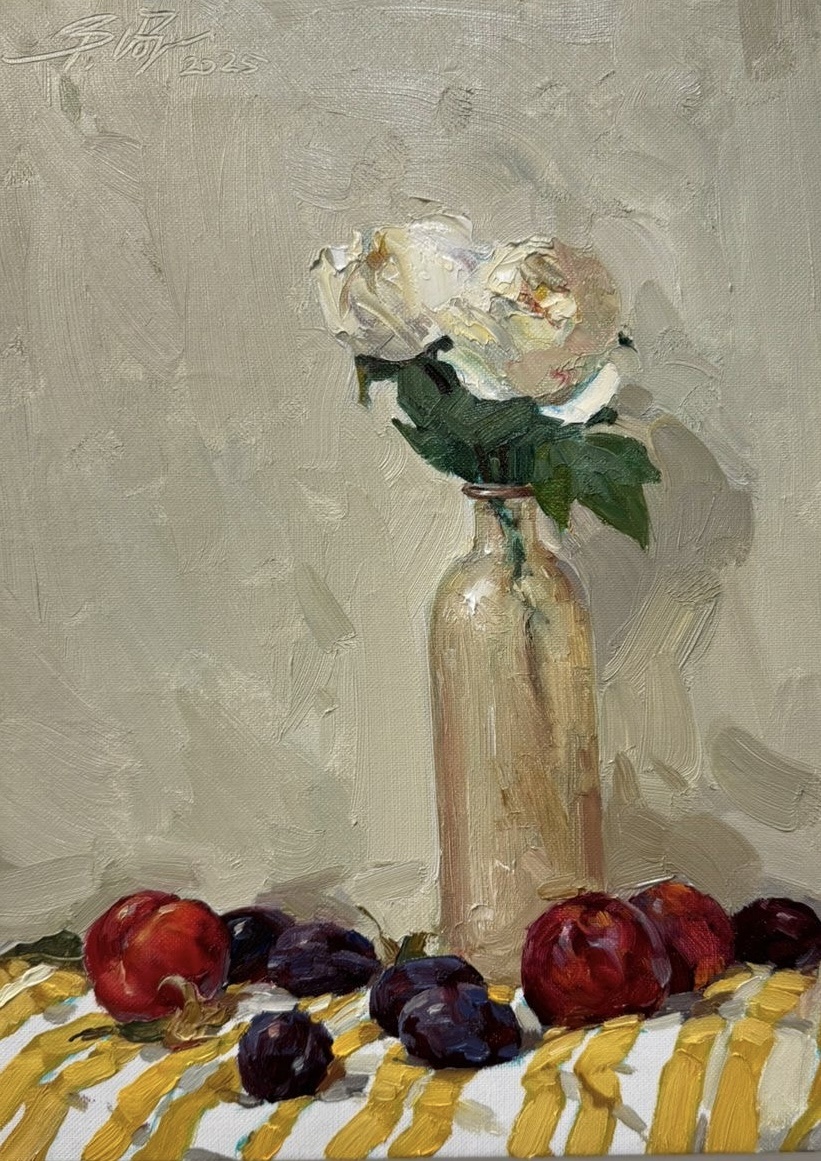
Still Life with White Roses and Plums
Otgoo BadamOtgoo Badam’s still life is a chamber piece in the spirit of Russian Impressionism: a vase with white roses is in the centre, with apples and plums on a yellow‑and‑white tablecloth in the foreground. The composition is balanced: the neutral background accentuates the objects, while impasto brushstrokes give them volume. The palette is restrained — warm yellow stripes contrast with the cool tones of the background, and the rich colours of the fruit and the whiteness of the roses create a harmonious focal point. Badam, a graduate of the Repin Academy, blends academic realism with an expressive painting style.
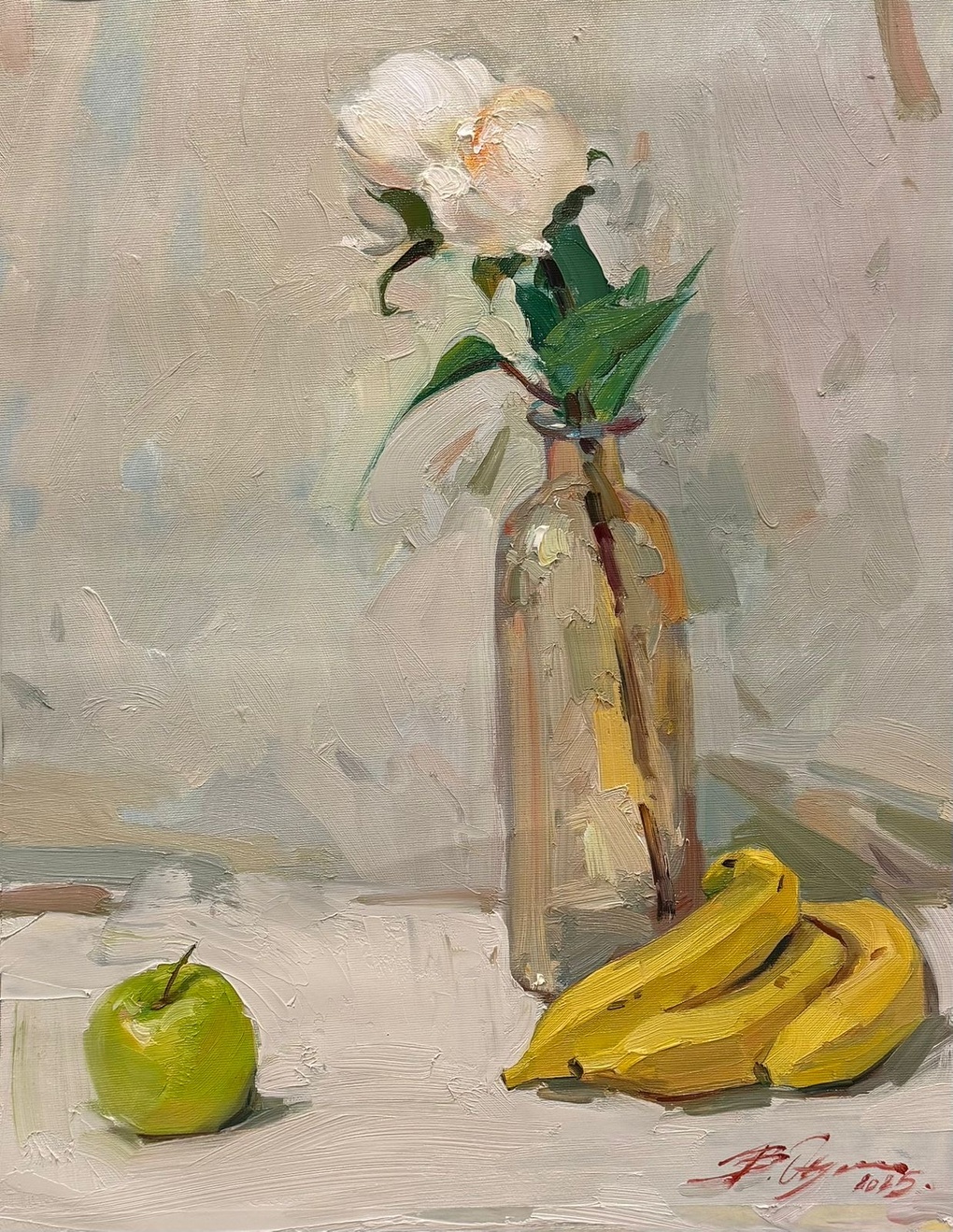
White Rose, Bananas, and Green Apple
Otgoo BadamA concise still life rendered in a soft, restrained palette. At the center of the composition is a transparent glass vase with a single white rose and expressive green leaves; the texture of the glass is accentuated by painterly brushstrokes. To the left is a green apple, to the right a bunch of yellow bananas: their simple, recognizable forms create a calm rhythmic balance. The background is painted in muted gray‑beige tones—it does not distract from the objects but rather emphasizes their materiality. The characteristic dense, impasto technique lends the canvas tangible plasticity and depth. The composition exudes tranquility and contemplation, while the restrained color scheme and expressive texture evoke the traditions of the realist school with elements of impressionistic freedom of brushwork.
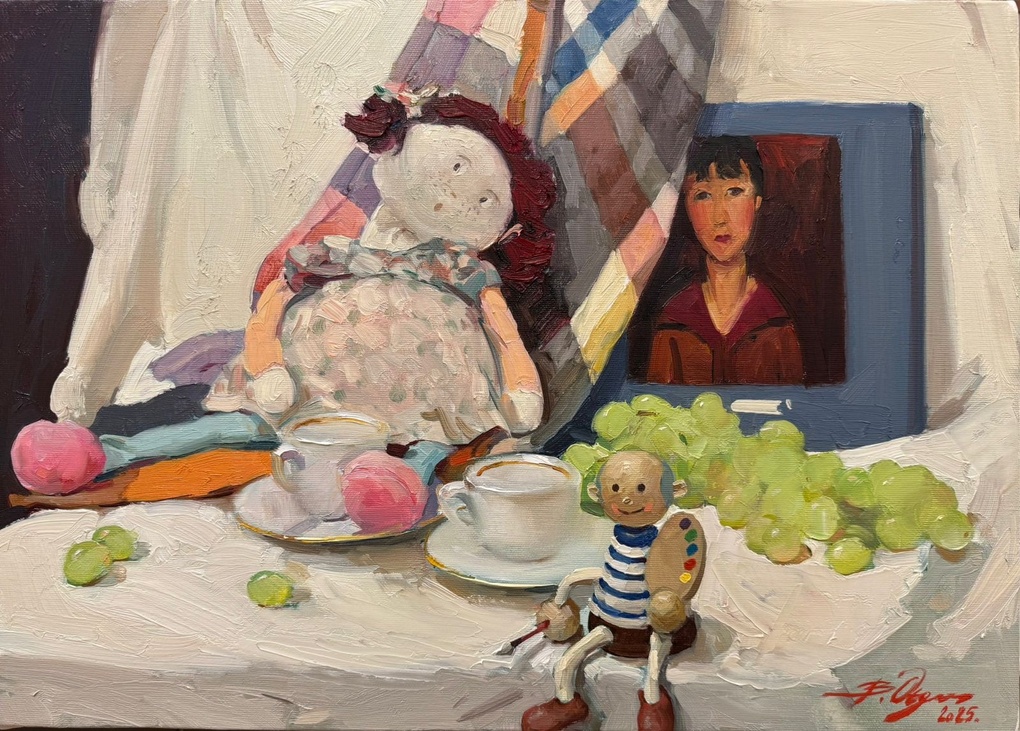
Still Life with Doll and Portrait
Otgoo BadamToys (dolls) are a symbol of childhood, innocence, but also fragility, transience of time. They can remind you of the past, of the lost paradise of childhood. Tea cups are an association with family traditions, the warmth of the home. Grapes are a classic symbol of life, abundance, but also transience (like all fruits, it will soon deteriorate). A child's portrait is a personal, intimate element that turns a still life into a kind of "family history". A doll with a palette is a metaphor for creativity, play, imagination. It can be the image of the artist himself, who "plays" with objects, creating a new reality on the canvas. This work evokes warm, slightly sad feelings associated with memories of childhood, family comfort, transience of time. It is both simple and deep, combining everyday specifics with poetic metaphor. The artist does not just depict objects, but creates an atmosphere, invites the viewer to reflect on the meaning of things, on the connection between the past and the present.
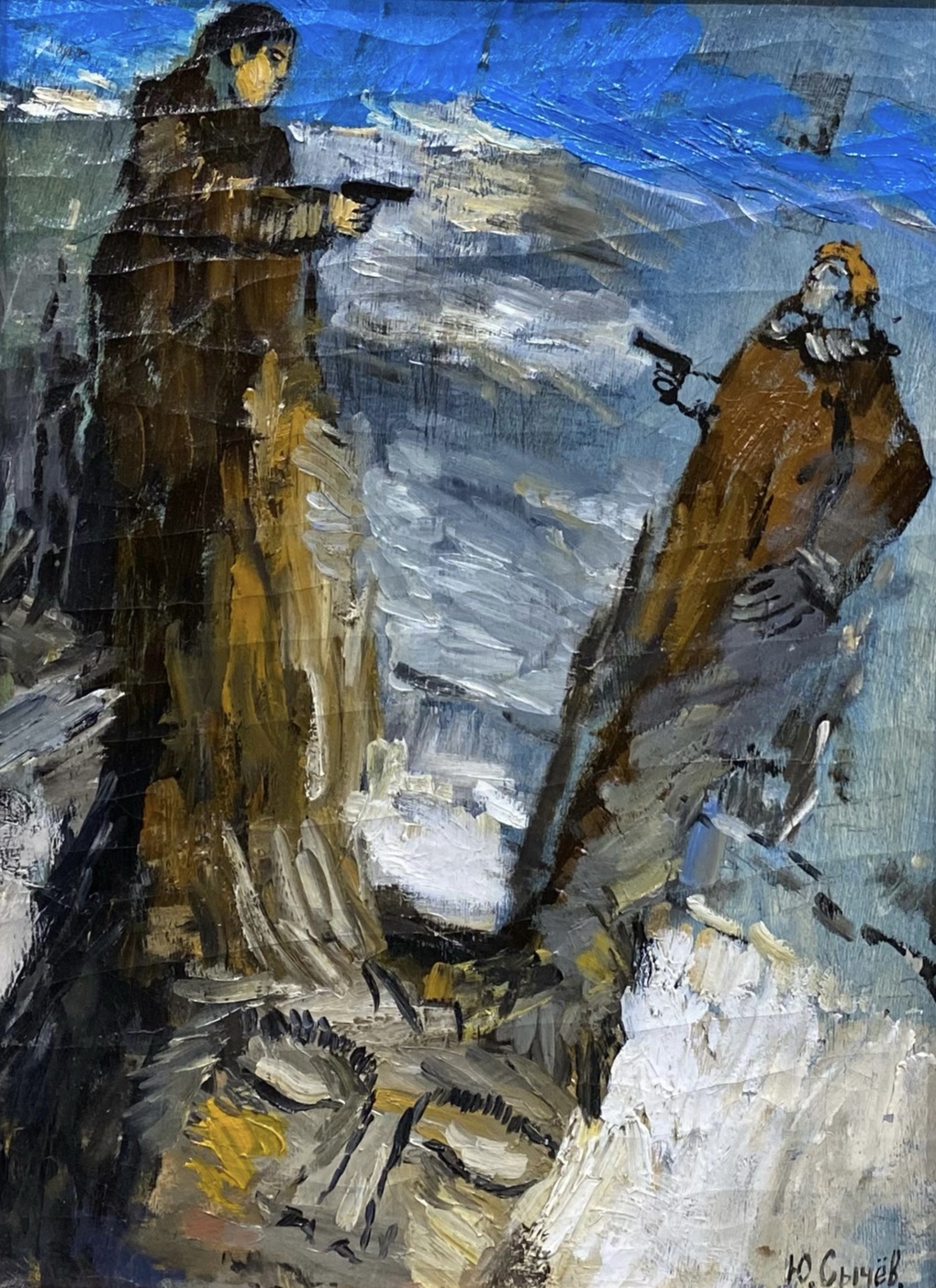
Duel in the Snow
Yuri SychevY. Sychyov’s painting depicts a dramatic confrontation between two figures with pistols, where the figure on the left dominates — standing confidently with an outstretched arm, while the figure on the right appears bewildered and defensive. The composition is built on the contrast between the poses and emotional states of the characters. The colour scheme is restrained: dark brown and black tones of the clothing contrast with the cool blue and grey hues of the background, while yellow accents add tension. The painting style is expressive: broad brushstrokes and impasto create volume, while the background is sketched loosely, focusing the viewer’s attention on the characters. The plot can be interpreted in several ways: as a literary-historical narrative (honour, betrayal), a psychological drama (the struggle between opposites), or a social commentary (a clash of worldviews). The landscape is generalized, creating a sense of замкнутого, closed, hopeless space. The work combines realism and expressionism, conveying the «nerve» of the moment and the inner energy of the conflict, prompting the viewer to reflect on the fine line between aggression and vulnerability.
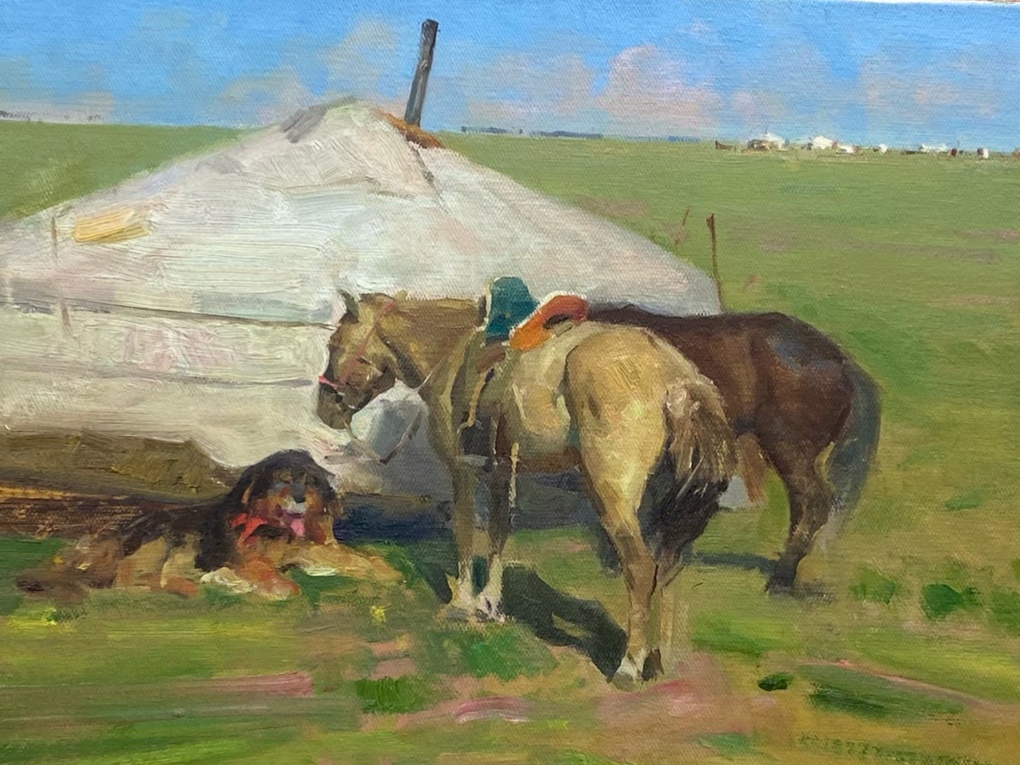
Rest Stop by the Yurt
Munkh BinderyaThe composition is built on a combination of natural elements and everyday objects of nomads. The central object is a yurt — the traditional dwelling of nomads, symbolising the connection between humans and nature, as well as nomadic culture. The composition is asymmetrical: the yurt is positioned on the left, while the main group of animals (a horse and a dog) is shifted towards the foreground. This creates a sense of spontaneity, of a “captured moment” from everyday life. The horizontal line of the horizon emphasises the vastness of the steppe landscape, while diagonal lines (the horse’s back, the dog’s posture) add dynamism. This scene embodies the idyll of nomadic life: the harmony between humans, animals and nature. The horse is a key companion of the nomad, a symbol of freedom and strength. The dog fulfills a protective role, highlighting the coziness of home. The yurt represents mobility and adaptation to the harsh conditions of the steppe. The brushstrokes are loose and impressionistic, with a clear texture. The artist does not aim for photorealism, but rather conveys the general mood of the scene. Glazes (transparent layers of paint) create a sense of the slight shimmer of air typical of the steppe climate. The painting evokes a feeling of tranquillity and gentle nostalgia. The vastness of the steppe, the calmness of the animals, and the stillness of the yurt create a sense of the eternal cycle of life and harmony with nature. Warm hues and soft light emphasise the benevolence and sense of security in this world.
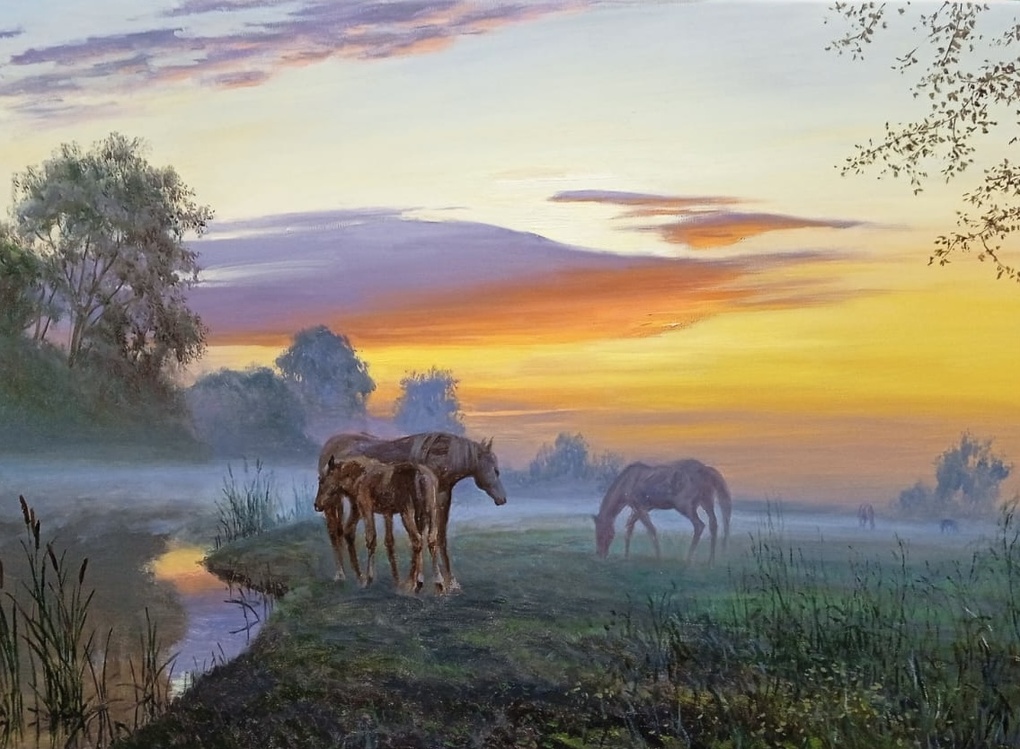
Misty Dawn in the Meadow
Dmitry KrasnovThis is a picturesque painting in the landscape genre with elements of animalism: in the foreground, there are three horses peacefully grazing in a meadow by the water’s edge, while the backdrop features a mesmerising sunset that has painted the sky in warm shades of orange, yellow and pink, gradually transitioning into cool violet and blue tones. The composition follows the classical principle of balance: the foreground is occupied by the group of horses, the middle ground — by the soft outlines of trees and a misty haze, and the background — by the dominant sunset sky, which takes up a significant portion of the canvas. The horizontal horizon line clearly separates the earth and the sky, emphasising the vastness of nature. The artist skilfully uses the contrast between warm and cool tones: the rich hues of the sunset sky create a sense of soft glow typical of the evening, while the muted greens and browns of the land and vegetation emphasise the naturalness of the scene. The misty haze connecting the foreground and background softens the transitions between colours and adds atmosphere. The horses, positioned asymmetrically, add dynamism to the composition without disrupting the overall sense of harmony. Their figures do not overwhelm the painting but are organically integrated into the natural landscape. The animals here are not merely subjects of depiction but a symbol of freedom, strength and natural grace. They embody the connection between humans and nature, calmness and harmony, as well as the cyclical nature of life — after all, the sunset symbolises the end of the day, peace and the anticipation of a new beginning. The technique combines realism and elements of impressionism: the blurred outlines of the trees in the background convey aerial perspective, the detailed rendering of the horses and grass in the foreground creates a sense of presence, and the smooth colour transitions in the depiction of the sky and mist lend the work лёгкость and airiness. Free brushstrokes enhance the atmospheric impression of the scene, while the gradations of the sunset sky create a sense of light in motion. The emotional impact of the painting cannot be overstated: it evokes in the viewer a feeling of tranquillity, gentle nostalgia and unity with nature. The soft colours and smooth lines create a meditative atmosphere, prompting reflection on the beauty of simple natural scenes. The work combines the precision of realism, the lyricism of landscape painting and the expressiveness of impressionism, transforming an ordinary sunset landscape with horses into a profound philosophical image filled with calmness and inner harmony.
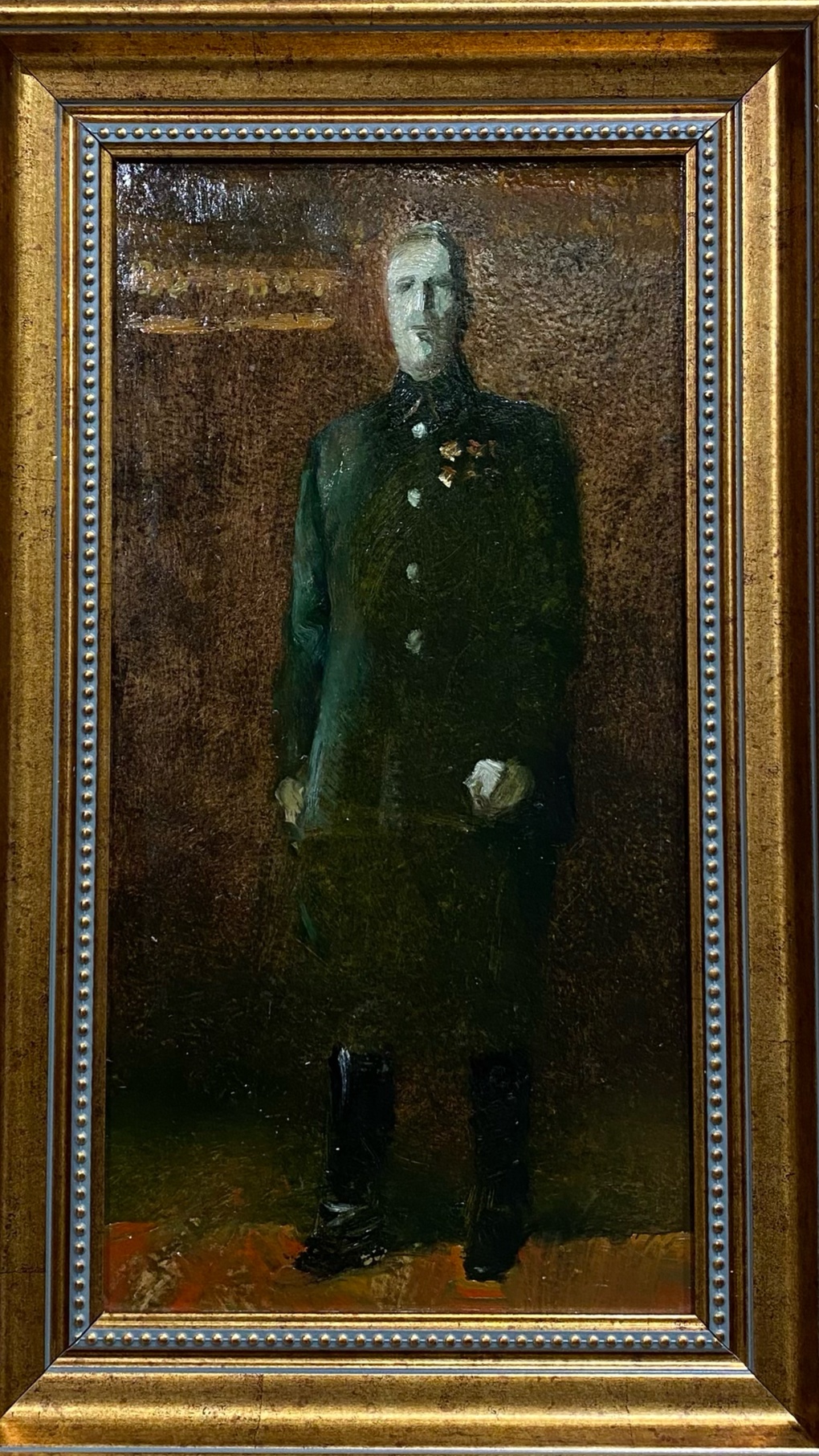
Formal Portrait in a Dark Uniform
Dmitry ObosnenkoThe ceremonial portrait of a military figure is executed in a realistic style. At the centre of the composition is a figure of a man in uniform; his pose is static (hands in pockets), which gives the image restraint and inner strength. His straight posture and confident gaze emphasise the authority and dignity of the subject. The artistic features of the painting are as follows: The colour scheme is built on the dominance of dark, muted tones — deep green and brown shades of the uniform, which harmonise with the gloomy, unexpressive background. This creates a dramatic atmosphere and focuses attention on the figure of the hero. Chiaroscuro is rendered in strong contrast, modelling the volume of the figure and highlighting details of the uniform and face. The light seems to single out the hero from the darkness, symbolising his significance and inner resilience. Detailing is focused on elements of the uniform — buttons, orders, and the cut of the coat. This not only individualises the character but also emphasises his status. The background of the painting is neutral, almost abstract, without superfluous details. This technique, typical of ceremonial portraits, does not distract from the main subject and creates a sense of solemnity. A massive frame with decorative ornamentation emphasises the prestige of the work and the traditional approach to presenting a ceremonial portrait. In terms of genre, this is a classic ceremonial portrait, designed not only to capture the outward appearance of the hero but also to convey his character, status and inner strength. Works of this kind were often created to commemorate the merits of military figures; they were displayed in official institutions or family galleries.
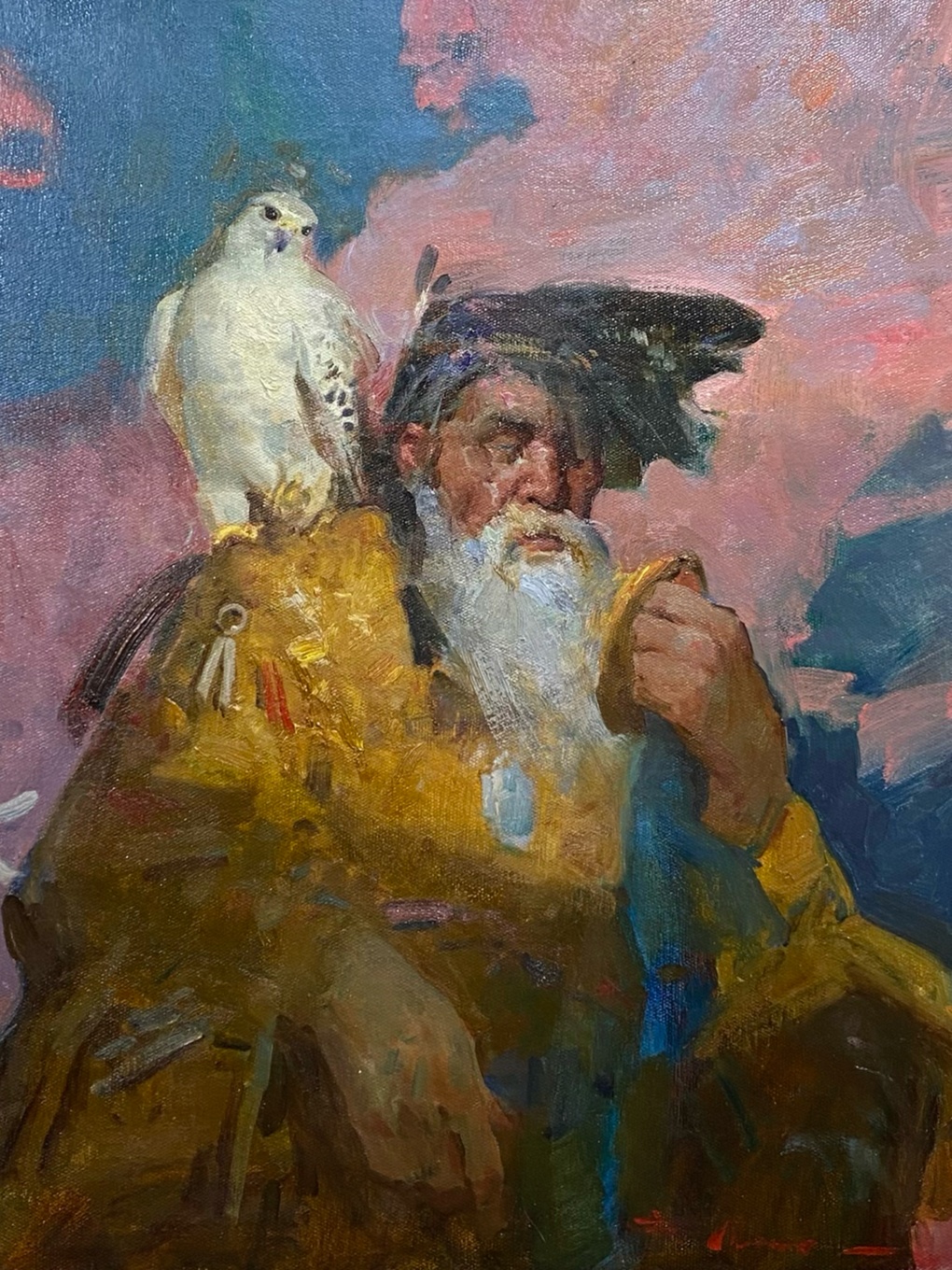
The Falconer
Munkh BinderyaThe painting depicts an elderly man with a long white beard, dressed in traditional ethnic clothing. A white falcon is perched on his shoulder. The composition is based on a close‑up shot. The contrast between the massive, earthy figure of the old man and the light, elevated bird creates dramatic tension. Positioned above the man’s head, the falcon visually “leads” the composition, emphasising its vertical axis. This enhances the sense of connection between man and nature, between the earthly and the heavenly. The artwork is executed in an expressive manner, using thick, textured brushstrokes. The colour scheme is built on the contrast between warm and cool tones. The work resonates with the traditions of Russian epic painting (Surikov, Repin) but is reinterpreted through the lens of the “Severe Style”. It features: monumentality and plastic expressiveness;conciseness of details combined with deep semantic richness; a combination of realism and symbolism.
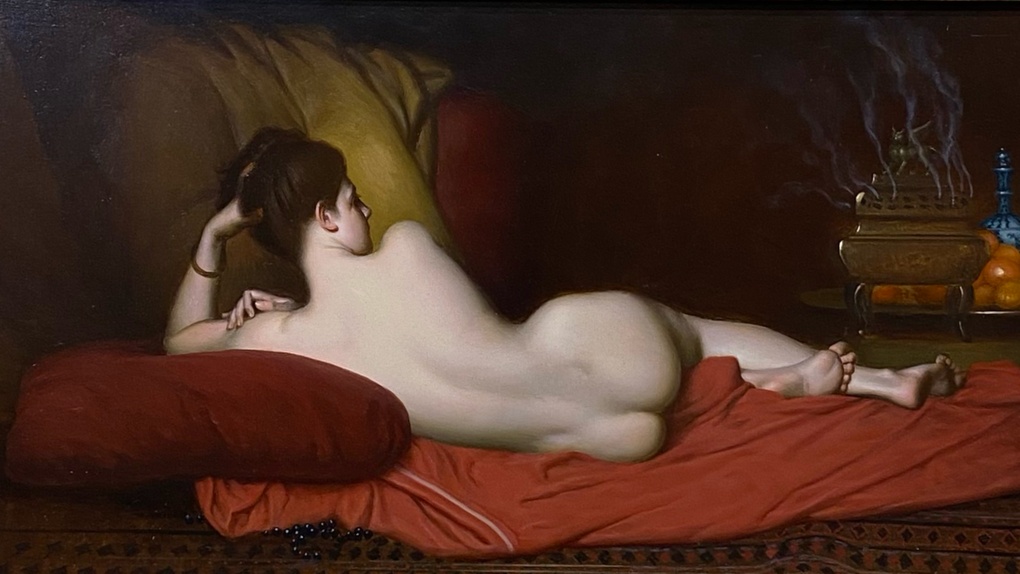
Reclining Nude with Incense
Alexei KreydunThe artwork portrays a reclining nude figure. The compositional focus is deliberately shifted: the figure is depicted with her back to the viewer, thereby emphasizing the plastic выразительность of the forms rather than individual portraiture. The viewer’s attention is drawn to the graceful rhythm of the lines — the contours of the shoulder, waist, and hip create a harmonious visual composition. The color palette enhances the emotional resonance of the piece. The warm, приглушённая color scheme with velvety transitions between light and shadow creates an atmosphere of secluded intimacy. This atmosphere generates a meditative quality rather than an erotic one, inviting the viewer to engage in contemplation. The symbolic dimension of the work is revealed through carefully selected elements: the red drapery and pillows serve as symbols of sensuality and the tangible presence of matter, emphasizing the tactile quality of the image and highlighting the textures. The incense burner with its rising smoke introduces a motif of transience and memory, linking the physical with the ritualistic, evoking a sense of the temporal nature of the material world and the eternal quality of the symbolic. From a collective standpoint, the work holds significant appeal. The fusion of a timeless classical theme with an evocative oriental ambiance ensures its high decorative value in any interior setting. The composition and color palette seamlessly integrate into both contemporary and traditional environments, while the depth of symbolic meaning adds conceptual durability, independent of shifting artistic trends.
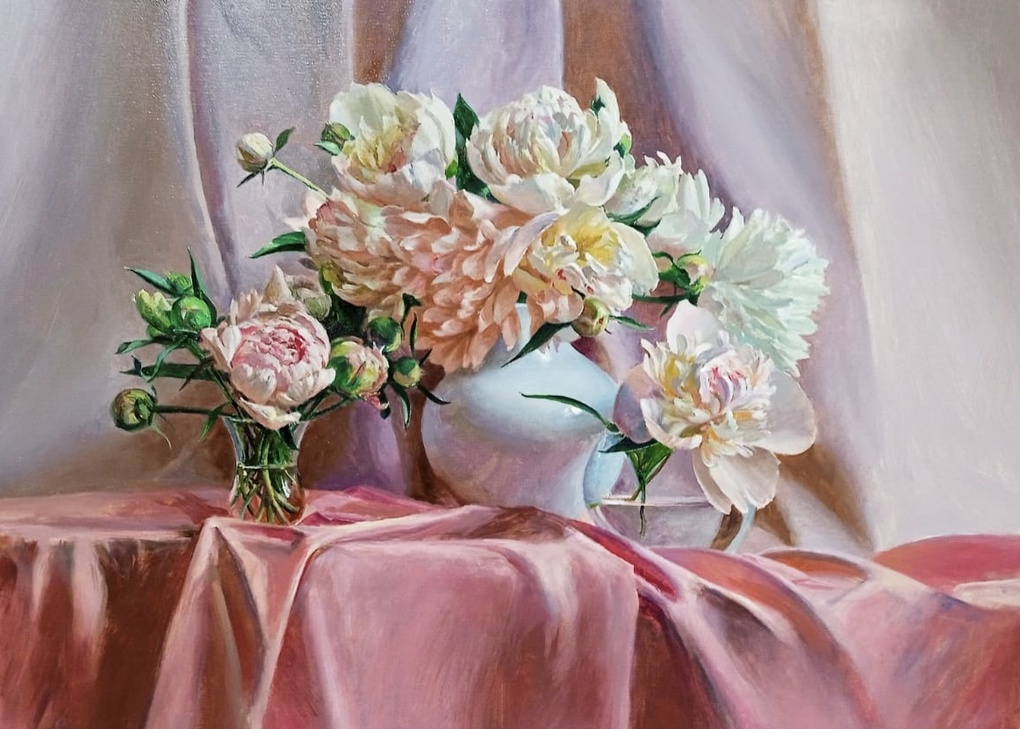
Peonies on Pink Drapery
Dmitry KrasnovThe still life captivates with the harmony of white‑and‑pink peonies and softly shimmering fabrics. Here, the flower is not merely a motif, but a subtle metaphor for the fleeting nature and generosity of the moment. The viewer’s gaze glides smoothly: from the lush, “whipped” texture of the petals to the strict geometry of the ceramic vase, and then to the elegant folds of the tablecloth. In this way, an ordinary scene transforms into an intimate arrangement full of inner meaning. The palette is built on noble pearlescent and powdery hues, delicately enlivened by rare green accents. These touches prevent the composition from becoming overly sweet, lending it freshness and vitality. This work is a true gift for any collector: it will seamlessly fit into a living space while retaining the museum‑quality composition and execution
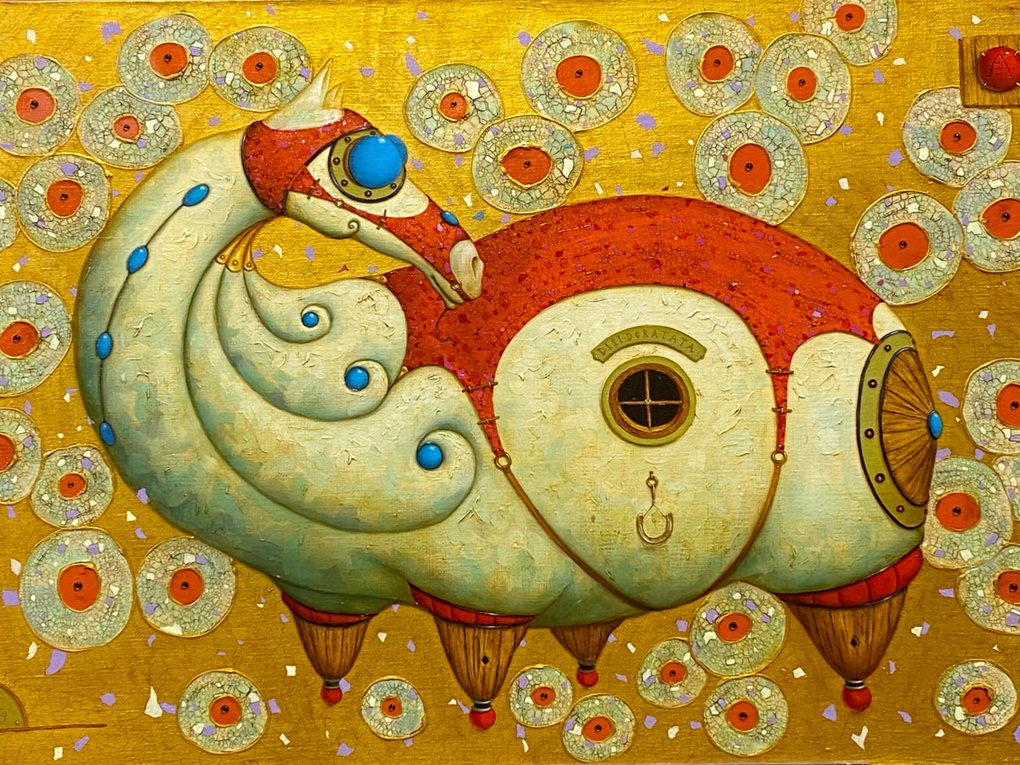
Mechanical Horse on a Golden Field
Alexei YezhovThis painting is a striking example of Alexey Ezhov’s «medieval surrealism», blending elements of fantasy, mechanics, and traditional painting. The canvas depicts a fantastical creature resembling a hybrid of an animal and a mechanical device: its body is smoothly curved, adorned with blue accents, while its head is stylized as a horse’s, featuring a prominent blue «eye» element. Key features of the composition: The creature’s body resembles a ship or a house on legs, complete with details such as a porthole and a hook, emphasizing its mechanistic aesthetic. The legs are designed as wooden supports with red tips, adding stability and a touch of grotesque to the image. The background is filled with circles featuring red centres, resembling stylized coins or discs, creating a sense of movement and rhythm. The golden-yellow background enhances the fairy-tale and irrealistic quality of the scene, contrasting with the white and red hues of the main character. Artistic techniques: The multi-layered glazing technique, characteristic of Ezhov’s style, adds depth to the work. The combination of organic and mechanical forms is the artist’s signature approach, creating the illusion of a parallel world. The rich colour palette, dominated by gold, red, and blue, evokes both festivity and mystery.
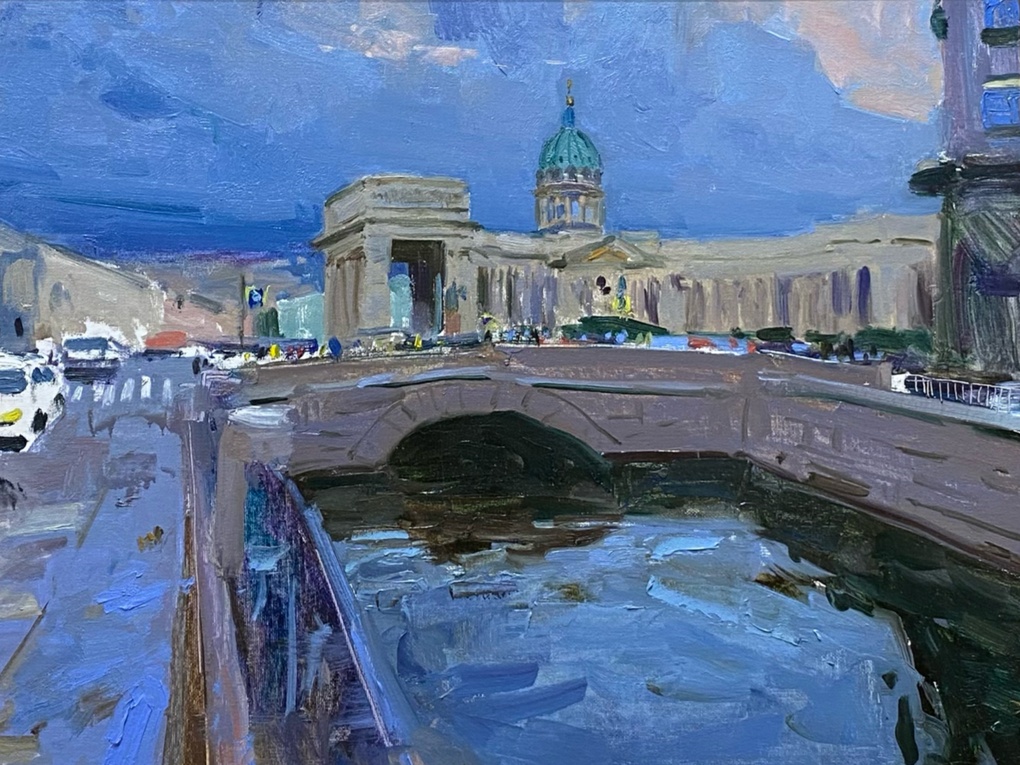
Evening by the Kazan Cathedral
Munkh BinderyaThis painting depicts one of St. Petersburg's iconic architectural ensembles—a view of the Kazan Cathedral from the bridge over the Griboyedov Canal (formerly the Catherine Canal). The work is executed in a painterly style with pronounced brushstrokes, lending the scene a dynamic and atmospheric feel. 1. Composition The composition is built on the contrast between monumental architecture and the vibrant urban environment. The artist masterfully conveyed the key architectural features of the Kazan Cathedral: the colonnade, domes, and cornices. The contrast between the static architecture and the dynamism of urban life emphasizes the vibrant essence of the city. Reflections in the water add a poetic touch, creating a sense of duality in reality. The choice of perspective (from the bridge, at an angle to the cathedral) allows for multiple planes to be captured and the scale of the ensemble to be conveyed. The painting evokes a feeling of both grandeur and a touch of melancholy: The grandeur is due to the monumentality of the cathedral and the strict symmetry of the colonnade. Melancholy—due to the cool color palette, overcast sky, and reflections in the water, creating a feeling of coolness and pensiveness. A note of everyday life—in the hints of urban life, adding realism and a human touch to the image of the city.
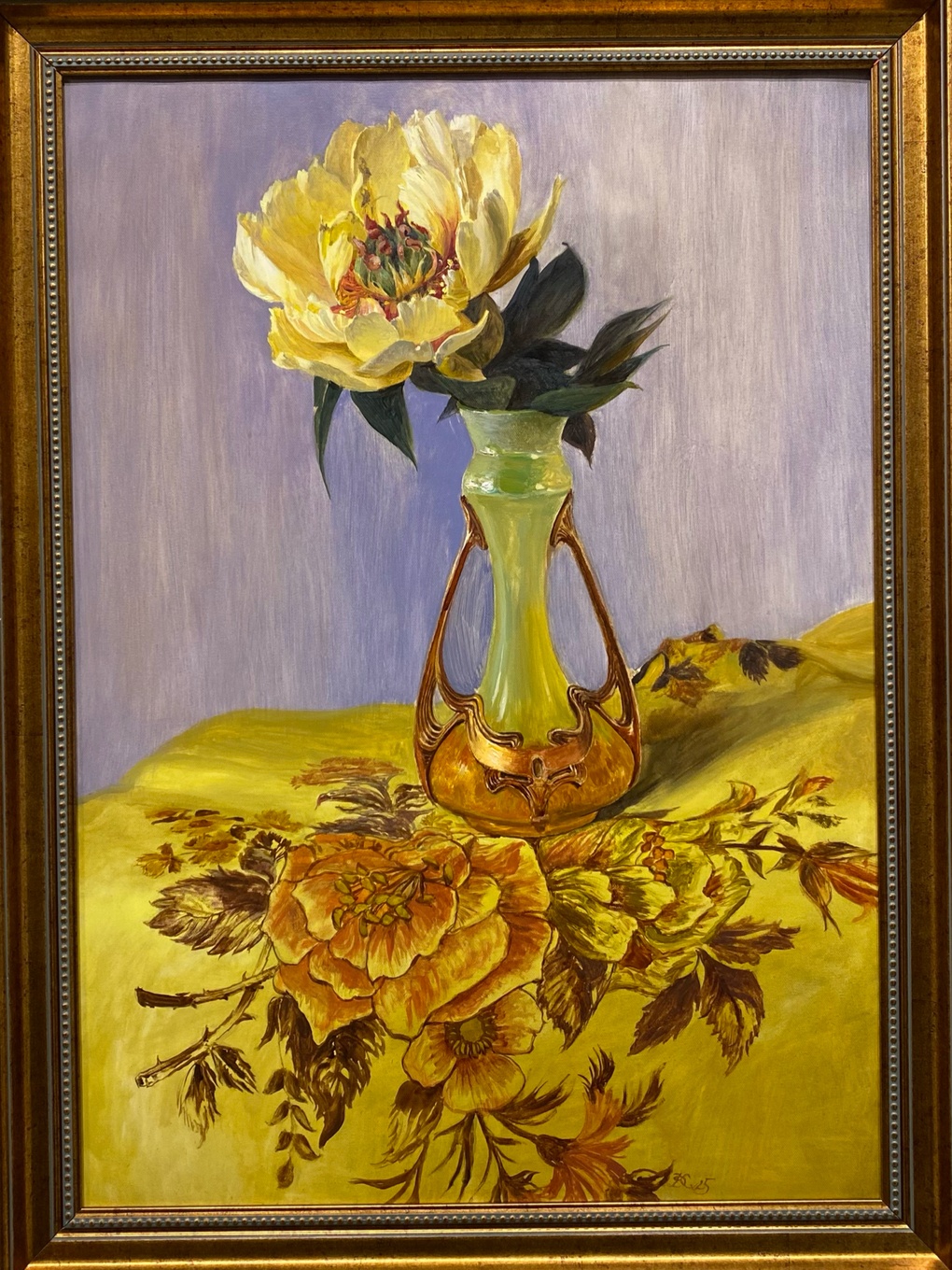
Yellow Peony in a Glass Vase
Dmitry KrasnovThis painting is a classic still life executed in the oil painting technique. At the centre of the composition is an elegant glass vase with decorative metal elements, holding a large yellow peony with expressive petals and dark accents in the centre. The artist skillfully plays with the contrast between the delicacy of the flower and the strict geometry of the vase. The background is rendered in calm lilac tones, which helps to highlight the main subject and creates an atmosphere of tranquillity. The vase sits on a surface covered with fabric featuring a large floral pattern in yellow‑brown hues — this element adds depth and decorativeness to the composition, evoking a sense of homely comfort. The composition is balanced: the flower occupies the upper third of the canvas, while the patterned fabric fills the lower part, forming a harmonious triangle. The colour scheme is warm, dominated by yellow, green, and brown tones, which gives the work a sunny, life‑affirming mood.
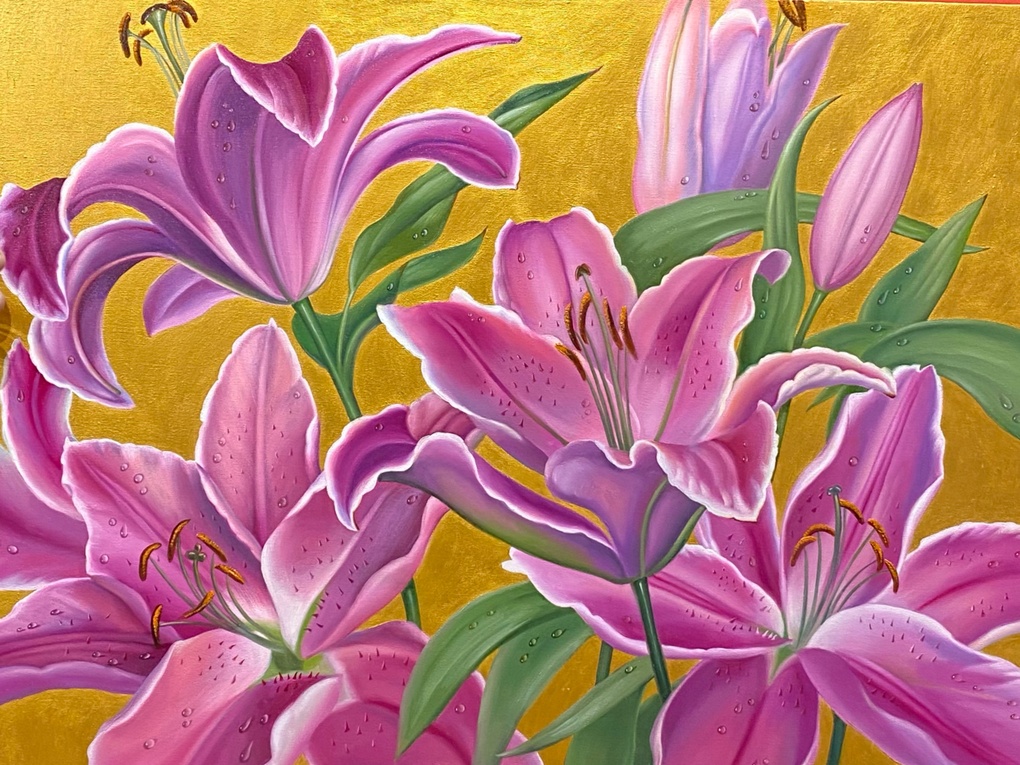
Lilies on a Gold Ground
Farida KapshanovaThe painting depicts a lush bouquet of lilies rendered in rich violet‑pink hues. The flower petals are depicted in great detail, with soft colour transitions and expressive veins, which gives them volume and realism. Dew drops are visible on the petals, creating a sense of freshness and morning coolness.The green leaves harmoniously complement the composition, accentuating the vibrancy of the flowers. The background of the painting is executed in a warm golden‑yellow colour, which contrasts beautifully with the cool tones of the lilies and makes the flowers even more striking. The composition is dynamic: the flowers are arranged at different angles, creating a feeling of naturalness, as if the bouquet had just been gathered and placed on the canvas. The painting conveys both sophistication and natural simplicity, evoking associations with a summer garden and the fragrance of fresh flowers.
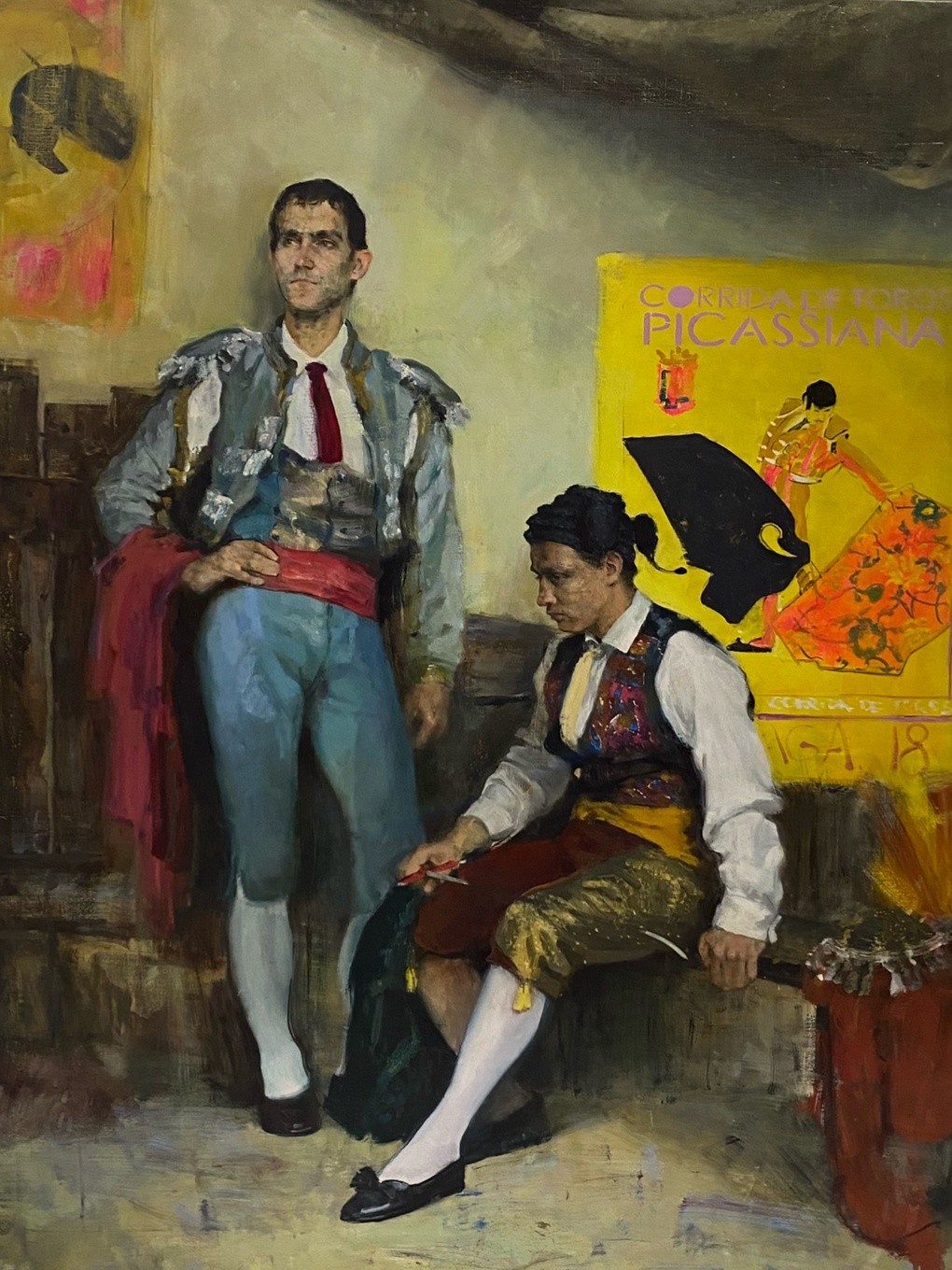
Before Entering the Arena
Mikhail SolovyovThe painting depicts two characters associated with the traditional Spanish spectacle of bullfighting: a standing matador in a classic costume (fringed jacket, red sash, white stockings, and tie) — embodying strength, confidence, and readiness for action (with an open posture and forward-facing gaze) — and a seated assistant (a banderillero or backstage participant at the arena) in less formal but vivid attire with decorative elements — symbolizing the behind-the-scenes aspect of bullfighting and the human side of the scene (with a closed posture and downcast eyes). In the background, there is a poster reading «CORRIDA DE TOROS PICASSIANA», featuring an image of a bullfight scene. This element serves as both the colourful and thematic focal point of the composition and is a reference to Pablo Picasso, who frequently explored the theme of bullfighting in his work. The colour scheme of the painting is built on contrast: cool tones (blue, grey) in the matador’s costume convey a sense of composure and discipline, while warm accents (the red sash, details of the seated character’s clothing) add emotion and evoke passion and danger. The vibrant poster (yellow, black, and red) structures the composition and reinforces the bullfighting theme. The painting is executed in a realistic style with elements of genre painting. The artist pays meticulous attention to the depiction of clothing, textures, and lighting, employing loose brushstrokes to bring the scene to life. The generalised background helps to focus the viewer’s attention on the characters.
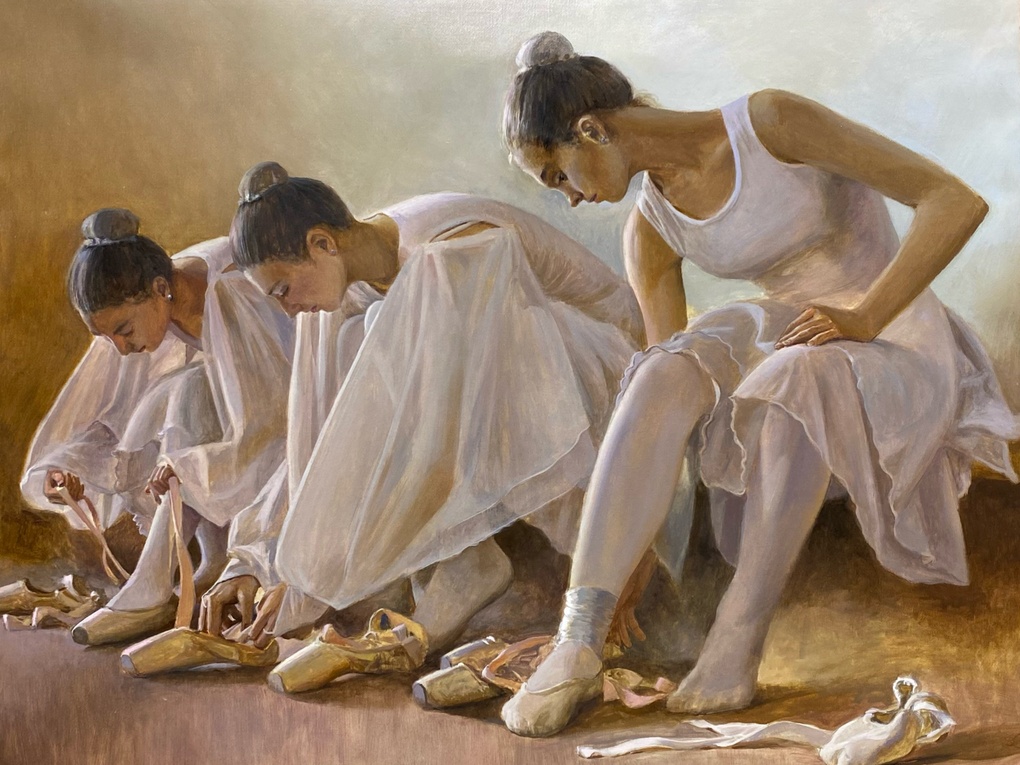
Before the Curtain
Dmitry KrasnovThis painting privileges the moment before performance: three ballerinas bent over their pointe shoes, absorbed in a quiet, almost ceremonial preparation. The composition runs on a strong diagonal, translating concentration into structure; lowered faces and restrained gestures keep the narrative anchored in hands, ribbons, and fabric rather than theatrical display. A soft, diffused light models form through nuanced warm–cool transitions, while the whites of tulle and tights become a showcase for finely calibrated translucency and tonal control. Symbolically, the scene speaks to the cost of perfection—the unseen labor behind stage glamour and the delicate balance between the body’s limits and the ideal it pursues. For collectors, the work offers a compelling combination of intimacy and universality: an iconic ballet subject rendered with a polished, gallery-ready finish. Its tasteful palette and recognizable motif make it highly installable in both classic and contemporary settings, with strong appeal for figurative art buyers and institutions seeking culture-adjacent themes without overt narrative excess.
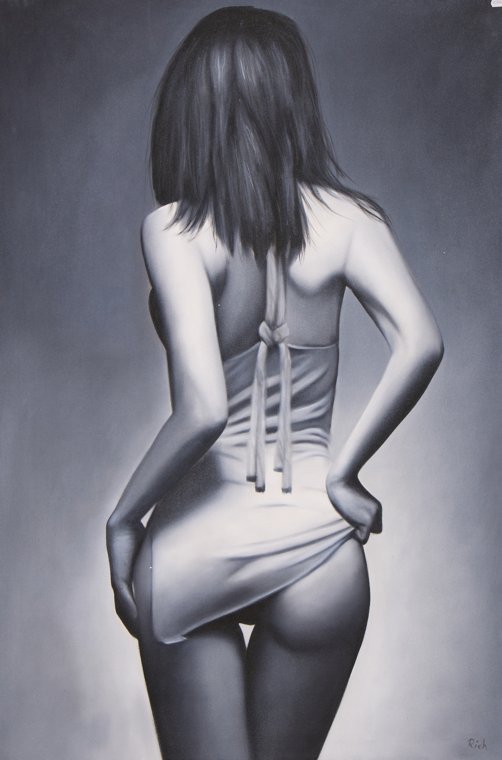
Figure from Behind
Unknown ArtistThis monochrome figurative work is built on the tension between academic poise and a deliberately provocative gesture. The female figure is seen from behind: dark loose hair conceals the head and neck, the narrow ties of the dress emphasize the spinal axis, and the lifted hem shifts the image from straightforward nude-adjacent study into an inquiry into vulnerability, control, and self-presentation. The artist privileges psychology over narrative; the hidden face withholds identity, allowing the figure to function as a broader symbol of desire, modesty, and the power of the gaze. Soft chiaroscuro, smooth tonal transitions, and carefully modeled anatomy give the painting persuasive technical authority and immediate market appeal. Its restrained grayscale palette adds strong decorative versatility, making it especially adaptable for contemporary interiors and private collections. For collectors, the work stands out for its union of disciplined draftsmanship, intimate erotic charge, and a distilled visual economy that remains sophisticated rather than merely sensational.
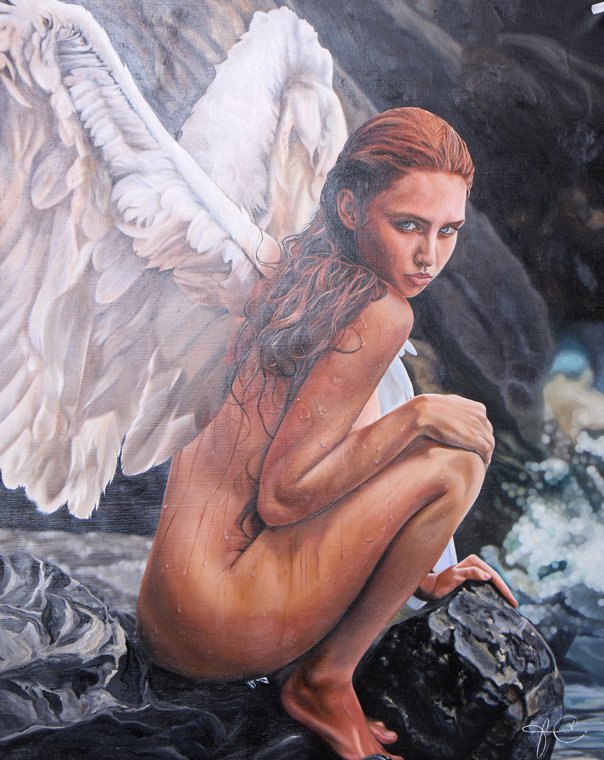
Angel
Anastasia ShchetkinaAnastasia Shetinina's 2021 painting presents a striking blend of realism and surrealism. The depiction of a nude figure with angelic wings perched on rocks captivates with its detail and texture. The artist masterfully uses light and shadow to highlight the physical and emotional beauty of the figure. The waves crashing against rocks in the background add dynamism and contrast to the peaceful and contemplative demeanor of the angel. The sense of introspection and mystery emanating from the figure prompts viewers to reflect on spirituality and human nature. Shetinina's works are renowned for their technical prowess and deep symbolic undertones, making them appealing to collectors seeking both visual and intellectual value.
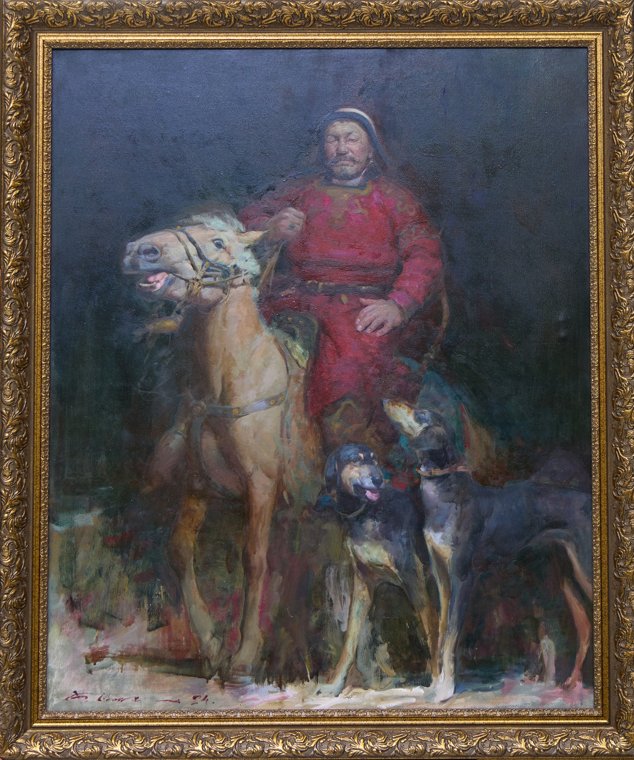
Subedei
Munkh BinderyaThis painting by Munkh Binderiya depicts a powerful and majestic scene of a man on horseback with two dogs, filled with a sense of strength and confidence. The masterful use of dark and rich colors creates an atmosphere of mystery and intrigue. The central figure, clad in red, commands attention with his calm assurance. The horse and dogs, portrayed with grace and energy, add dynamism to the composition. The imagery conveys a sense of unity between the man and his animals, creating a harmonious bond between nature and humanity. Executed in a realistic style, this work showcases the artist's exceptional skill in rendering textures and emotions through color and form, making it appealing to collectors and art enthusiasts.
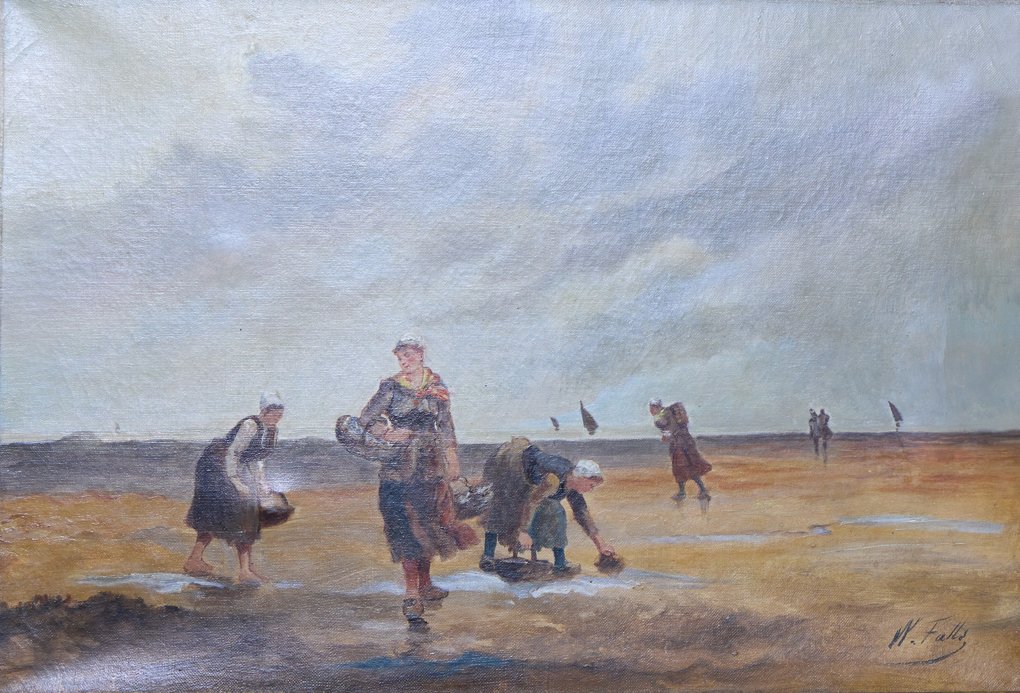
Shell Collectors
Unknown ArtistThis painting by an unknown artist depicts a group of women gathering shells on the shore. Rendered in a realistic style, it brings an authentic and close-to-nature feel to the scene. The sky is filled with large clouds, creating a dramatic mood. The women are dressed in traditional attire, adding a historical context to the image. The color palette is calm and muted, consisting of earthy and blue tones, which creates a sense of tranquility and simplicity. Technical skill is evident in the fine detail work, such as the reflection of light on the water, adding depth and texture to the canvas. This work draws attention not only for its aesthetic beauty but also for its ability to capture a moment of everyday life.
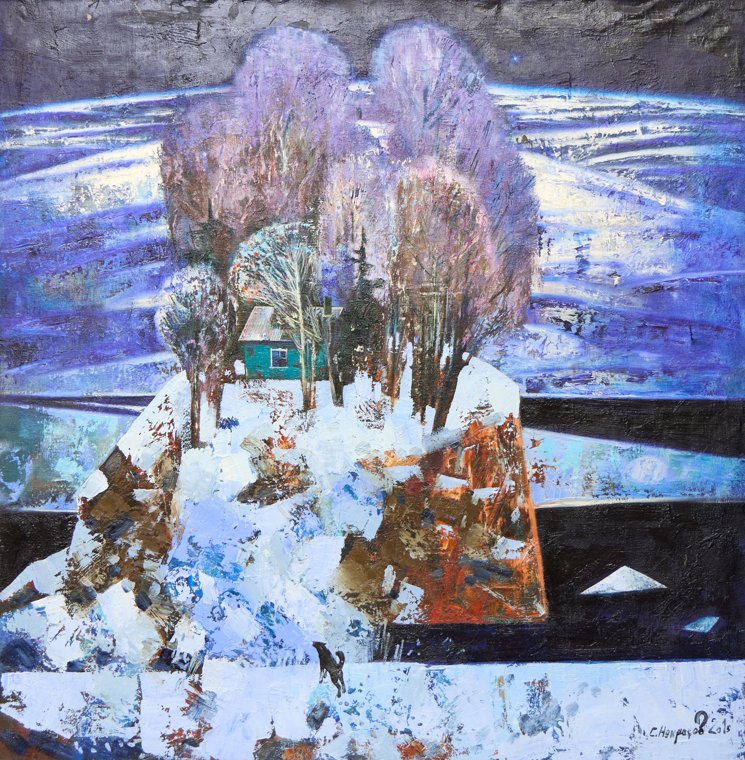
First star
Sergei NekrasovSergey Nekrasov's 2015 work transports the viewer to a mysterious winter landscape where silence and tranquility blend with vivid hues. The painting depicts snow-covered ground embracing a cozy house and tall trees, evoking a warm and somewhat magical impression. The purples and blues in the sky add depth and mystery, while the delicate brushwork and textures impart a sense of movement. The artist’s technique in using light and dark contrasts demonstrates his skill in conveying the mood and atmosphere of a winter night. This artwork strikes a perfect balance between realism and abstraction, inviting the viewer to immerse in a winter dream full of emotions and fantasies.
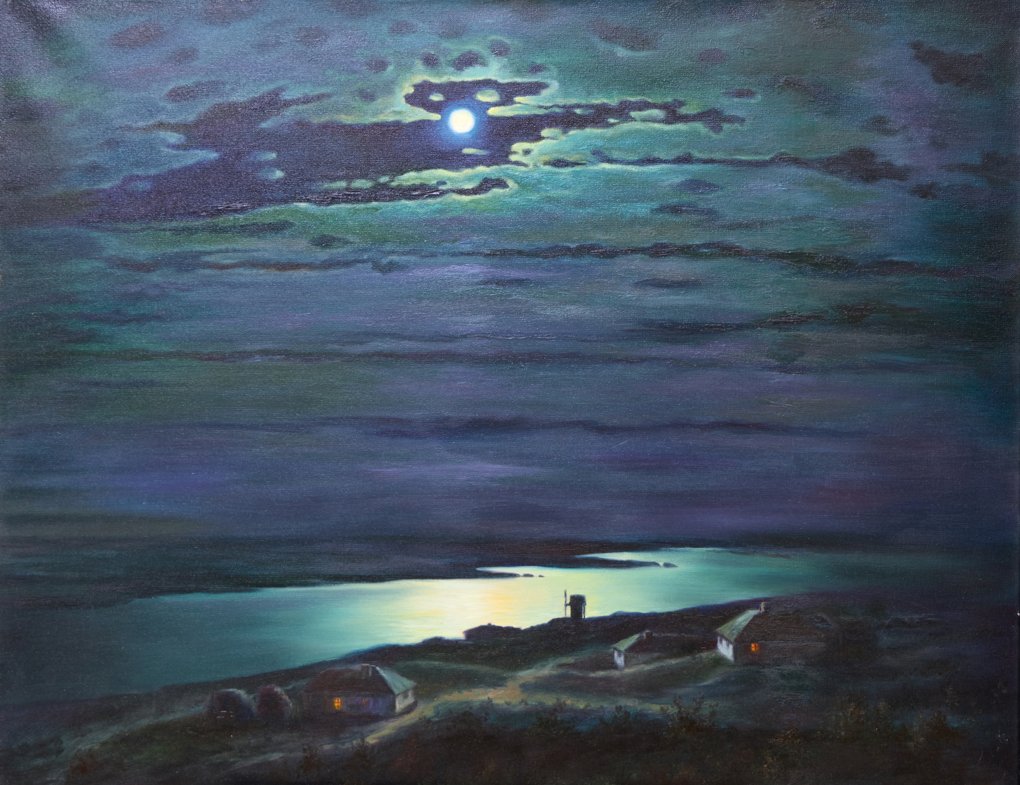
Night on the Dnieper River. Copy of a painting by Arkhip Kuindzhi
Dmitry TishkovThis painting by Dmitriy Tishkov immerses the viewer in the atmosphere of nighttime silence, creating a sense of solitude and peace. The moon brightly illuminates the sky, breaking through thick clouds, creating a mesmerizing play of light and shadow. Below lies an idyllic rural landscape with houses, their windows glowing warmly, filling the scene with a sense of coziness and tranquility. Dark shades of blue and green blend seamlessly, forming an illusion of depth and space. This work showcases the artist's skill in conveying the nocturnal atmosphere and his ability to imbue the piece with emotion through simple yet expressive details. The style of the painting echoes the traditions of realism, with a touch of romanticism, making it appealing to both classical art lovers and those seeking unique and soulful works for their collection.
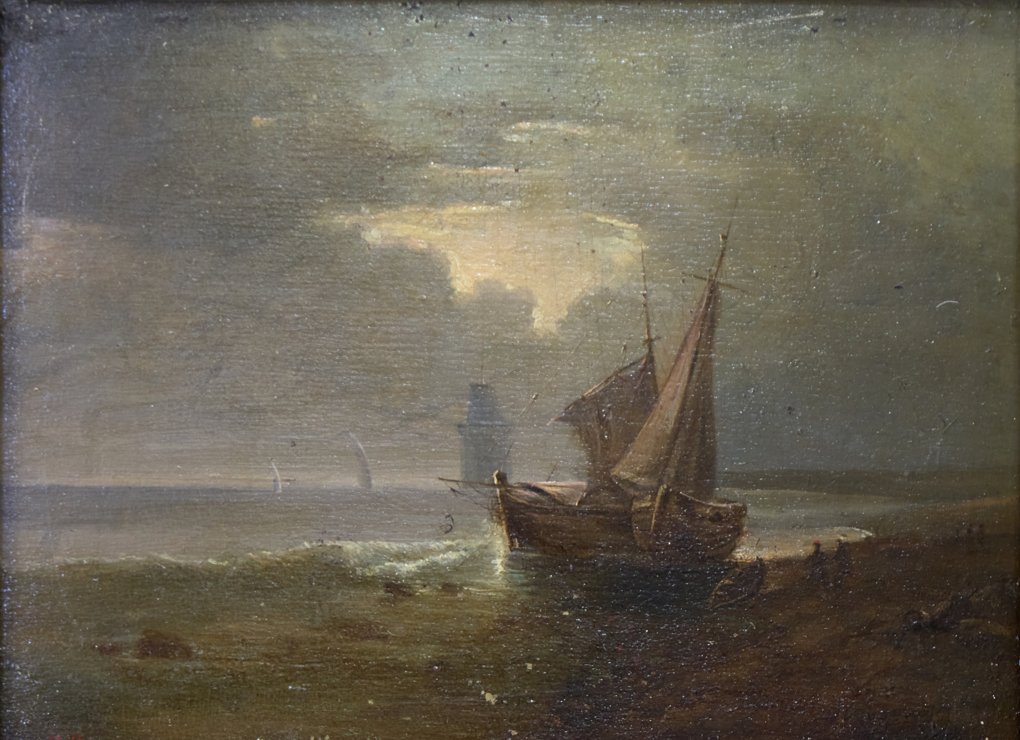
By the sea
Unknown ArtistThis painting depicts a tranquil seascape with a sailboat resting on the shore. The scene is enveloped in an atmosphere of calm and contemplation, emphasized by the soft shades of the sky and sea. The sailboat in the center of the composition creates a sense of movement despite its stillness, showcasing the artist's skill in conveying both dynamism and tranquility simultaneously. Dark clouds on the horizon contrast with the bright patches in the sky, adding contrast and depth that captivate the viewer. This work is an excellent example of a seascape and will interest both art lovers and collectors.
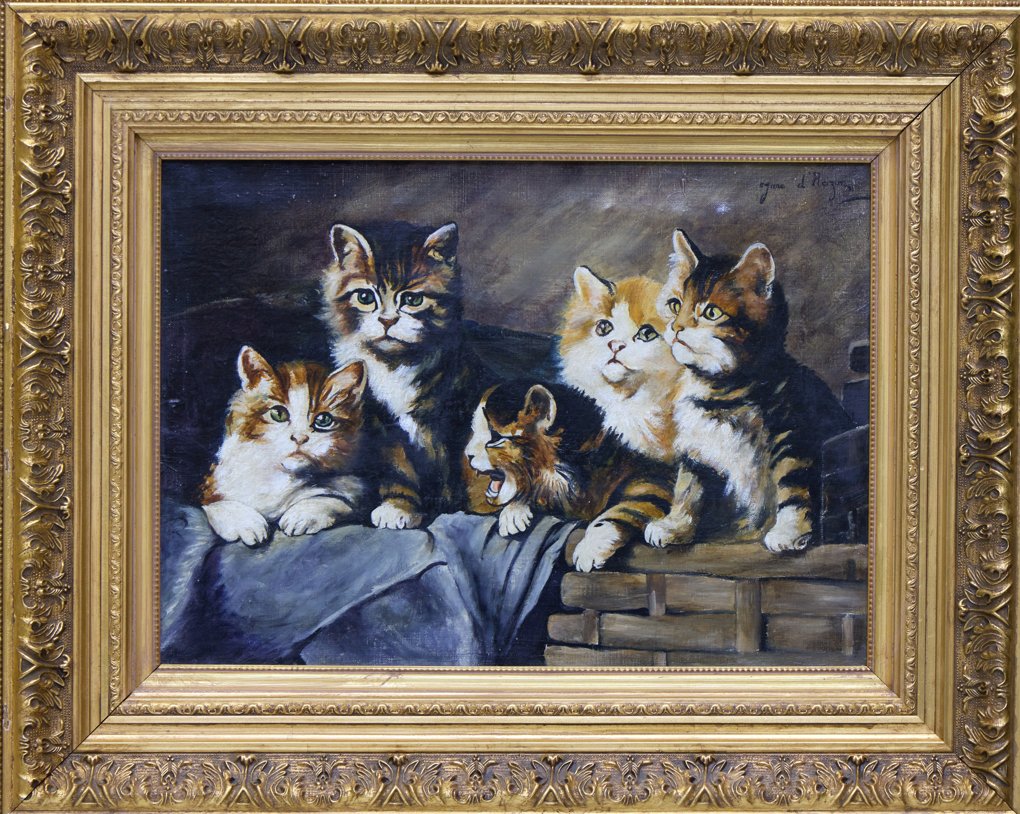
Kittens
Jeanne HazonJeanne Hazon’s painting is a charming depiction of five kittens cozying up on a soft surface. Their fur, realistically rendered through textures and shades, exudes warmth and comfort. The kittens’ gazes are filled with curiosity and playfulness, adding emotional depth to the scene. A dark background contrasts with the bright fur of the animals, enhancing focus on their expressive faces. The artwork is done in a realistic style, typical of Hazon’s works, known for her ability to portray the animal world with keen attention to detail. This style appeals to collectors and art lovers due to its accessibility and emotional richness.