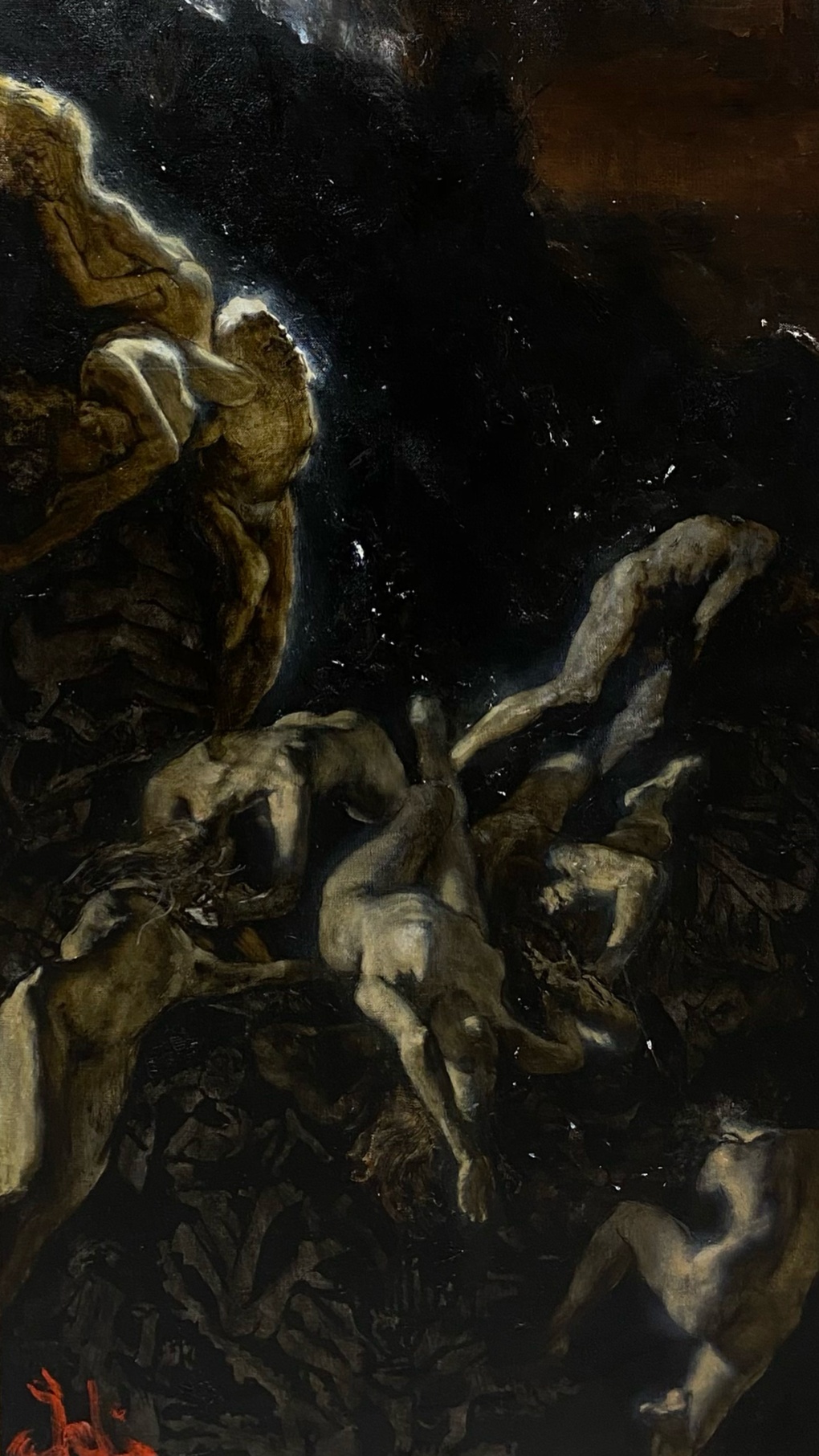
The Fall
Mikhail SolovyovA monumental, night-bound tableau unfolds in near-bottomless darkness: nude, vulnerable bodies appear dislodged from any ground and drawn into a downward vortex. The work is less concerned with academic anatomy than with the dramaturgy of light—cool, intermittent highlights skim shoulders, backs, and limbs, turning the figures into symbols of a shared human condition: loss of control, the collapse of order, and inevitability. Broad handling and selectively dry brushwork sit over dense, deepened layers, creating a surface that hovers between the corporeal and the spectral. The painting resonates with the tragic tradition of European Baroque and the psychological charge of Expressionism, yet its restraint keeps it distinctly contemporary. For collectors, its appeal lies in the rare combination of panoramic narrative and intimate painterly force: it reads as a decisive focal piece, capable of anchoring a room and elevating a collection with high emotional voltage and strong curatorial presence.
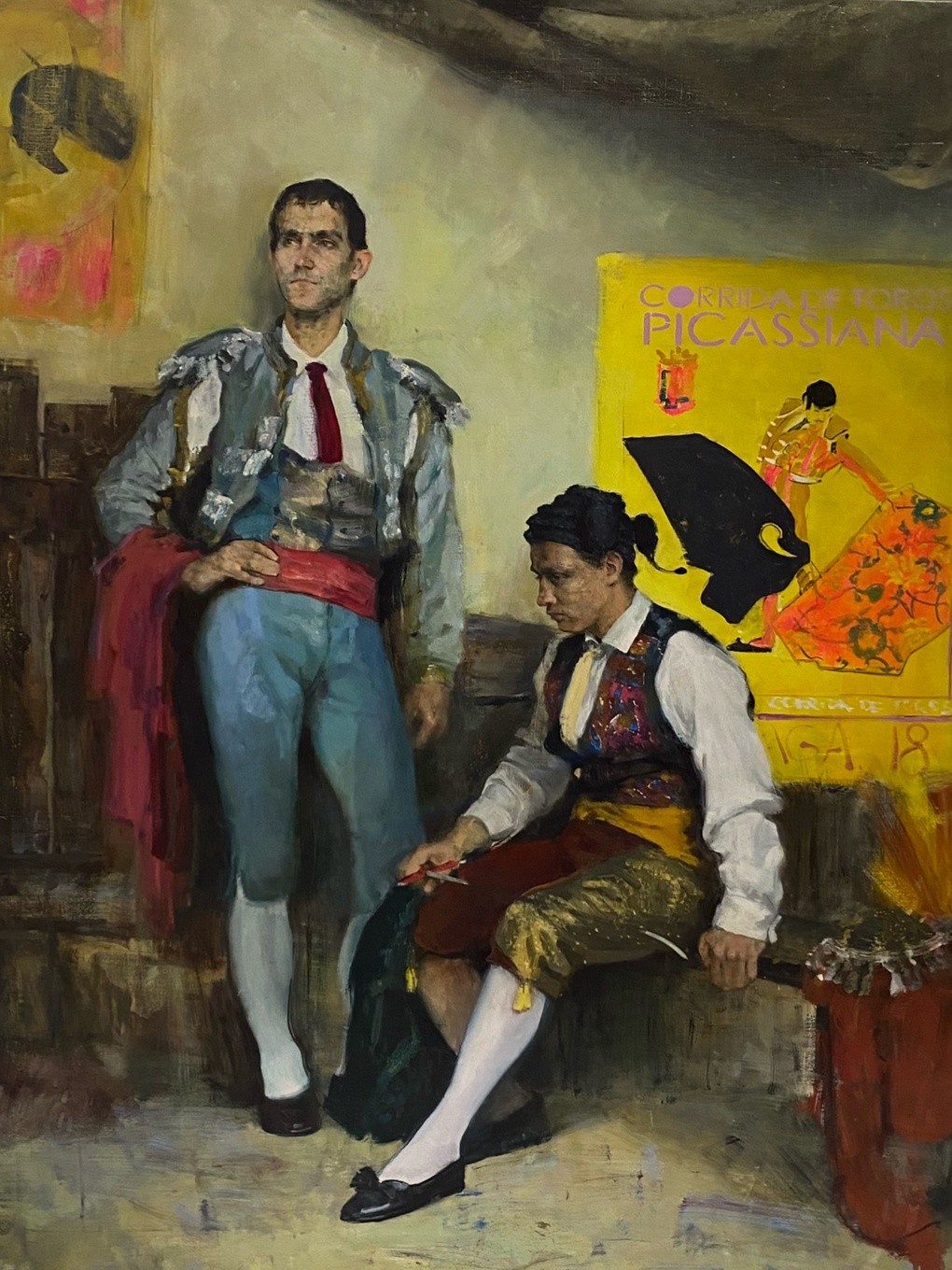
Before Entering the Arena
Mikhail SolovyovThe painting depicts two characters associated with the traditional Spanish spectacle of bullfighting: a standing matador in a classic costume (fringed jacket, red sash, white stockings, and tie) — embodying strength, confidence, and readiness for action (with an open posture and forward-facing gaze) — and a seated assistant (a banderillero or backstage participant at the arena) in less formal but vivid attire with decorative elements — symbolizing the behind-the-scenes aspect of bullfighting and the human side of the scene (with a closed posture and downcast eyes). In the background, there is a poster reading «CORRIDA DE TOROS PICASSIANA», featuring an image of a bullfight scene. This element serves as both the colourful and thematic focal point of the composition and is a reference to Pablo Picasso, who frequently explored the theme of bullfighting in his work. The colour scheme of the painting is built on contrast: cool tones (blue, grey) in the matador’s costume convey a sense of composure and discipline, while warm accents (the red sash, details of the seated character’s clothing) add emotion and evoke passion and danger. The vibrant poster (yellow, black, and red) structures the composition and reinforces the bullfighting theme. The painting is executed in a realistic style with elements of genre painting. The artist pays meticulous attention to the depiction of clothing, textures, and lighting, employing loose brushstrokes to bring the scene to life. The generalised background helps to focus the viewer’s attention on the characters.
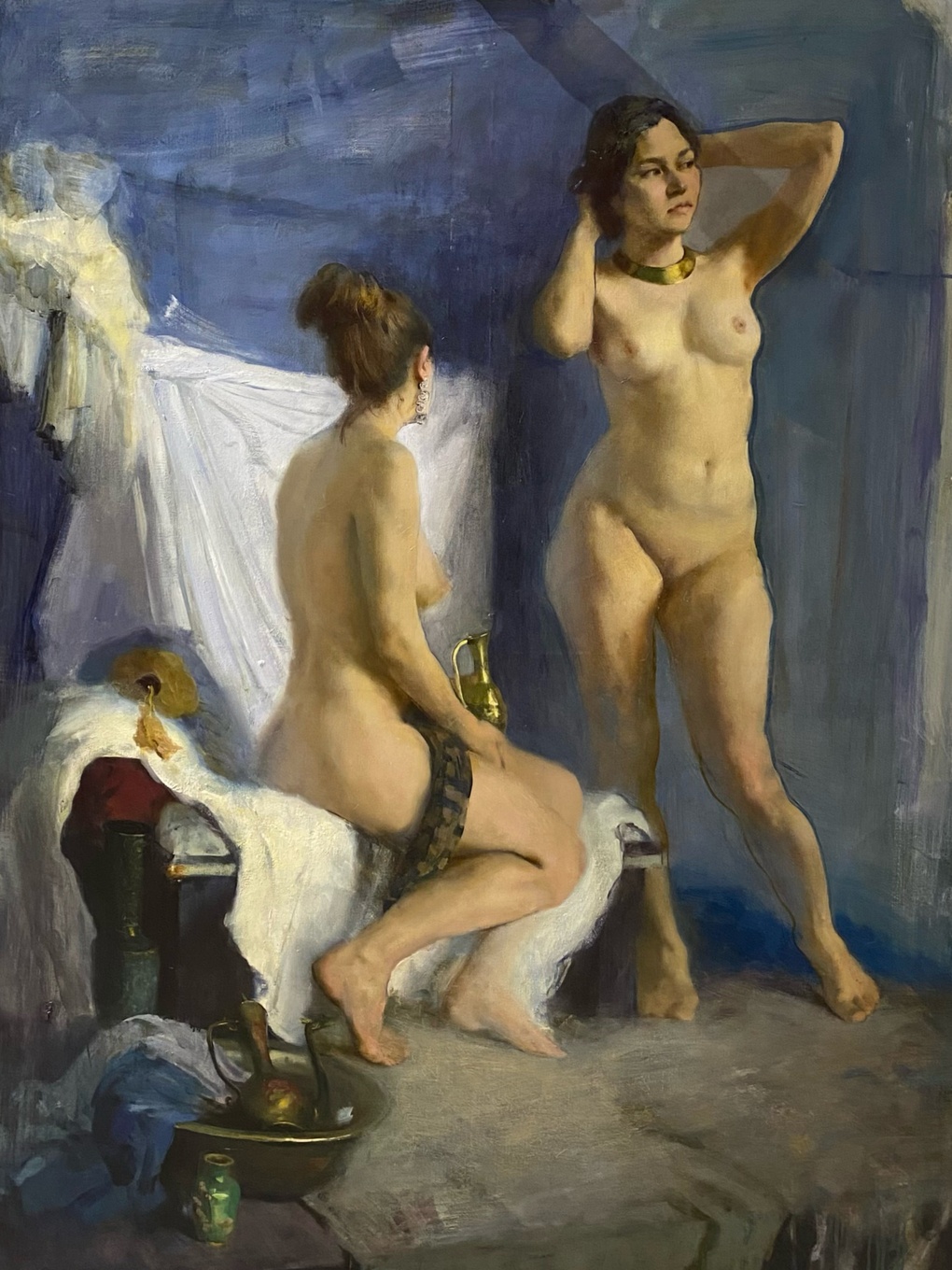
In the Studio: Two Nudes
Mikhail SolovyovThis is an intimate genre scene, constructed according to the principles of the classical “atelier” genre. Two nude figures appear frozen in a moment of quiet dialogue: one is shown in a half‑turn, absorbed in introspection, while the other stands upright and confidently, as if asserting the harmony of the body. The warm tones of the skin glow softly against the deep blue background — this contrast does not merely divide the space, but also creates an atmosphere of seclusion, where the body becomes an object not only of gaze, but also of self‑awareness. Every detail here is a sign: the white cloth and sheet serve as a hint at theatricality and the purity of perception; the brass vessels and basin allude to a ritual, evoking both ritual purity and everyday life at the same time. The painting style is lively and immediate: one can see glazes (or retouches), smooth transitions in the modelling, and light that confidently shapes the forms. The canvas breathes with the energy of the studio — without embellishments, without salon‑like sweetness.
All 3 paintings loaded