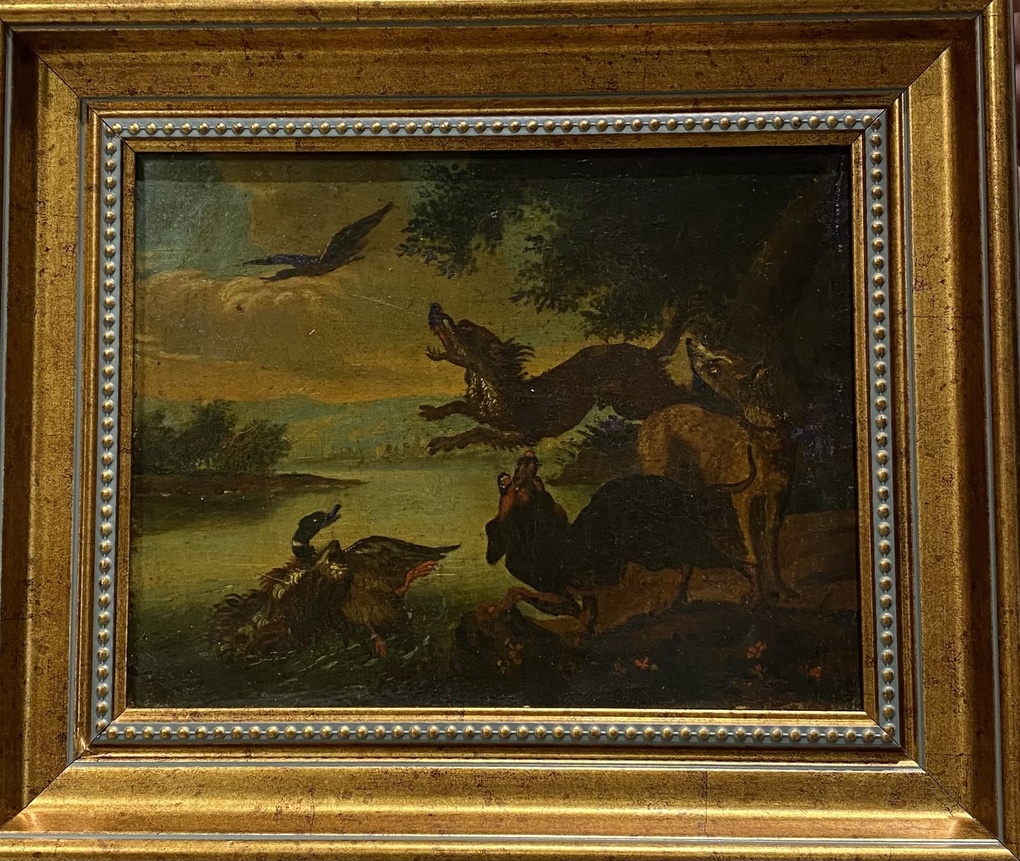
Hunting Dogs at the Water’s Edge
The painting captures a dramatic moment: in the foreground, there is game (including waterfowl with meticulously rendered plumage); a little further back, massive figures of large animals are depicted, their poses conveying tension and dynamism. In the right part of the canvas, the silhouette of a dog is discernible — the constant companion of aristocratic hunting. The background features a tranquil landscape: a smooth expanse of water, gently sloping banks, a dense mass of dark trees, and a dramatic sky with swirling clouds. The warm ochre and olive tones of the land and water contrast with the deep, dark silhouettes of the animals and birds, while the light softly models the volume, emphasizing the texture of fur and feathers. The composition is built along diagonals — they imbue the scene with movement and guide the viewer’s gaze, leading it sequentially from the foreground to the background. The painting combines decorative expressiveness with naturalistic precision: the artist masterfully renders a variety of surfaces — from velvety fur to glossy feathers — and creates an image that is both ceremonial and emotionally charged. Dutch school, around 1700.