
Lilies on a Gold Ground
Farida KapshanovaThe painting depicts a lush bouquet of lilies rendered in rich violet‑pink hues. The flower petals are depicted in great detail, with soft colour transitions and expressive veins, which gives them volume and realism. Dew drops are visible on the petals, creating a sense of freshness and morning coolness.The green leaves harmoniously complement the composition, accentuating the vibrancy of the flowers. The background of the painting is executed in a warm golden‑yellow colour, which contrasts beautifully with the cool tones of the lilies and makes the flowers even more striking. The composition is dynamic: the flowers are arranged at different angles, creating a feeling of naturalness, as if the bouquet had just been gathered and placed on the canvas. The painting conveys both sophistication and natural simplicity, evoking associations with a summer garden and the fragrance of fresh flowers.
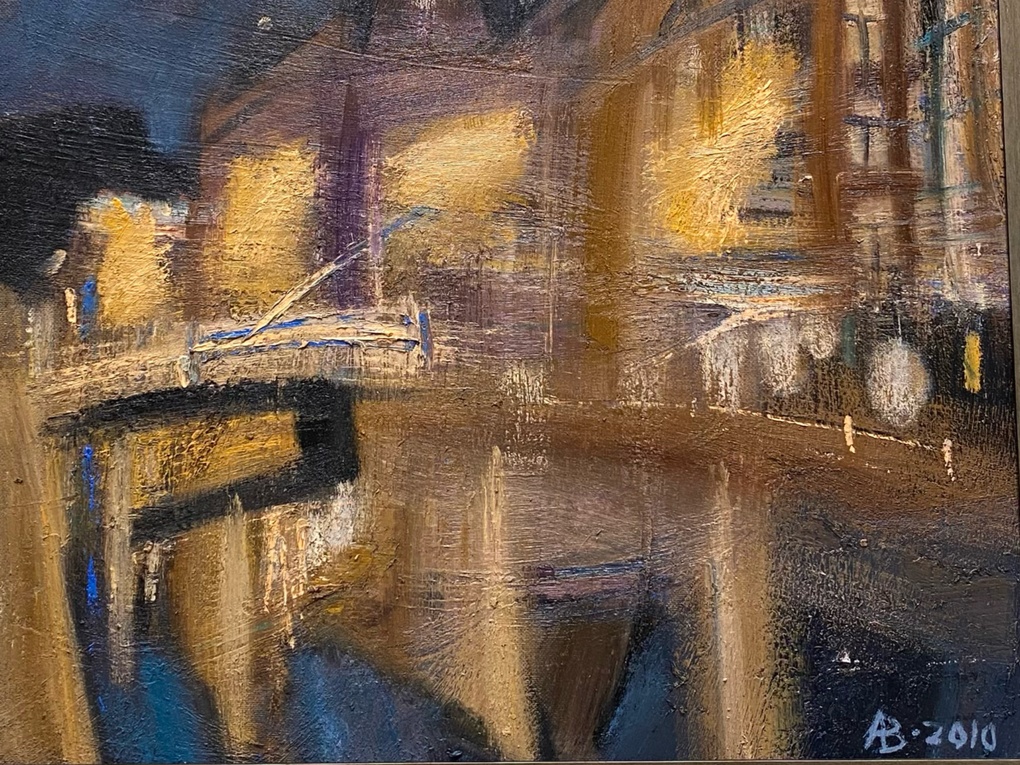
Night City: Lights and Reflections
Andrei VetrogonskyThis is a night city — not seen through the eyes of a tourist, but experienced as an inner sensation. Warm amber lights shimmer against a backdrop of cool blue shadows, creating the atmosphere of a fleeting moment: humid air, a barely perceptible movement, and a silence filled with life. The buildings and cars here are not objects, but signs. The artist does not draw a map of the city, but conveys its “psychological temperature” — something that cannot be measured, but can be felt. The surface of the canvas lives its own life: pastose brushstrokes create texture, retouches or glazes (scraping‑back effects) reveal hidden layers, and the light appears to be scratched through the paint — this is how shop windows and panes become sources of inner glow. The wet asphalt captures reflections, blurring the shapes without erasing them — on the contrary, it enhances the impression, like a memory that preserves not the details, but the emotions.
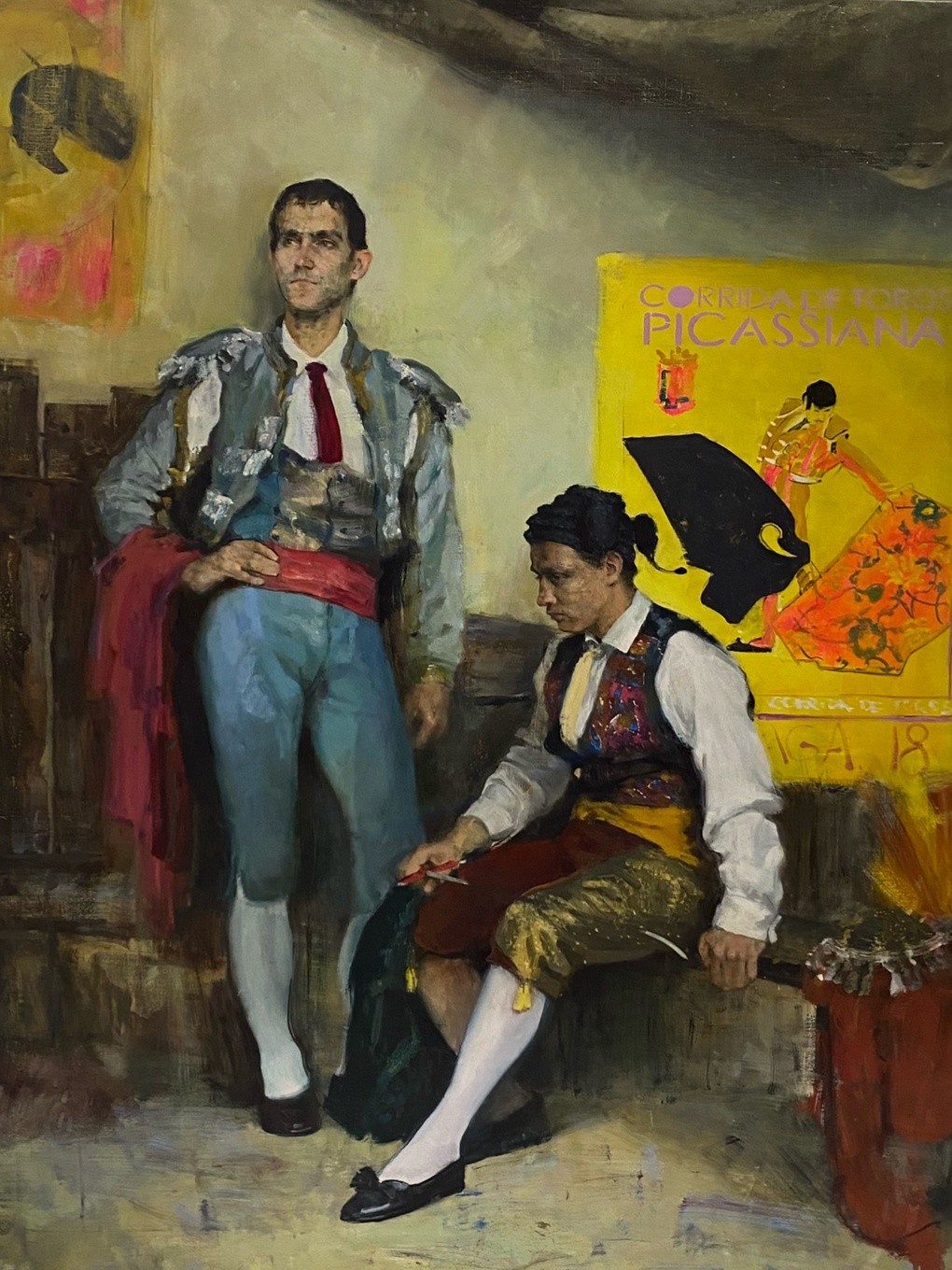
Before Entering the Arena
Mikhail SolovyovThe painting depicts two characters associated with the traditional Spanish spectacle of bullfighting: a standing matador in a classic costume (fringed jacket, red sash, white stockings, and tie) — embodying strength, confidence, and readiness for action (with an open posture and forward-facing gaze) — and a seated assistant (a banderillero or backstage participant at the arena) in less formal but vivid attire with decorative elements — symbolizing the behind-the-scenes aspect of bullfighting and the human side of the scene (with a closed posture and downcast eyes). In the background, there is a poster reading «CORRIDA DE TOROS PICASSIANA», featuring an image of a bullfight scene. This element serves as both the colourful and thematic focal point of the composition and is a reference to Pablo Picasso, who frequently explored the theme of bullfighting in his work. The colour scheme of the painting is built on contrast: cool tones (blue, grey) in the matador’s costume convey a sense of composure and discipline, while warm accents (the red sash, details of the seated character’s clothing) add emotion and evoke passion and danger. The vibrant poster (yellow, black, and red) structures the composition and reinforces the bullfighting theme. The painting is executed in a realistic style with elements of genre painting. The artist pays meticulous attention to the depiction of clothing, textures, and lighting, employing loose brushstrokes to bring the scene to life. The generalised background helps to focus the viewer’s attention on the characters.
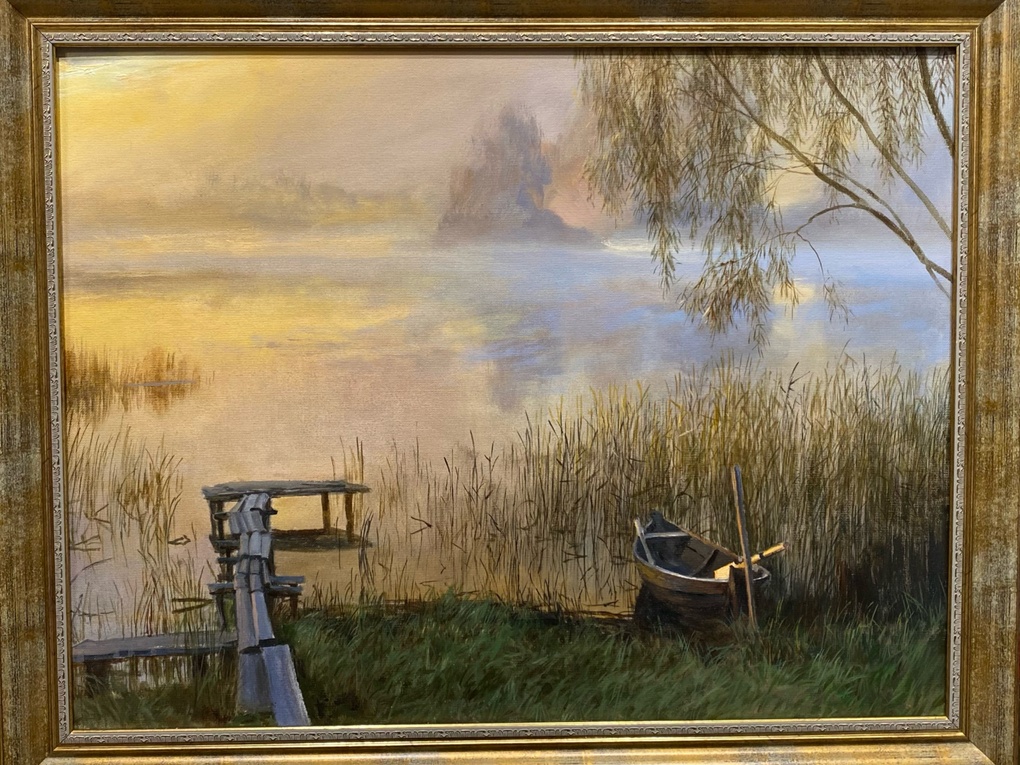
Quiet Backwater with a Boat
Dmitry KrasnovThis is a lyrical landscape painted in the traditions of the Russian realist school. The artist masterfully captures the transitional state of nature — that brief moment between night and day when the world is still asleep but already filling with light. The landscape is imbued with philosophical contemplation. The boat and the pier may symbolise the journey of life, pauses and reflections. The fog serves as a metaphor for uncertainty, anticipation, and also the beauty of fleeting moments. The overall atmosphere of the painting is peaceful and contemplative, inviting inner reflection. The artist employs subtle glazing and smooth tonal transitions, which lend an airy quality to the work. The brushstrokes vary: they are detailed in the depiction of the boat and reeds, yet more generalised in rendering the fog and the sky. This creates a balance between specificity and the poetic quality of the image. A small boat left at the water’s edge and a modest wooden dock are read as signs of human presence without a person — a theme of waiting, pause, and an inner journey.
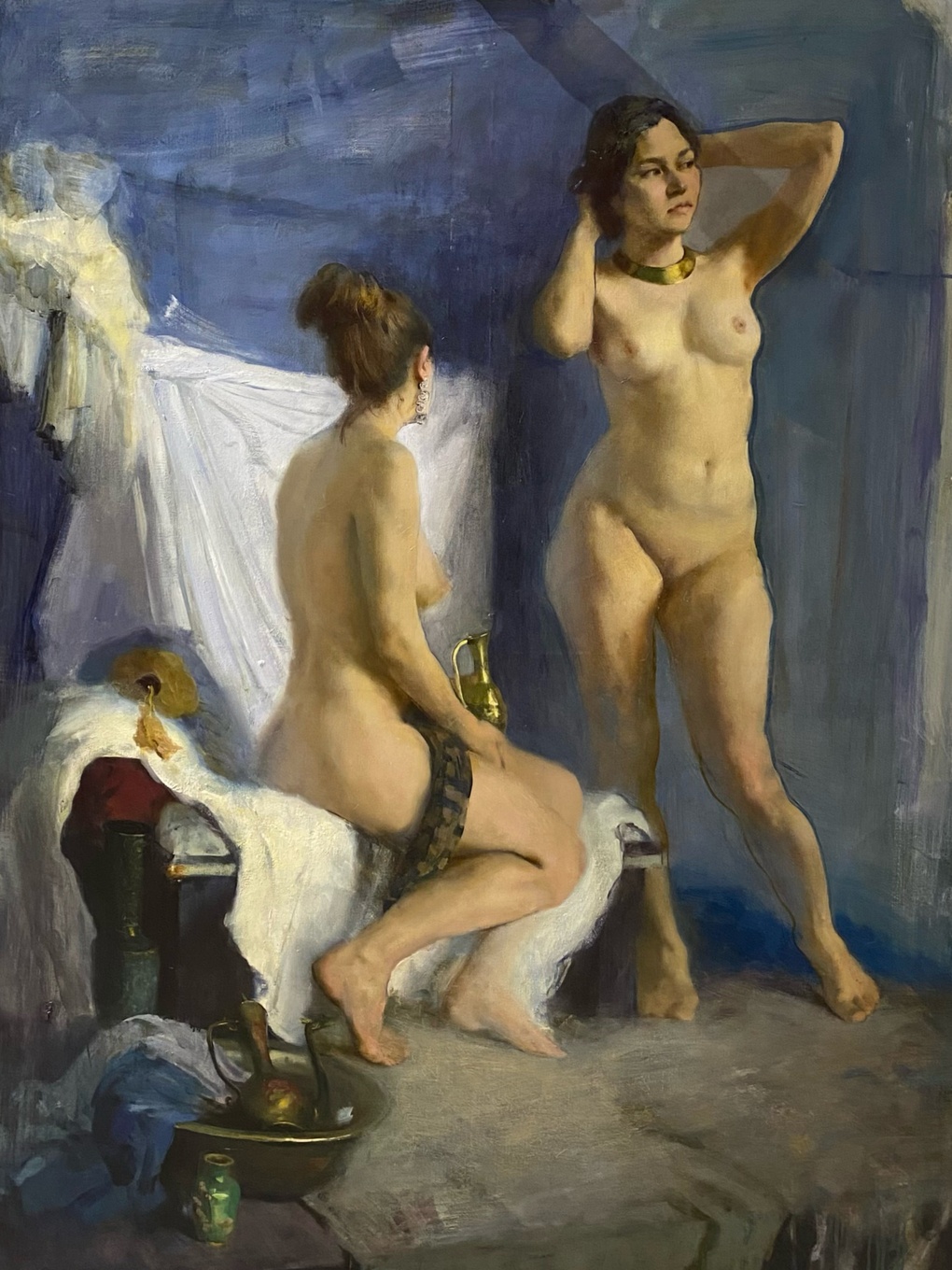
In the Studio: Two Nudes
Mikhail SolovyovThis is an intimate genre scene, constructed according to the principles of the classical “atelier” genre. Two nude figures appear frozen in a moment of quiet dialogue: one is shown in a half‑turn, absorbed in introspection, while the other stands upright and confidently, as if asserting the harmony of the body. The warm tones of the skin glow softly against the deep blue background — this contrast does not merely divide the space, but also creates an atmosphere of seclusion, where the body becomes an object not only of gaze, but also of self‑awareness. Every detail here is a sign: the white cloth and sheet serve as a hint at theatricality and the purity of perception; the brass vessels and basin allude to a ritual, evoking both ritual purity and everyday life at the same time. The painting style is lively and immediate: one can see glazes (or retouches), smooth transitions in the modelling, and light that confidently shapes the forms. The canvas breathes with the energy of the studio — without embellishments, without salon‑like sweetness.
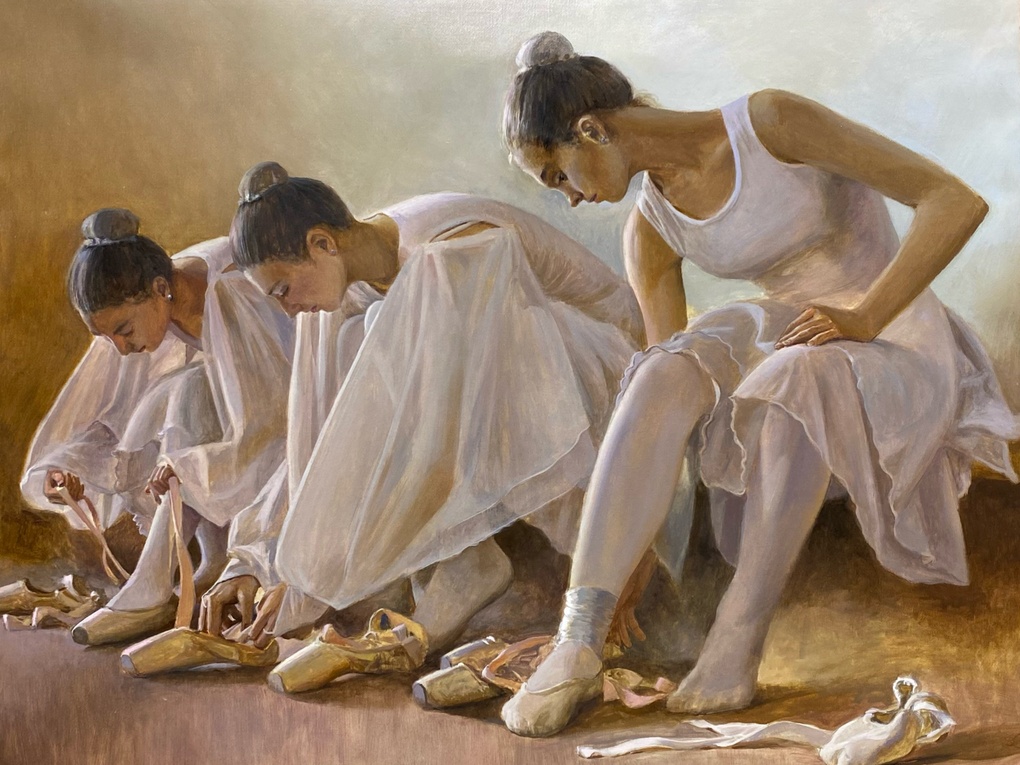
Before the Curtain
Dmitry KrasnovThis painting privileges the moment before performance: three ballerinas bent over their pointe shoes, absorbed in a quiet, almost ceremonial preparation. The composition runs on a strong diagonal, translating concentration into structure; lowered faces and restrained gestures keep the narrative anchored in hands, ribbons, and fabric rather than theatrical display. A soft, diffused light models form through nuanced warm–cool transitions, while the whites of tulle and tights become a showcase for finely calibrated translucency and tonal control. Symbolically, the scene speaks to the cost of perfection—the unseen labor behind stage glamour and the delicate balance between the body’s limits and the ideal it pursues. For collectors, the work offers a compelling combination of intimacy and universality: an iconic ballet subject rendered with a polished, gallery-ready finish. Its tasteful palette and recognizable motif make it highly installable in both classic and contemporary settings, with strong appeal for figurative art buyers and institutions seeking culture-adjacent themes without overt narrative excess.
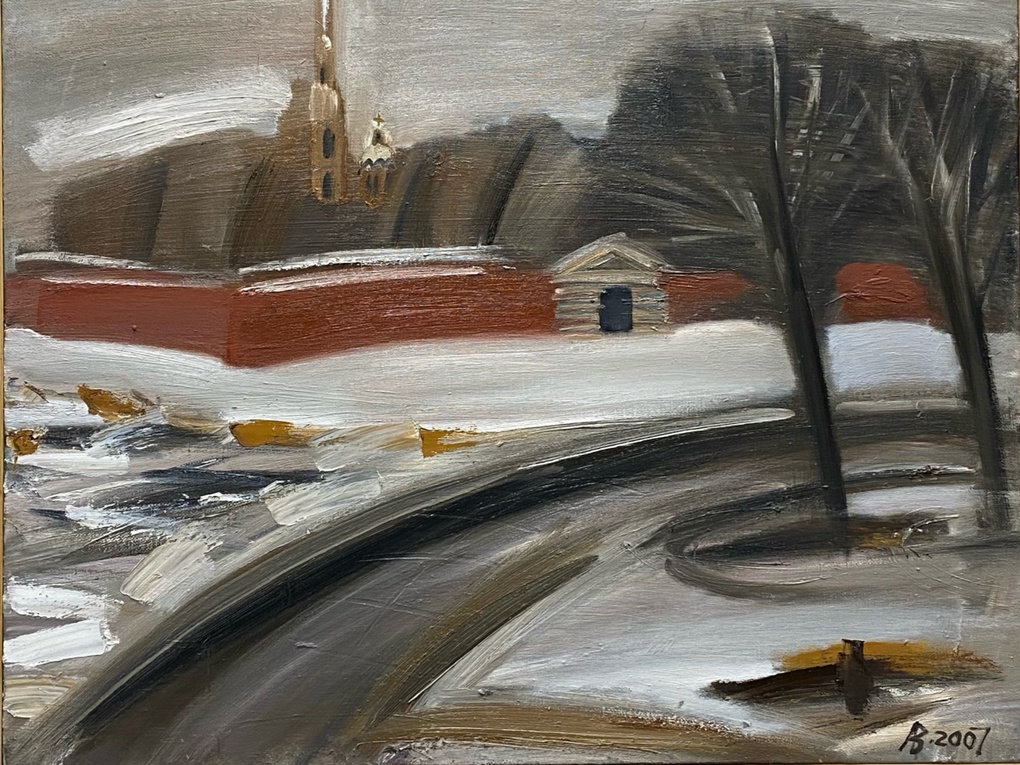
Peter and Paul Fortress in november
Andrei VetrogonskyThe painting depicts a winter cityscape executed in an expressive manner characteristic of Andrei Vetrogonsky’s work. The composition is built on a contrast between the strict geometric forms of the buildings and dynamic, slightly blurred brushstrokes that convey the movement and atmosphere of a cold day. In the foreground, a winding road covered with snow and ice is visible. Broad, energetic brushstrokes create the impression of a slippery, wet surface. On both sides of the road stand bare trees with thin, almost graphic trunks, emphasising the harshness of the winter landscape. At the centre of the composition is a small structure with a triangular roof, resembling a guardhouse or utility building. Its laconic forms contrast with a massive red wall stretching horizontally across the entire picture. The rich red colour of the wall adds warmth to the cold palette of the canvas and serves as a visual anchor for the viewer’s gaze. In the background rises the silhouette of a building with a tall tower or spire, partially obscured by grey clouds and haze. The architectural details are rendered schematically, creating a sense of depth and distance. The colour palette of the painting is restrained: grey, white, and brown tones predominate, enlivened by accents of red and yellow. Broad brushstrokes and a loose painting technique lend the work a special expressiveness and emotional intensity. In the lower right corner, the artist’s signature and date — “V. 2007” — are visible, indicating the year the work was created. The overall atmosphere of the painting simultaneously conveys the calm of a winter day and the hidden dynamism of city life, which is a hallmark of Andrei Vetrogonsky’s works.
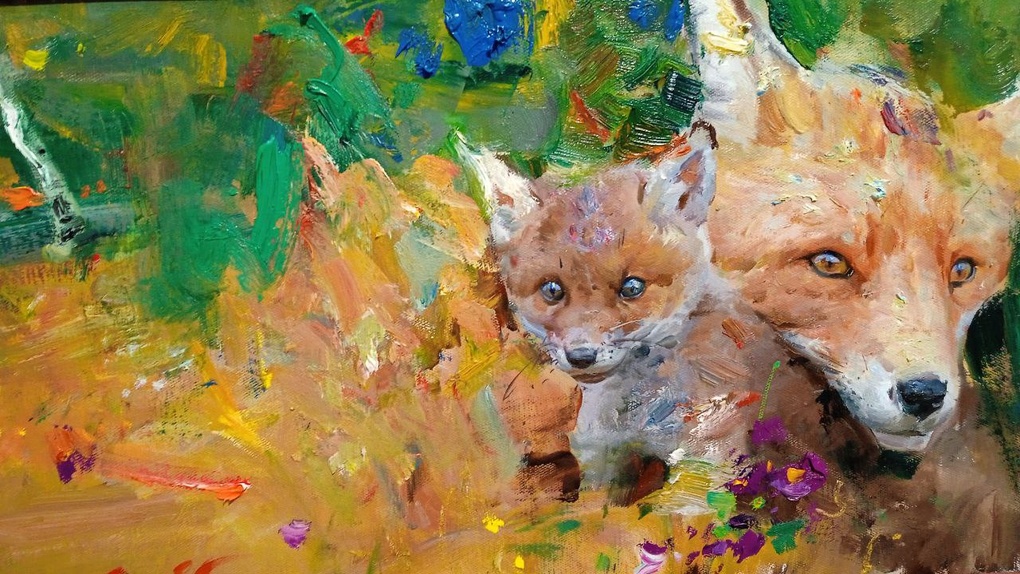
Vixen and Cub
Munkh BinderyaThis painterly image of a fox and cub operates less as naturalistic wildlife depiction than as an emotionally charged study of intimacy, protection, and instinct. The artist deliberately suspends the boundary between representation and abstraction: the animals’ faces anchor the composition while the surrounding field dissolves into animated passages of green, ochre, blue, and peach. That tension gives the work its vitality, suggesting both tenderness and alertness in a world that feels constantly in motion. Thick, tactile brushwork, visible revisions, and chromatic fragmentation lend the surface a persuasive contemporary energy and make the painting highly legible at a glance—an asset in both exhibition and private collection settings. From a market perspective, the piece is especially appealing for collectors drawn to modern animal imagery that balances decorative richness with psychological resonance. Symbolically, the fox is handled here not as folklore cliché but as a vehicle for adaptability, intelligence, and maternal vigilance rendered through an expressive, color-driven language.
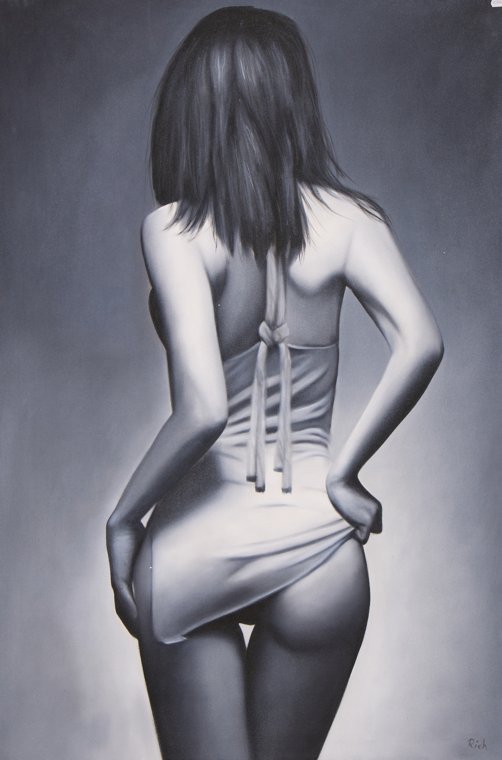
Figure from Behind
Unknown ArtistThis monochrome figurative work is built on the tension between academic poise and a deliberately provocative gesture. The female figure is seen from behind: dark loose hair conceals the head and neck, the narrow ties of the dress emphasize the spinal axis, and the lifted hem shifts the image from straightforward nude-adjacent study into an inquiry into vulnerability, control, and self-presentation. The artist privileges psychology over narrative; the hidden face withholds identity, allowing the figure to function as a broader symbol of desire, modesty, and the power of the gaze. Soft chiaroscuro, smooth tonal transitions, and carefully modeled anatomy give the painting persuasive technical authority and immediate market appeal. Its restrained grayscale palette adds strong decorative versatility, making it especially adaptable for contemporary interiors and private collections. For collectors, the work stands out for its union of disciplined draftsmanship, intimate erotic charge, and a distilled visual economy that remains sophisticated rather than merely sensational.
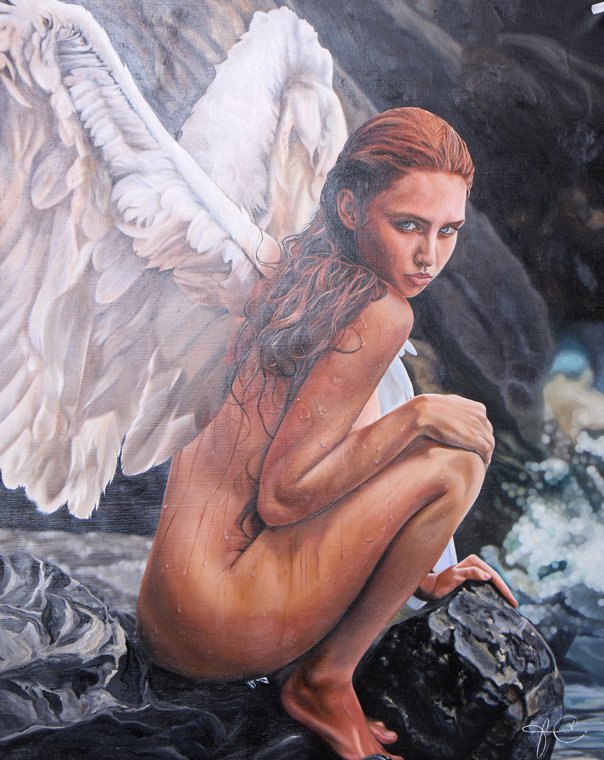
Angel
Anastasia ShchetkinaAnastasia Shetinina's 2021 painting presents a striking blend of realism and surrealism. The depiction of a nude figure with angelic wings perched on rocks captivates with its detail and texture. The artist masterfully uses light and shadow to highlight the physical and emotional beauty of the figure. The waves crashing against rocks in the background add dynamism and contrast to the peaceful and contemplative demeanor of the angel. The sense of introspection and mystery emanating from the figure prompts viewers to reflect on spirituality and human nature. Shetinina's works are renowned for their technical prowess and deep symbolic undertones, making them appealing to collectors seeking both visual and intellectual value.
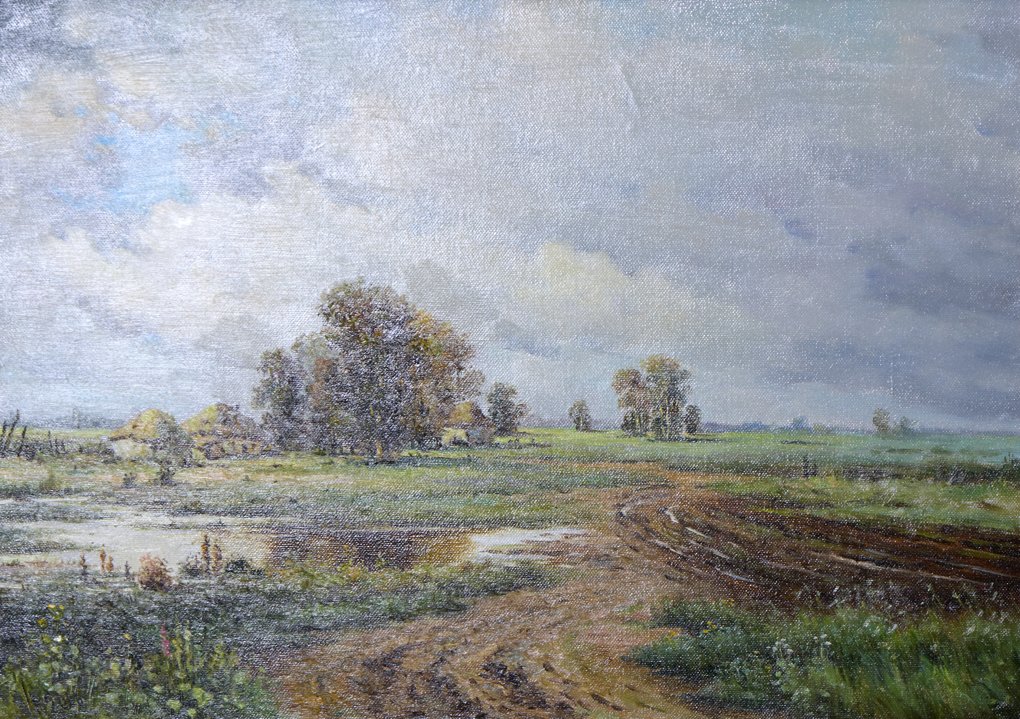
Landscape
Unknown ArtistThis painting by an unknown artist is a refined example of realistic landscape art. The canvas depicts a vast rural expanse with a winding road leading deeper into the composition. The sky, occupying a significant portion of the painting, is filled with clouds that evoke a sense of breadth and freedom. A cluster of trees stands at the center, their greenery contrasting with the dark soil and water bodies in the foreground. This landscape conveys tranquility and the grandeur of nature, reminding viewers of the beauty of the natural world. The realistic style and attention to detail make this work appealing to both art lovers and collectors.
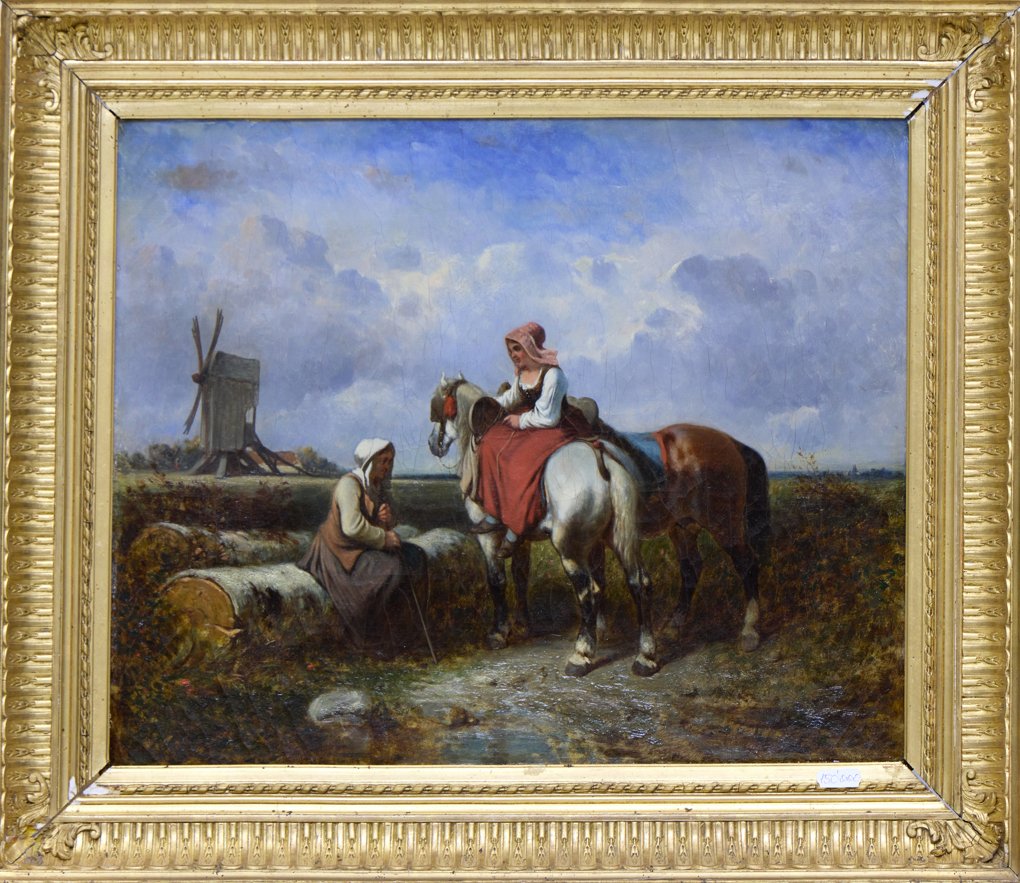
Rural Scene with Horsewoman and Shepherdess
Unknown ArtistThis genre painting presents a measured rural encounter: a young horsewoman pauses on a country track beside a seated peasant woman, while a windmill anchors the distant horizon. The composition is notable for its balance between anecdotal storytelling and landscape structure; the figures are not staged as theatrical protagonists but absorbed into the working countryside itself. The artist prioritizes atmosphere over incident: wet ground, dense cloud cover, and diffused light create the sensation of suspended weather and lived-in time. Warm rose-red garments and the white horse provide controlled chromatic accents against subdued earth and blue-grey sky, sharpening the human presence without disturbing the painting’s tonal harmony. From a market perspective, the work holds appeal for collectors of 19th-century style European genre and pastoral painting, where accessibility of subject, solid draftsmanship, and decorative breadth remain highly desirable. Its collector value lies in the legible narrative, pleasing period sensibility, and the enduring interior appeal of a pastoral scene with equestrian and agrarian motifs.
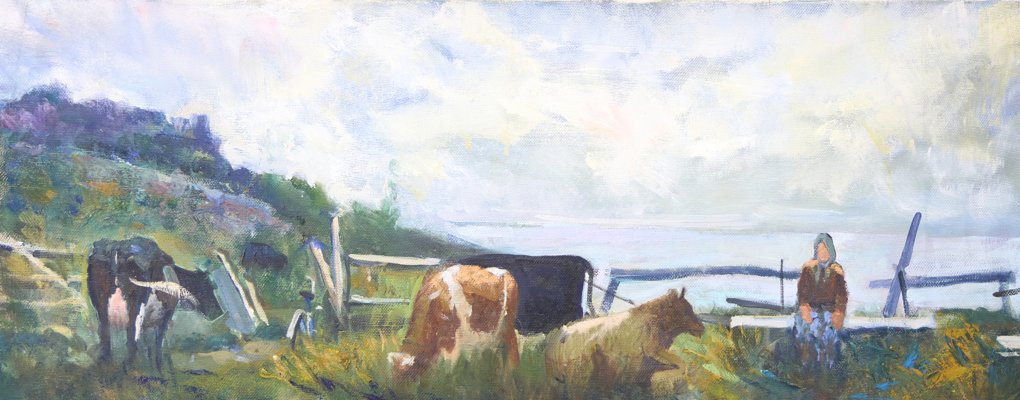
Pastoral by the Water
Mikhail SolovyovThis intimate rural composition balances close observation with painterly freedom. In the foreground appear cows, a pale horse, and a solitary female figure near the shoreline; beyond them, calm water and an expansive sky open the scene into quiet breadth. Mikhail Solovyov avoids anecdotal detail and instead consolidates the motif into a coherent emotional register: labor, nature, and everyday life merge into an image of durable calm. The treatment of light is particularly persuasive. Soft, shifting passages in the sky and warm ochres in the grasses create the sensation of damp air and a muted summer day. Market-wise, the painting benefits from immediate legibility, decorative ease, and the desirable overlap of genre subject and lyrical landscape. Its appeal lies not in spectacle but in confidence and tonal restraint. Works of this kind often reward long-term collectors because they remain visually generous over time, offering atmosphere, authenticity, and a stable point of reference within a broader landscape collection.
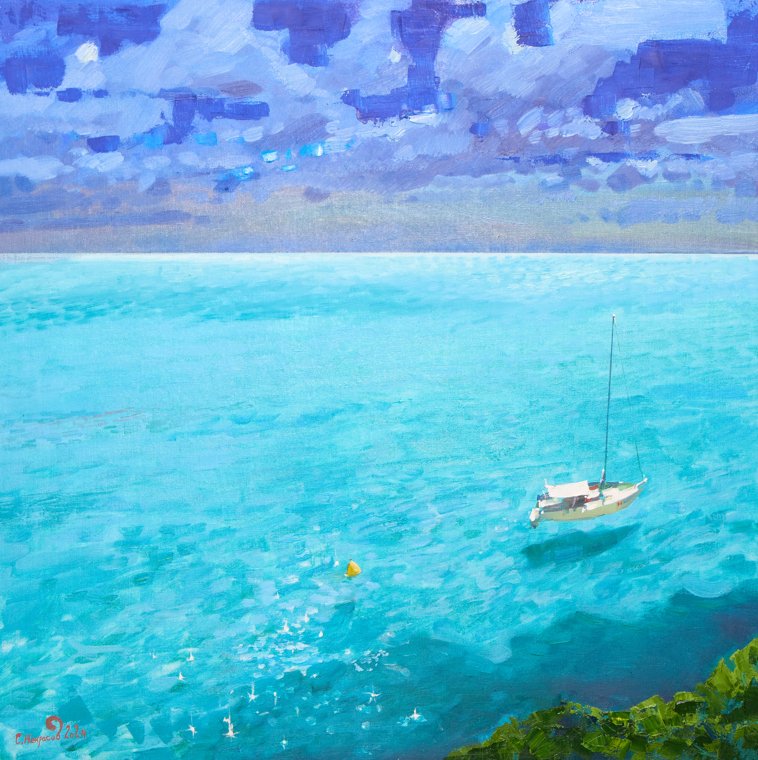
Azure waters
Sergei NekrasovSergey Nekrasov's 2024 painting encapsulates a serene and captivating seascape, where gentle waves of vibrant turquoise water embrace a solitary boat. The predominance of blue and turquoise hues imbues the scene with a sense of tranquility, contrasting with the dynamic brushstrokes that depict a cloudy sky. Nekrasov's style can be classified as contemporary realistic landscape, masterfully capturing the play of light on water and the calm of the sea horizon. This work inspires contemplation of the infinite and the beauty of nature, inviting the viewer to immerse in an atmosphere of quiet reflection. The combination of emotional depth and technical precision makes the painting appealing to both art lovers and collectors.
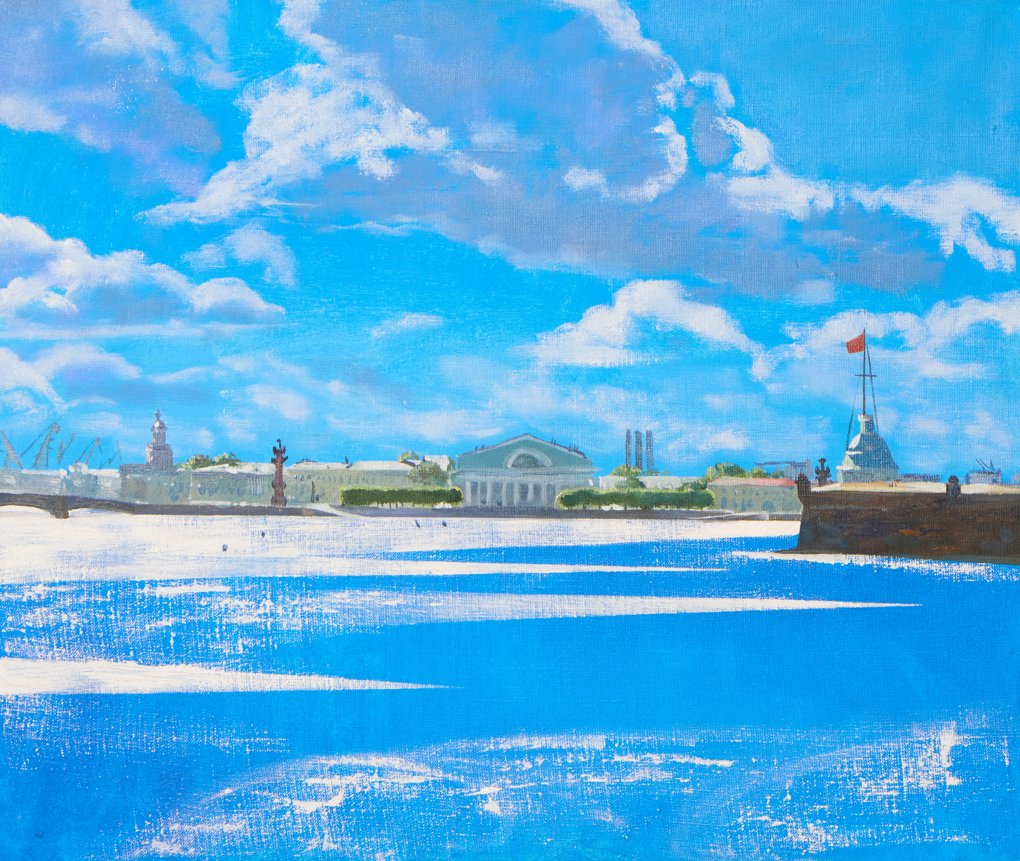
Neva water area
Yulia BobrovaYulia Bobrova's 2018 painting is a picturesque embodiment of the urban landscape of Saint Petersburg. This artwork captivates with its vividness and meticulous detailing of architectural elements. The blue sky with fluffy white clouds creates a spacious sense of freedom and freshness, reflecting in the calm waters of the river. The buildings in the background, including famous historical structures, add grandeur and significance to this composition. The artist skillfully uses light and shadow to convey the atmosphere and mood of the city. The painting not only provides a visual experience but also evokes feelings of nostalgia and love for Saint Petersburg. This piece is perfect for collectors who appreciate cityscapes and cultural landmarks.
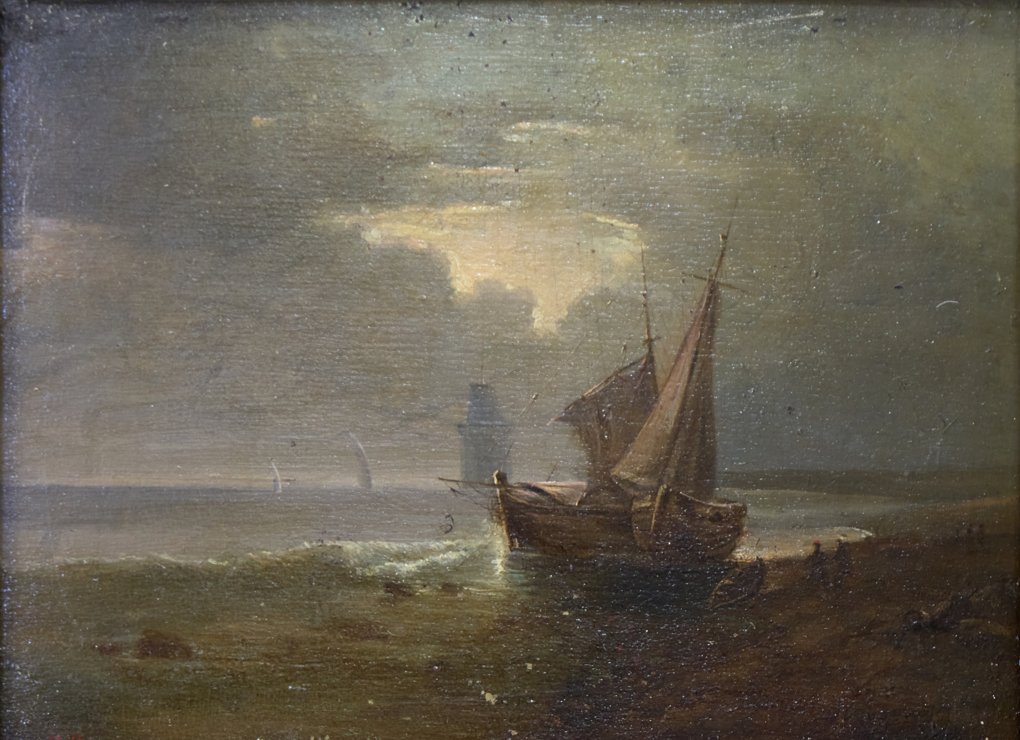
By the sea
Unknown ArtistThis painting depicts a tranquil seascape with a sailboat resting on the shore. The scene is enveloped in an atmosphere of calm and contemplation, emphasized by the soft shades of the sky and sea. The sailboat in the center of the composition creates a sense of movement despite its stillness, showcasing the artist's skill in conveying both dynamism and tranquility simultaneously. Dark clouds on the horizon contrast with the bright patches in the sky, adding contrast and depth that captivate the viewer. This work is an excellent example of a seascape and will interest both art lovers and collectors.
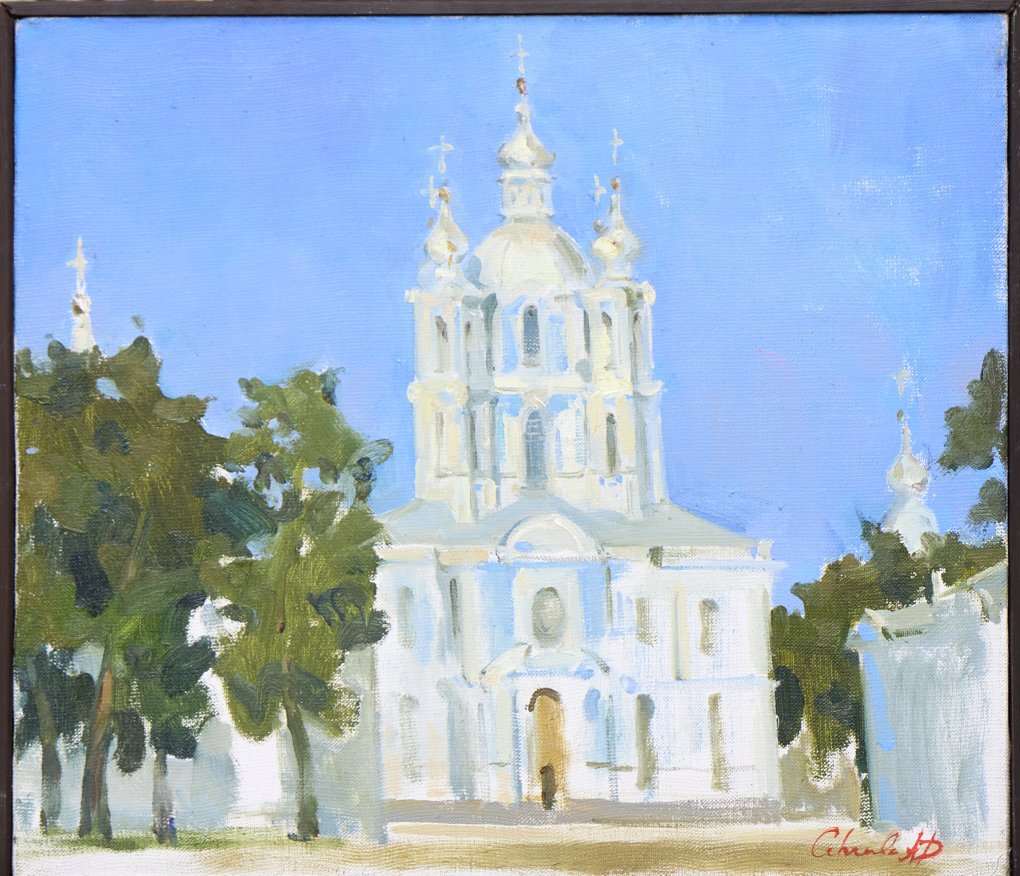
White Church
Anna SergeyevaIn this painting, Anna Sergeeva captures less a specific locale than the archetype of an Orthodox church as a symbol of steadiness and inner refuge. The luminous white structure—organized in a lucid symmetry of domes and crosses—reads as a metaphor of purification and calm, while the surrounding greenery and open blue sky amplify the sense of lifted, breathable space. The composition is deliberately frontal, almost icon-like in its directness, yet it resists literalism: forms soften into painterly touches and light becomes the true subject. Confident, broad brushwork and the visible weave of the canvas keep the surface active; tonal relationships are built through subtle variations of white and cool reflected color. The result is a contemporary architectural landscape with strong display presence: it holds from across a room, remains fresh up close, and delivers the plein-air immediacy collectors seek. As a one-off painted work with a clear motif and serene mood, it sits comfortably within modern interiors and maintains solid market appeal.
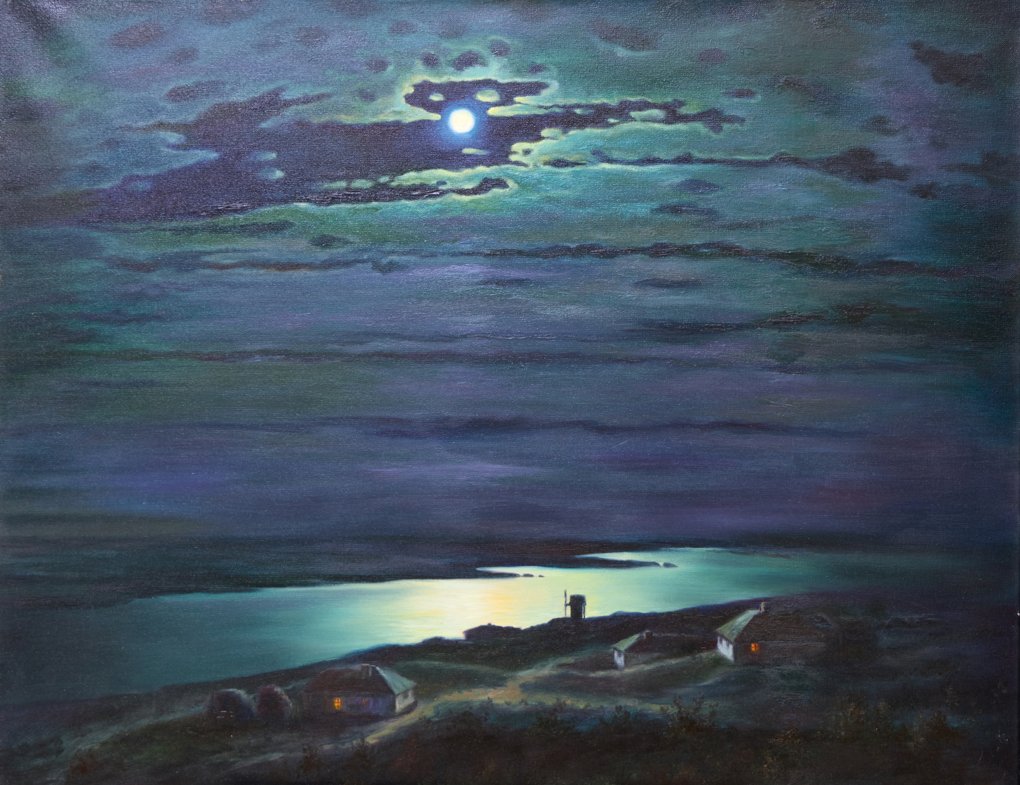
Night on the Dnieper River. Copy of a painting by Arkhip Kuindzhi
Dmitry TishkovThis painting by Dmitriy Tishkov immerses the viewer in the atmosphere of nighttime silence, creating a sense of solitude and peace. The moon brightly illuminates the sky, breaking through thick clouds, creating a mesmerizing play of light and shadow. Below lies an idyllic rural landscape with houses, their windows glowing warmly, filling the scene with a sense of coziness and tranquility. Dark shades of blue and green blend seamlessly, forming an illusion of depth and space. This work showcases the artist's skill in conveying the nocturnal atmosphere and his ability to imbue the piece with emotion through simple yet expressive details. The style of the painting echoes the traditions of realism, with a touch of romanticism, making it appealing to both classical art lovers and those seeking unique and soulful works for their collection.
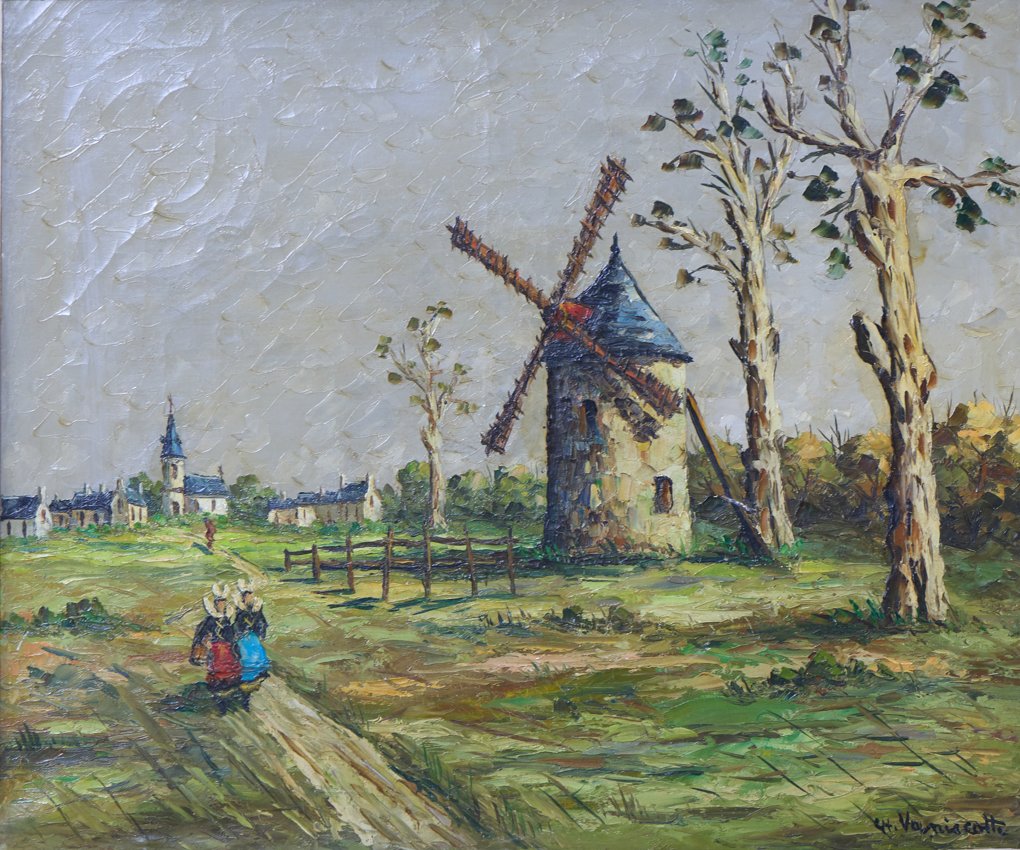
Windmill by the Village
Unknown ArtistThis intimate rural landscape, centered on a windmill with a village church and small figures along the path, functions less as topography than as an emblem of stable, inherited life. The mill serves as the compositional and symbolic anchor: a sign of labor, local economy, and communal memory. Tall trees introduce a strong vertical counterpoint, while the open field allows the eye to move outward into the village beyond. The painter employs a firm, textured brushstroke that preserves the physicality of the paint surface and lends the changing daylight a tactile presence. A restrained palette of gray-blue sky, ochre masonry, greens, and warm bark tones gives the picture a distinctly European provincial character and broad collector appeal. Market-wise, works of this kind remain desirable for their decorative flexibility, legible subject matter, and the enduring demand for atmospheric village scenes with historic agricultural architecture.
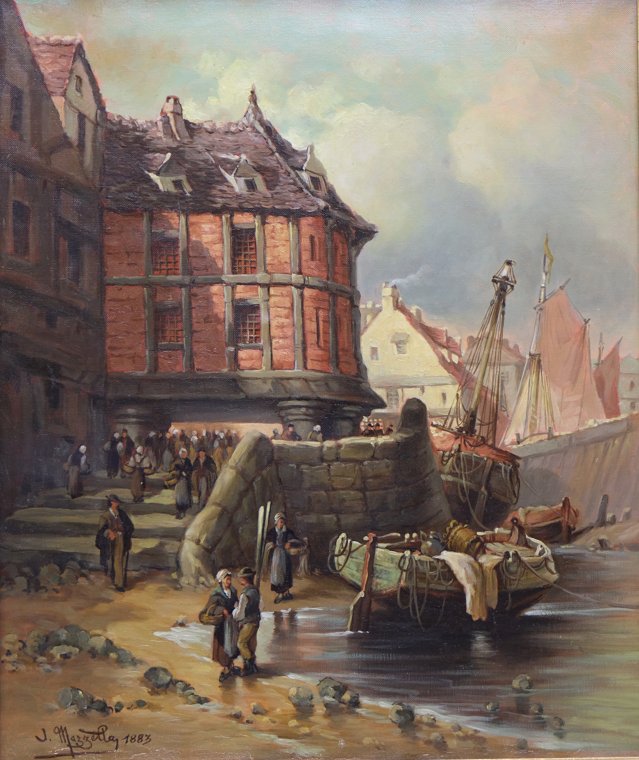
Harbor by the Old Warehouse
Unknown ArtistThis harbor view anchors itself on a potent opposition: the weight of timbered architecture and stone quay set against the shifting water and luminous sky. The artist blends genre painting with an urban veduta, capturing everyday activity at the waterfront—local figures, the handling of goods, and the damp, worked ground at the edge of the tide. Warm brick ochres are balanced by cool blue‑grey atmospheric planes, producing credible depth and a persuasive sense of weather. Diagonals of masts and rigging animate the scene, turning a static topography into a narrative of movement. Beyond a picturesque motif, the composition reads as a meditation on commerce and civic continuity: the old warehouse as a symbol of accumulated time and capital, the ship as an emblem of circulation and exchange. For collectors, the work offers a cohesive late‑19th‑century academic hand, confident tonal construction, and a rare, legible subject of European port life—highly displayable and historically resonant without relying on anecdote.
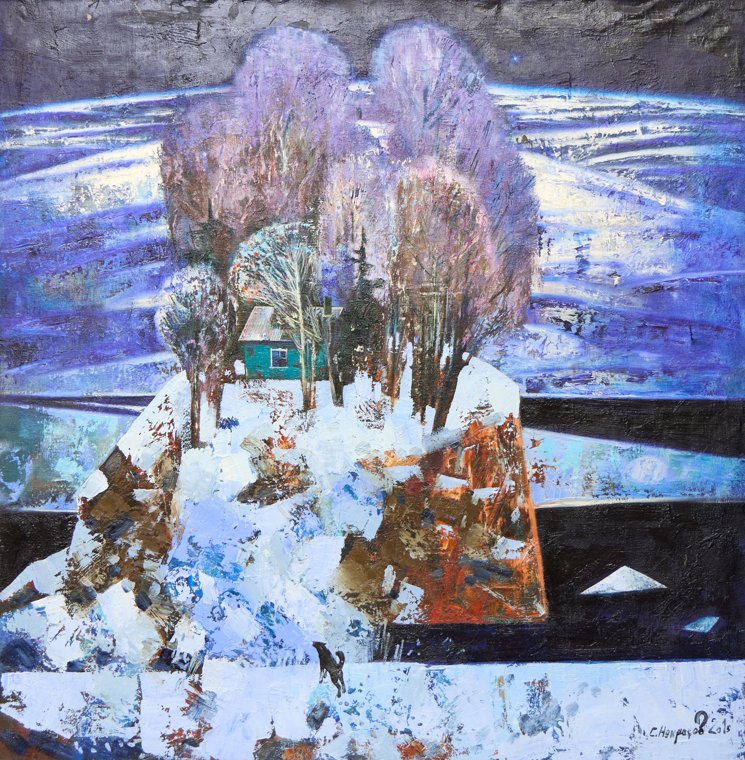
First star
Sergei NekrasovSergey Nekrasov's 2015 work transports the viewer to a mysterious winter landscape where silence and tranquility blend with vivid hues. The painting depicts snow-covered ground embracing a cozy house and tall trees, evoking a warm and somewhat magical impression. The purples and blues in the sky add depth and mystery, while the delicate brushwork and textures impart a sense of movement. The artist’s technique in using light and dark contrasts demonstrates his skill in conveying the mood and atmosphere of a winter night. This artwork strikes a perfect balance between realism and abstraction, inviting the viewer to immerse in a winter dream full of emotions and fantasies.
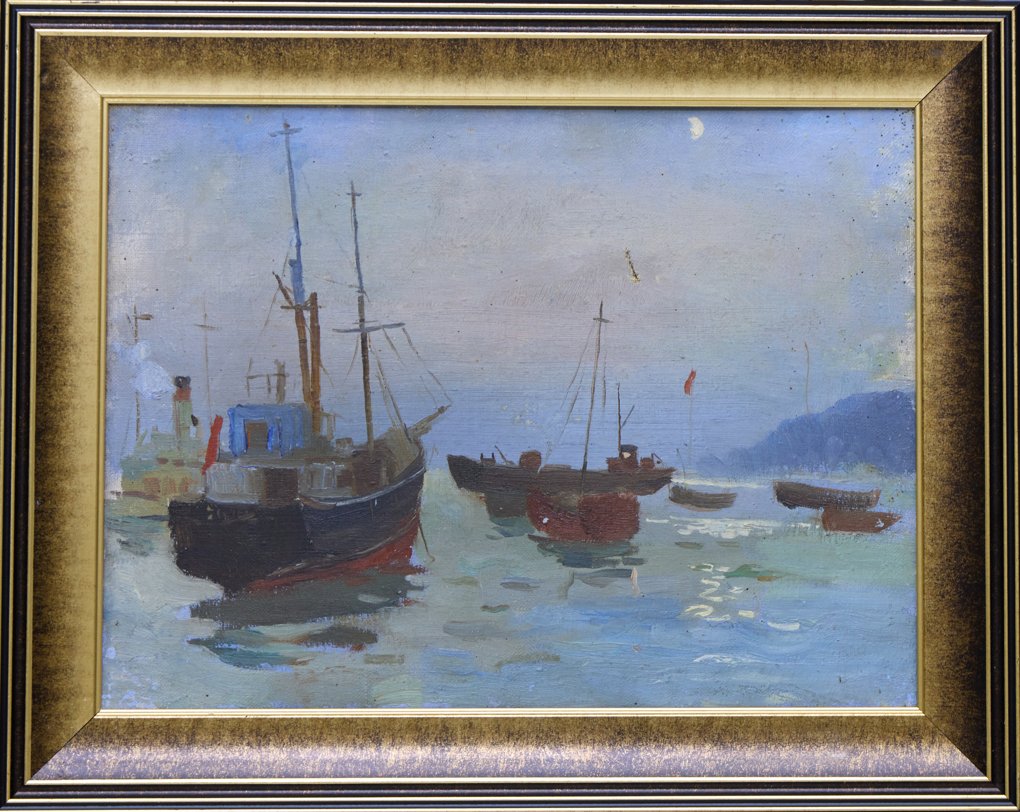
Boats in a Quiet Harbor
Unknown ArtistThis intimate marine scene achieves a notable balance of restraint and atmosphere. A cluster of moored vessels and small boats occupies a calm harbor, while cool blue-grey light dissolves the distant shoreline and softens the vertical cadence of the masts. The composition succeeds through understatement: rather than dramatizing the port, the painter concentrates on transient light, reflective water, and the hush of mist-laden air. Dark hulls anchor the image structurally, while restrained red-brown accents introduce warmth and painterly tension across the surface. Collectively, the work reads less as a topographical record than as a meditation on stillness, pause, and maritime time suspended between departure and return. Its value lies in this tonal coherence and in a lyrical handling of paint that favors atmosphere over hard detail. For collectors, it offers a market-friendly combination of decorative calm, traditional subject appeal, and a sensitive Impressionist-inflected approach to coastal painting.
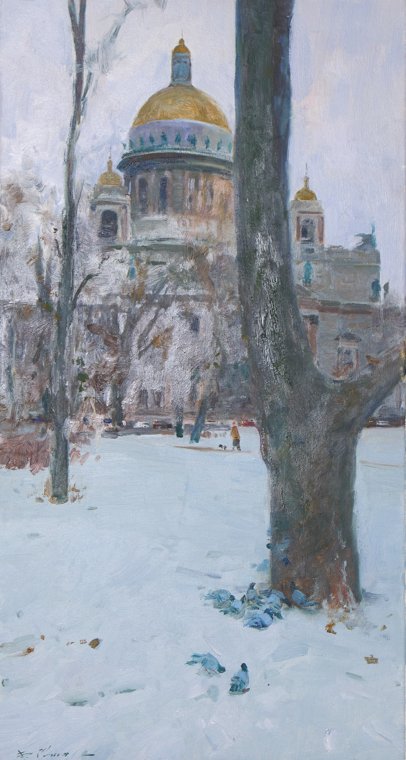
Isaac's Cathedral
Munkh BinderyaThis painting by Munkh Binderiya presents a captivating winter landscape featuring a majestic cathedral in the background. Snow-covered trees and finely detailed elements create an atmosphere of calm and tranquility. The use of a soft color palette dominated by whites and gentle blues evokes a cold yet bright winter morning. The central tree in the foreground adds depth and interest to the composition. Subtle brushwork creates a texture of snow, giving the scene realism and liveliness. The painting combines elements of realism and romanticism, inviting the viewer to enjoy the quiet and natural beauty of a winter's day.
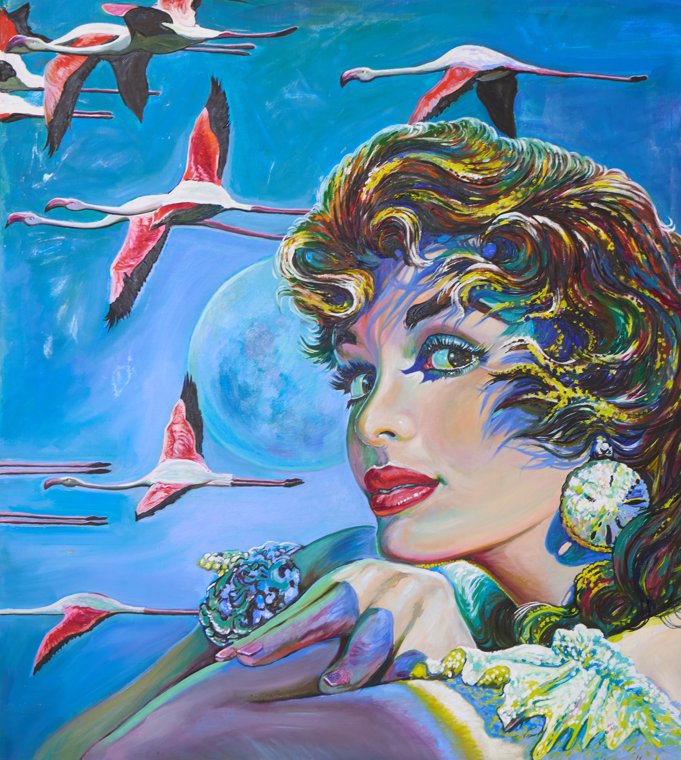
Flight of a Dream
Irina AlertIn this vivid composition, Irina Alert fuses a glossy, seductive female portrait with a flight of flamingos cutting through a crystalline, azure sky. The sitter functions less as a specific person than as a emblem of self-determination: her gaze follows the birds, where motion becomes a metaphor for choice, reinvention, and a private horizon. Cool atmospheric blues are punctuated by decisive pink-red accents, creating a controlled drama of anticipation. Meticulous hair modeling and jewel-like ornamentation elevate the figure into a contemporary icon—part glamour, part reverie—while the artist’s confident contour and saturated color fields keep the image legible at distance and compelling up close. The handling is deliberately decorative with near-graphic discipline, prioritizing impact and clarity over painterly ambiguity. Market-wise, the work offers strong wall presence: a bold figurative centerpiece paired with a universally readable symbol of migration and freedom, well suited to collectors of contemporary figurative painting, statement color, and narrative-leaning symbolism.
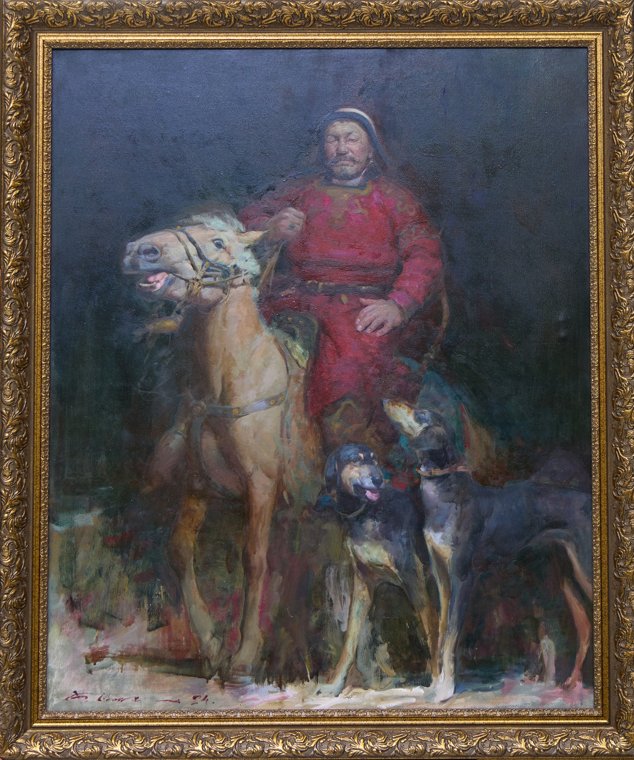
Subedei
Munkh BinderyaThis painting by Munkh Binderiya depicts a powerful and majestic scene of a man on horseback with two dogs, filled with a sense of strength and confidence. The masterful use of dark and rich colors creates an atmosphere of mystery and intrigue. The central figure, clad in red, commands attention with his calm assurance. The horse and dogs, portrayed with grace and energy, add dynamism to the composition. The imagery conveys a sense of unity between the man and his animals, creating a harmonious bond between nature and humanity. Executed in a realistic style, this work showcases the artist's exceptional skill in rendering textures and emotions through color and form, making it appealing to collectors and art enthusiasts.
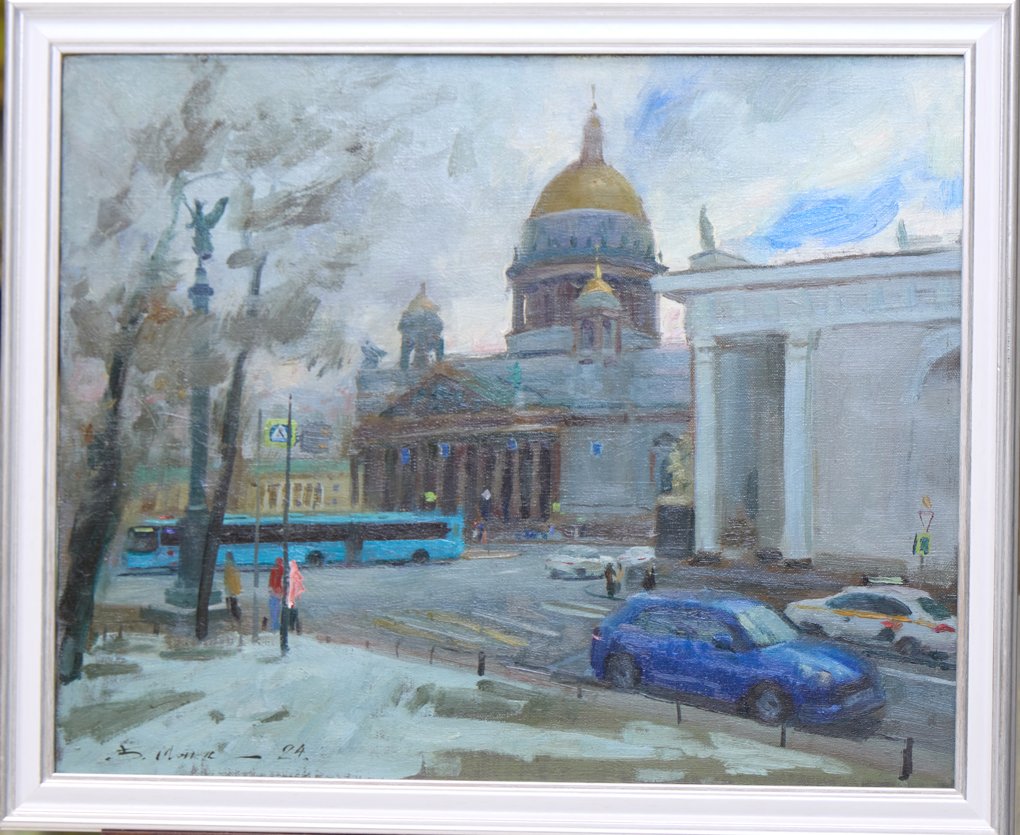
Winter View of St. Isaac’s Cathedral
Munkh BinderyaThe cityscape captures St Petersburg in the shifting winter light of a thaw. Rising above the moist air and the blurred silhouettes of trees is the majestic dome of the cathedral, while nearby the strict classical form of a monumental portico unfolds. The artist constructs the composition as a subtle dialogue between the eternal and the transient: historic architecture becomes the stable axis of the scene, while buses and automobiles introduce the restless rhythm of contemporary urban life. The painterly manner is built on a confident, free brushstroke and a restrained tonal palette. Semi-transparent layers of paint evoke the damp atmosphere, winter haze and soft reflections on the wet asphalt. Cool blue-grey tones are balanced by the warm golden glow of the dome — a symbol of permanence, light and the spiritual centre of the city. The work appeals to collectors for its recognisable vision of St Petersburg without postcard-like literalness. It presents a vivid and atmospheric view of the city, where historical grandeur meets the pulse of modern life, making the painting well suited for both private collections and corporate holdings of urban landscape art.
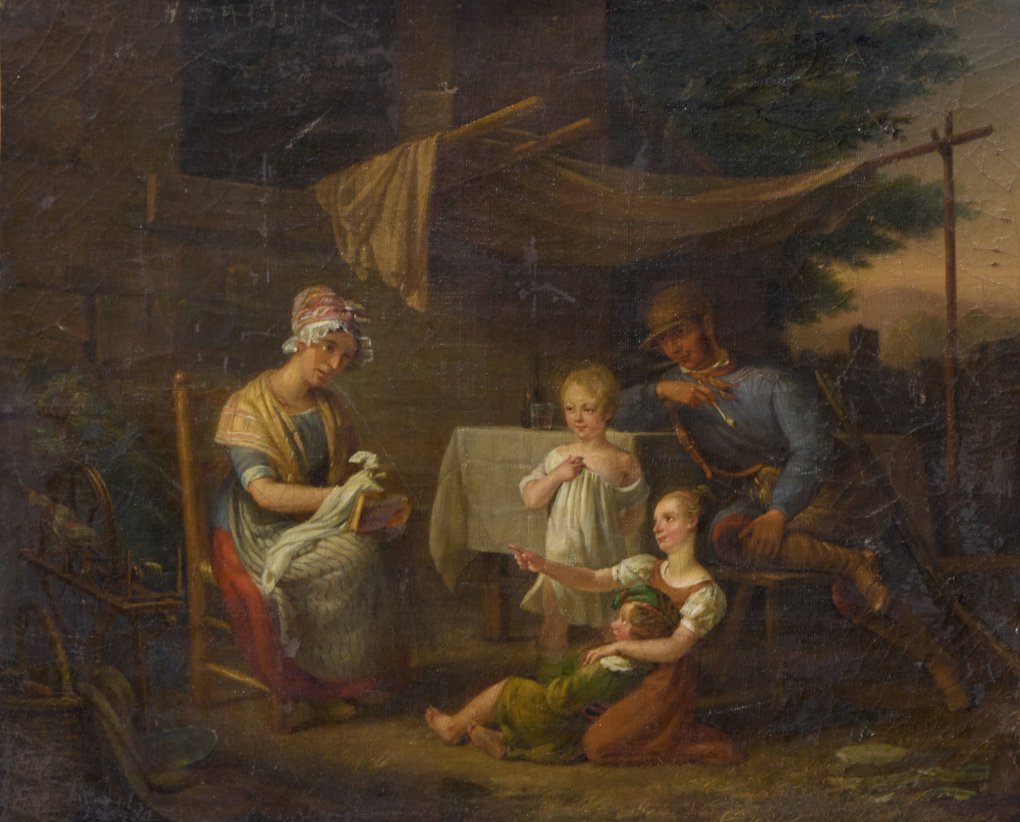
Family
Unknown ArtistThis painting by an unknown artist depicts a charming scene of family life in a realistic style. At the center are five figures: a woman with yarn, a young man in a military uniform, and three children. The painting conveys a sense of domestic coziness that unites all the participants. The color palette is carefully balanced, with soft browns, greens, and blues creating a warm and calming atmosphere. Light and shadow play a crucial role in the composition, adding depth and realism to the scene. Realistic details, such as the texture of the fabric and facial expressions, bring the work to life, highlighting the artist's skill. Despite the unknown author, this piece captivates with its sincerity and subtle execution, inviting viewers to reflect on the values of family life and everyday joys.
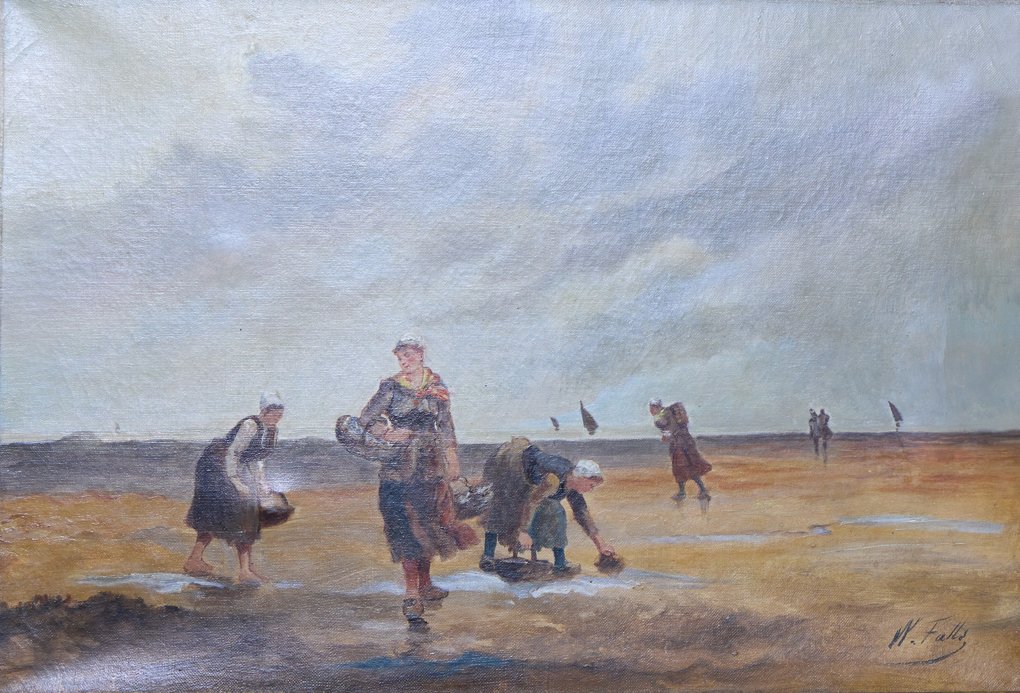
Shell Collectors
Unknown ArtistThis painting by an unknown artist depicts a group of women gathering shells on the shore. Rendered in a realistic style, it brings an authentic and close-to-nature feel to the scene. The sky is filled with large clouds, creating a dramatic mood. The women are dressed in traditional attire, adding a historical context to the image. The color palette is calm and muted, consisting of earthy and blue tones, which creates a sense of tranquility and simplicity. Technical skill is evident in the fine detail work, such as the reflection of light on the water, adding depth and texture to the canvas. This work draws attention not only for its aesthetic beauty but also for its ability to capture a moment of everyday life.
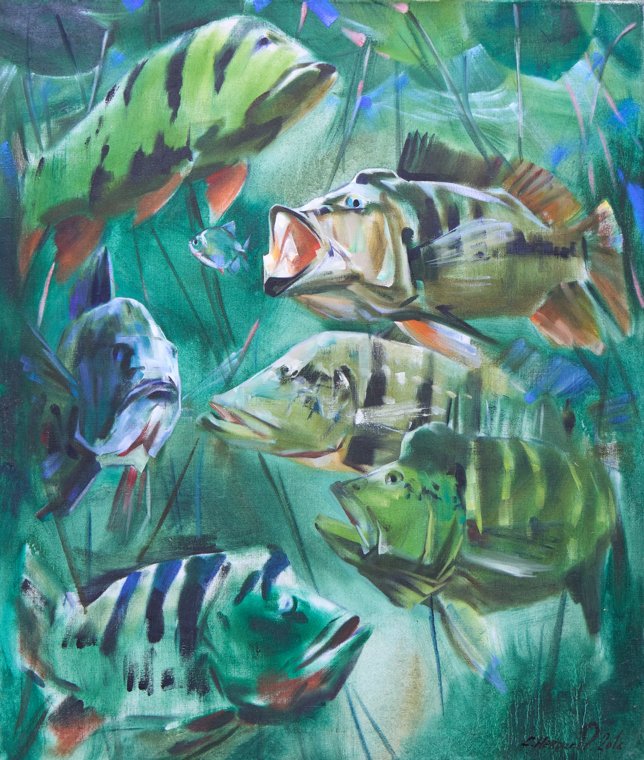
Attack 2
Sergei NekrasovSergey Nekrasov's 2016 painting invites the viewer into a mesmerizing underwater world where life flows in its unique and somewhat mysterious rhythm. The depiction of large fish swimming through a dense aquatic environment captivates with its rich green and blue tones, giving the scene depth and vibrancy. The artist skillfully uses a combination of sharp and blurred lines to convey movement and dynamism, creating the illusion of observing the world through water. The fish, with their shimmering scales and expressive eyes, appear almost alive, adding a sense of mystery and enthralling the viewer with its vivid expressiveness.
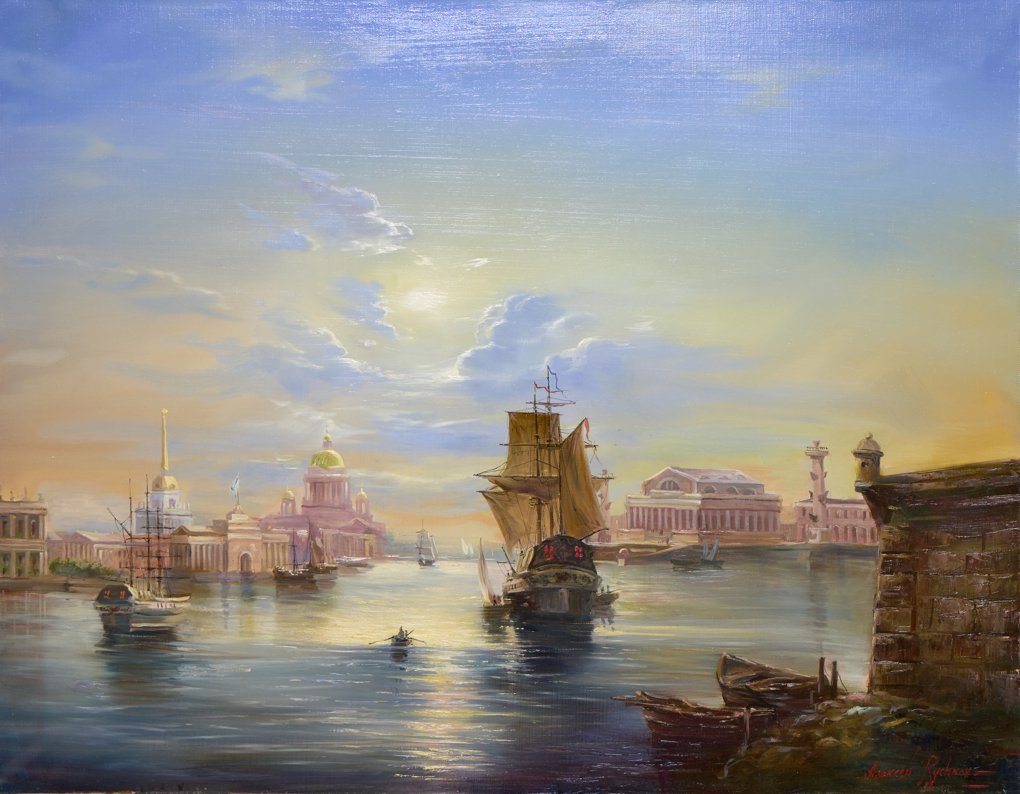
St. Petersburg Harbor
Alexei RychkovThis painting presents an assured vision of imperial St. Petersburg as a city shaped by water, light, and architectural memory. Sailboats and anchored vessels animate the central harbor, while the luminous sky and reflective water create an atmosphere of poised grandeur. Along the horizon, a sequence of domes, columns, and civic silhouettes lends the scene historical authority without reducing it to strict topography. Alexey Rychkov privileges mood over documentary precision: the restrained gold-and-blue palette, softened contours, and calibrated transitions of light generate a refined sense of stillness and cultural prestige. The work belongs to the tradition of the romanticized urban veduta, where the marine setting functions symbolically, suggesting openness, commerce, and imperial ambition. Particularly successful are the aerial perspective, the nuanced treatment of cloud mass, and the mirror-like water surface that binds city and sky into one coherent field. From a market perspective, the painting has strong collector appeal: a recognizable Petersburg subject, classical elegance, and decorative versatility suited to both residential and formal interiors.