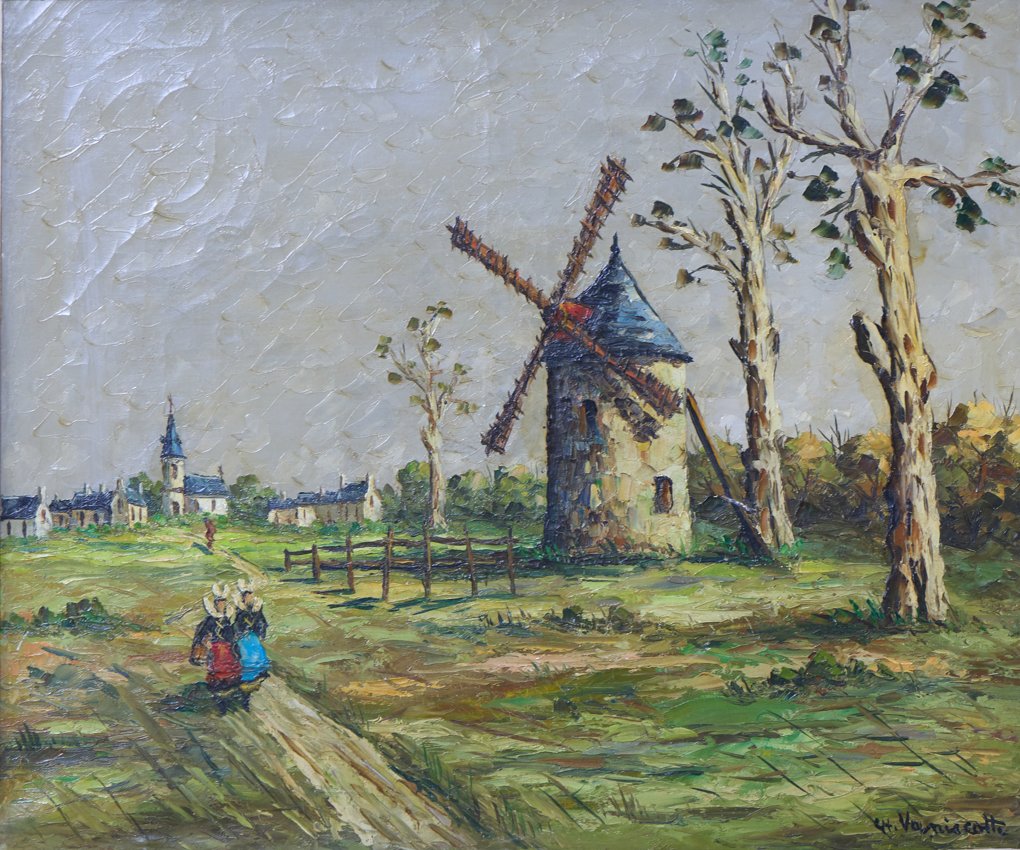
Windmill by the Village
This intimate rural landscape, centered on a windmill with a village church and small figures along the path, functions less as topography than as an emblem of stable, inherited life. The mill serves as the compositional and symbolic anchor: a sign of labor, local economy, and communal memory. Tall trees introduce a strong vertical counterpoint, while the open field allows the eye to move outward into the village beyond. The painter employs a firm, textured brushstroke that preserves the physicality of the paint surface and lends the changing daylight a tactile presence. A restrained palette of gray-blue sky, ochre masonry, greens, and warm bark tones gives the picture a distinctly European provincial character and broad collector appeal. Market-wise, works of this kind remain desirable for their decorative flexibility, legible subject matter, and the enduring demand for atmospheric village scenes with historic agricultural architecture.