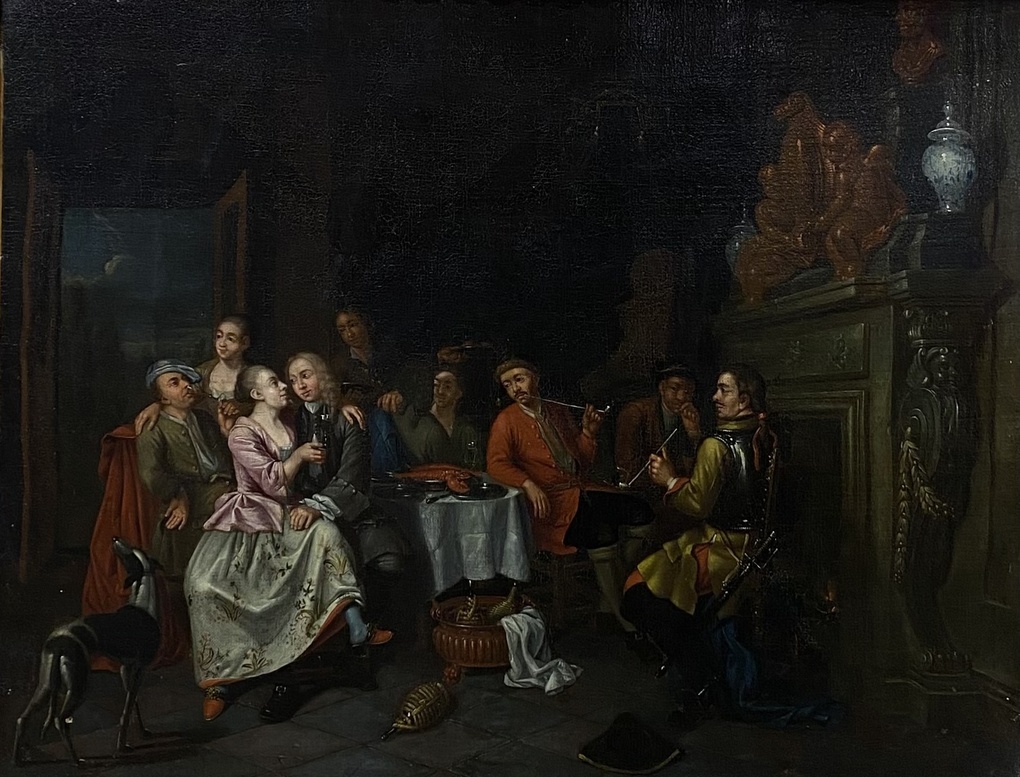
A Galant dinner (Le repas galant)
Balthasar van den BosscheA convivial genre scene unfolds in a dim interior beside a substantial fireplace. Seven men and two women gather around a laid round table, conversing, raising glasses, and smoking long pipes. The central couple is set apart by the cool sheen of a silvery-gray skirt, a pink bodice, and light falling across their faces. At right, a figure in a yellow coat sits before the carved chimney piece, topped with an ornamental group and a pale lidded vessel. Tableware and a red lobster appear on the table, while a basket and white cloth rest below. Deep shadows, localized ochres, and directed illumination create a compact theatrical composition rooted in Baroque genre painting traditions. The contrast between animated faces and the nearly absorbed background intensifies the intimacy of the gathering. The painting depicts a society dinner — a scene from the life of 18th‑century high society, filled with theatricality, hypocrisy, and underlying drama. The composition is rich with characters and details, each carrying a symbolic meaning. The atmosphere is both festive and tense: behind the outward splendour and courtesy lie intrigues, vanity, and moral decay. Expert opinion (expert — V. M. Uspensky); certificate (France) from Guy Herdebo and Alain Latreille, dated May 4, 2001.
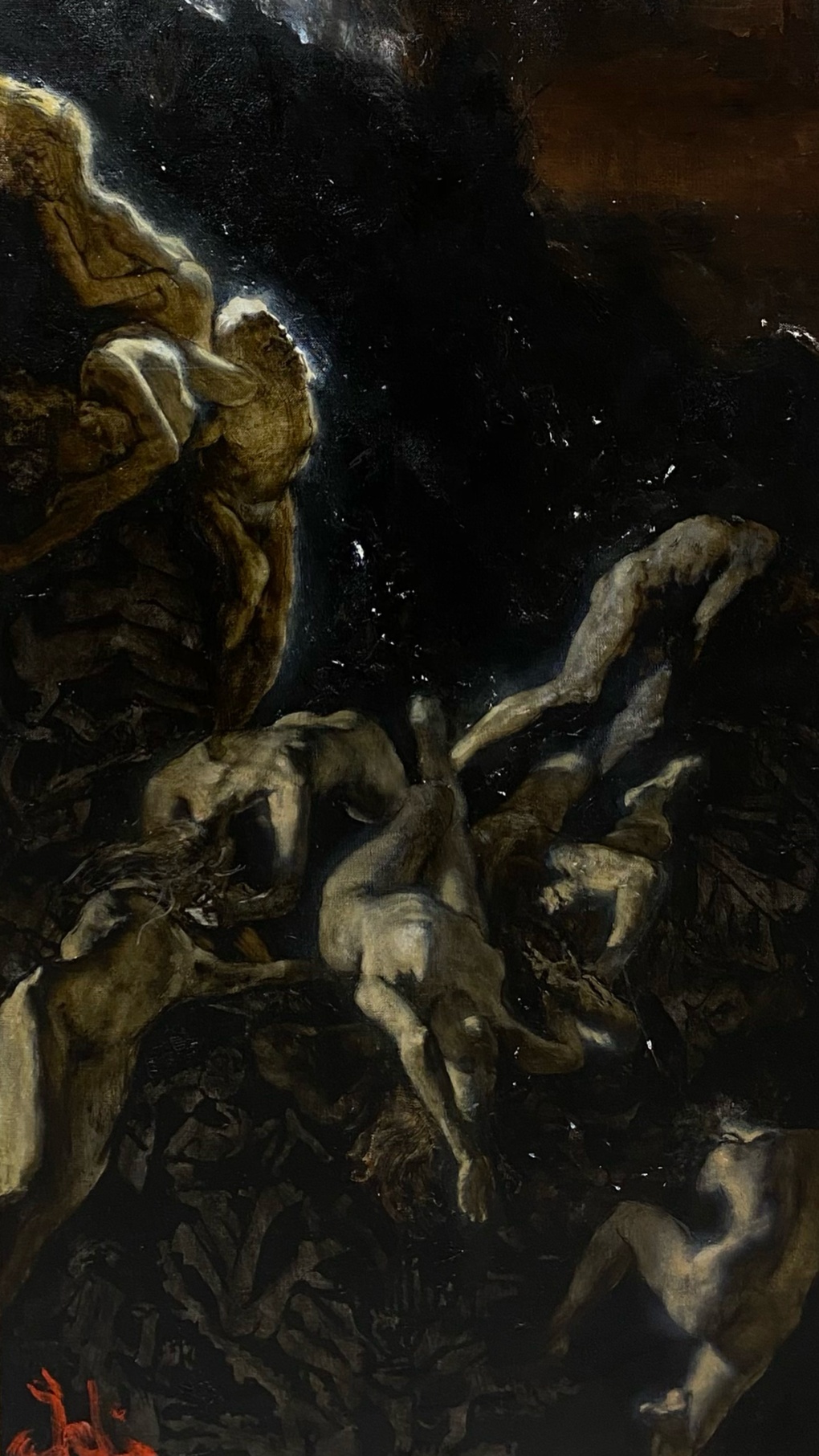
The Fall
Mikhail SolovyovA monumental, night-bound tableau unfolds in near-bottomless darkness: nude, vulnerable bodies appear dislodged from any ground and drawn into a downward vortex. The work is less concerned with academic anatomy than with the dramaturgy of light—cool, intermittent highlights skim shoulders, backs, and limbs, turning the figures into symbols of a shared human condition: loss of control, the collapse of order, and inevitability. Broad handling and selectively dry brushwork sit over dense, deepened layers, creating a surface that hovers between the corporeal and the spectral. The painting resonates with the tragic tradition of European Baroque and the psychological charge of Expressionism, yet its restraint keeps it distinctly contemporary. For collectors, its appeal lies in the rare combination of panoramic narrative and intimate painterly force: it reads as a decisive focal piece, capable of anchoring a room and elevating a collection with high emotional voltage and strong curatorial presence.
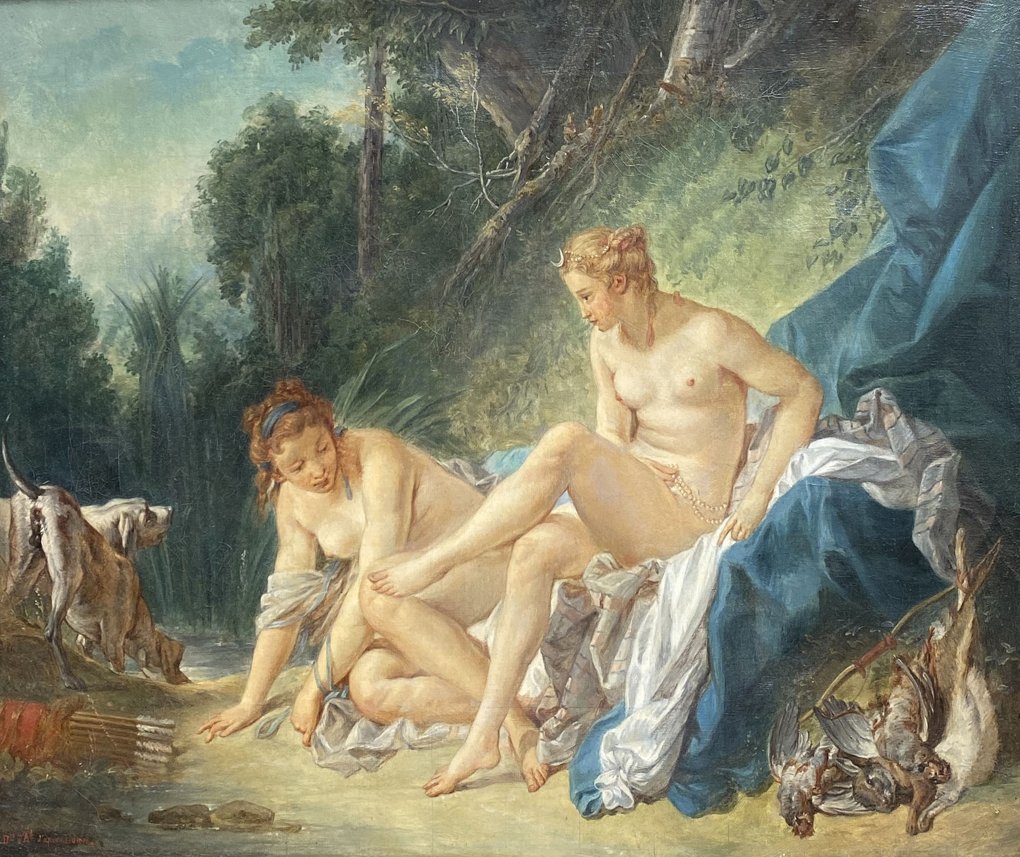
Diana and Callisto
Unknown ArtistThis painting by an unknown artist from the year 1900 is an elegant and classic example of Neoclassicism, focusing on mythological and pastoral themes. At the center are two nude women, immersed in a forest landscape, surrounded by hunting dogs and quivers, evoking scenes from ancient Greek mythology. Their poses and anatomical details are rendered with precision and adherence to the classical art standards. Behind them, lush trees create a sense of seclusion and tranquility. The color palette features soft greens and beiges, accented by vibrant blue drapery. This composition evokes a sense of serenity and timelessness, characteristic of an era when artists sought harmony and beauty. The painting may interest collectors due to its classic style and quality craftsmanship.
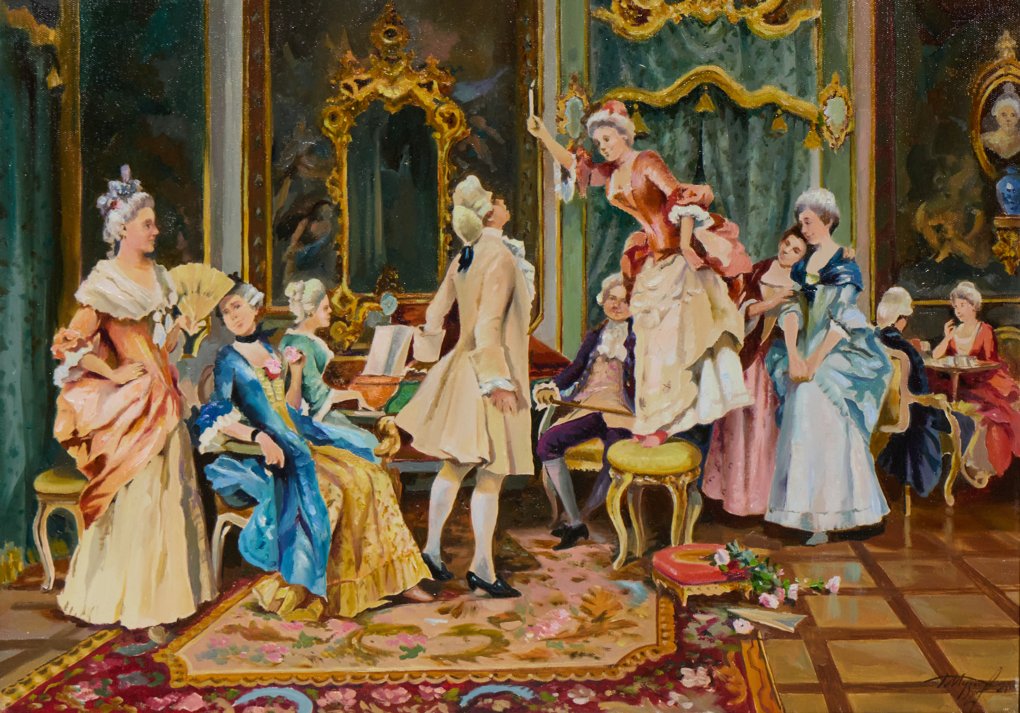
At the ball
Grigory MuzychenkoGrigory Muzychenko’s painting depicts a delightful scene from an aristocratic salon, filled with the grace and sophistication of the Rococo era. The image conveys a festive atmosphere where elegant ladies and gentlemen are clad in luxurious costumes adorned with lace and silk. The central figure standing on a chair enlivens the composition, creating dynamic balance, while mirrors and baroque decorative elements on the walls enhance the sense of opulence and elegance. Muzychenko masterfully handles color, using soft pastel shades that add depth and texture to the canvas. This painting is intriguing for art lovers due to its intricate technique and attention to detail.
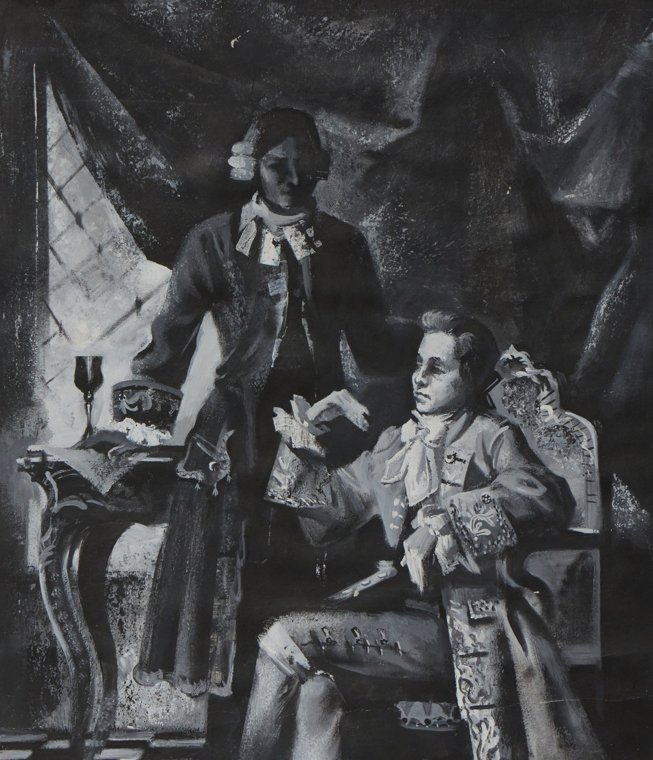
Mozart and Salieri
Unknown ArtistThis painting by an unknown artist depicts a scene of aristocratic life in an intimate setting. The characters' attire, crafted with meticulous detail, conveys the elegance and sophistication of the era. The figures are placed in a dark-grey interior that creates an atmosphere of intrigue and mystery. The central character, seated on an ornate carved chair, engages in conversation with a standing figure in a suit. Light and shadow expertly highlight the textures of the fabric and furniture, adding depth to the image. The artwork is rendered in a black-and-white palette, enhancing the dramatic effect and historical significance of the scene. This piece is a valuable acquisition for collectors interested in the Baroque period or classical portraiture.
All 5 paintings loaded