The Conflict
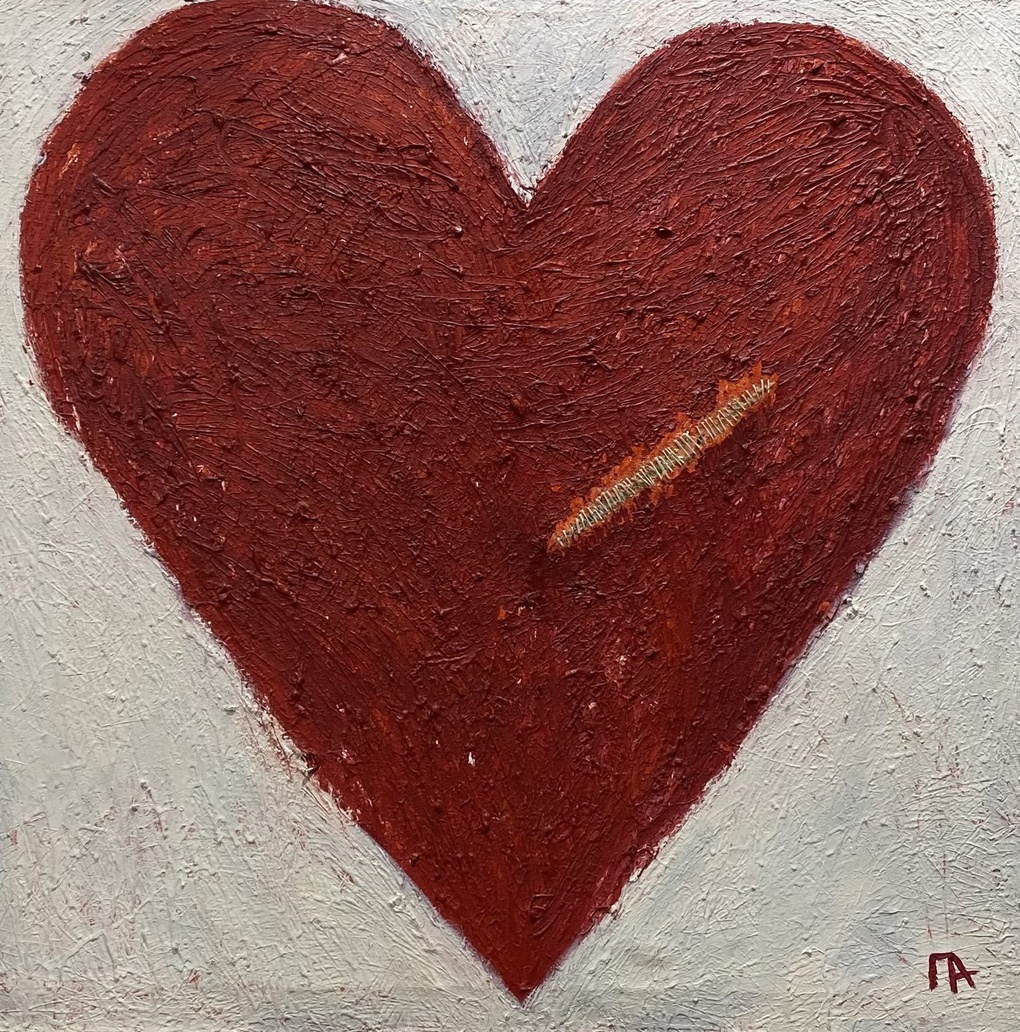
Alina PaylozyanThe painting The Conflict by Alina Paloyzyan is concise yet emotionally charged, with its meaning emerging from the contrast between form and detail. The central focus is a large heart in a deep, rich red hue — its colour balances between passion and unease. The texture is expressive: thick, raised brushstrokes create a sense of tension, as if the surface resists a smooth, effortless reading. The heart’s outline is clear but not perfect; its silhouette carries a raw, slightly uneven energy. The background is a calm, light grey with a grainy texture; it doesn’t distract but rather accentuates the drama of the main image. On the right side of the heart is a thin diagonal line, blending ochre, yellow‑green, and barely perceptible white strokes. This detail looks like a crack, a seam, or a healing scar — and it’s precisely this element that reveals the title The Conflict: it conveys both a fracture and an attempt at reconciliation. In the bottom right corner is the artist’s discreet monogram: a subtle accent that doesn’t disrupt the overall composition. Overall, the work is built on a paradox: the universal symbol of love here becomes a field of inner tension — and the viewer decides for themselves what is stronger in this heart: the wound or the desire to heal it.
Love
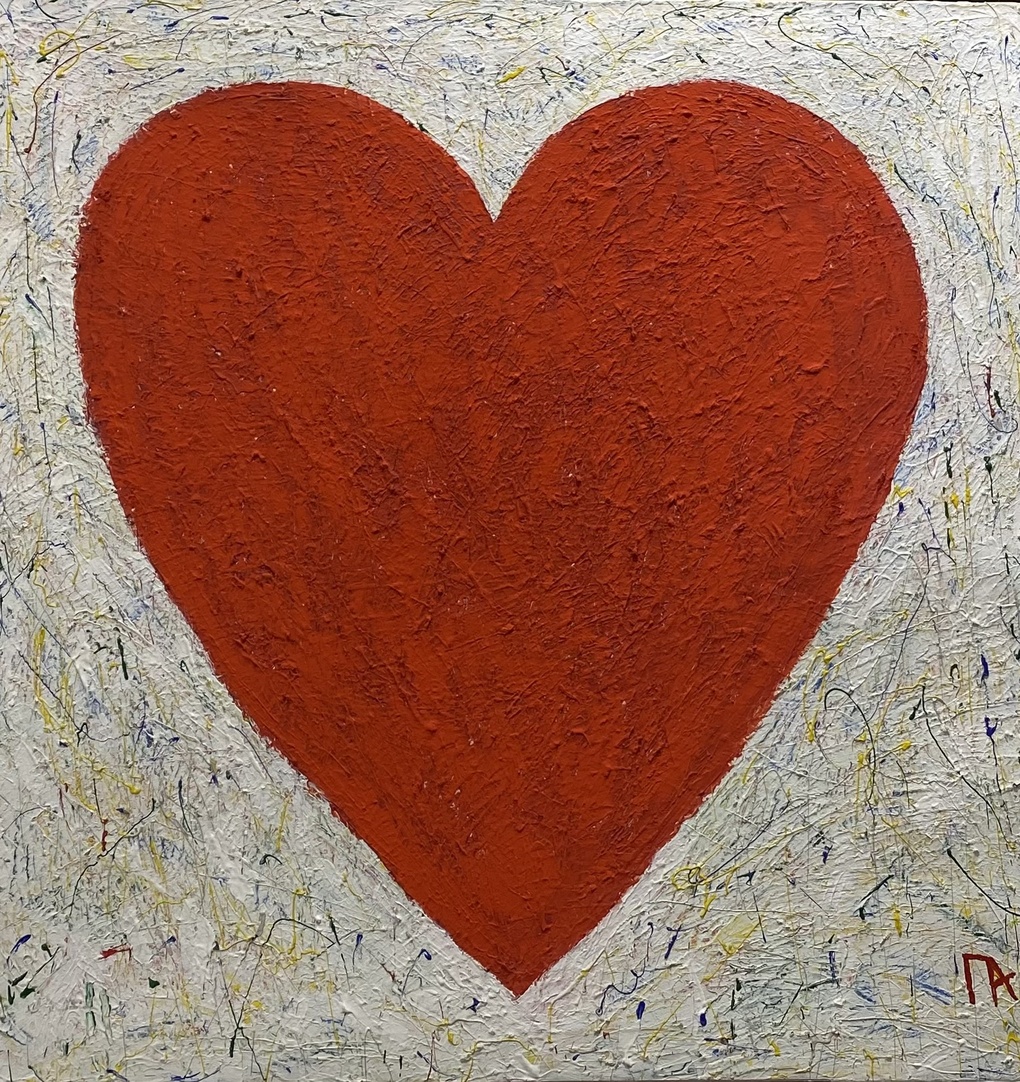
Alina PaylozyanAlina Paloyzyan’s painting “Love” immediately draws the eye thanks to its striking contrast: in the center of the canvas is a large red heart that occupies almost the entire space and becomes the undeniable focal point. Its shape is simple and recognizable, yet it doesn’t look schematic—the soft, slightly uneven curves give the silhouette a sense of liveliness, as if it were drawn not with a ruler but from an inner feeling. The red color alludes to traditional notions of passion and the power of emotion, but the shade is not garish; it’s rich and deep, which lends the image weight and even a certain monumentality. Texture plays a special role in the work: the heart is painted with thick, impasto strokes—the relief of the paint makes it almost tangible, creating an effect of volume and material density. In contrast to this “solid,” weighty center, the background appears light and dynamic: across the light, almost white surface are scattered thin, chaotic strokes and small colored specks—yellow, blue, and black lines seem to capture fleeting impulses, the inner movement of space. This contrast in textures reinforces the main idea: love is a stable center around which life pulsates. Stylistically, the work balances between figurative art and abstraction: an extremely simple symbol is presented without everyday details, yet with powerful expression. In the choice of color, the freedom of the brushstroke, and the deliberate juxtaposition of textures, one can see echoes of Expressionism and Fauvism—movements where the emotional message matters more than literal precision. At the same time, the painting isn’t overloaded with references; it speaks directly and concisely. The title “Love” leaves no room for ambiguity and simultaneously makes the image universal—every viewer can imbue this simple symbol with their own personal meaning.
Dawn
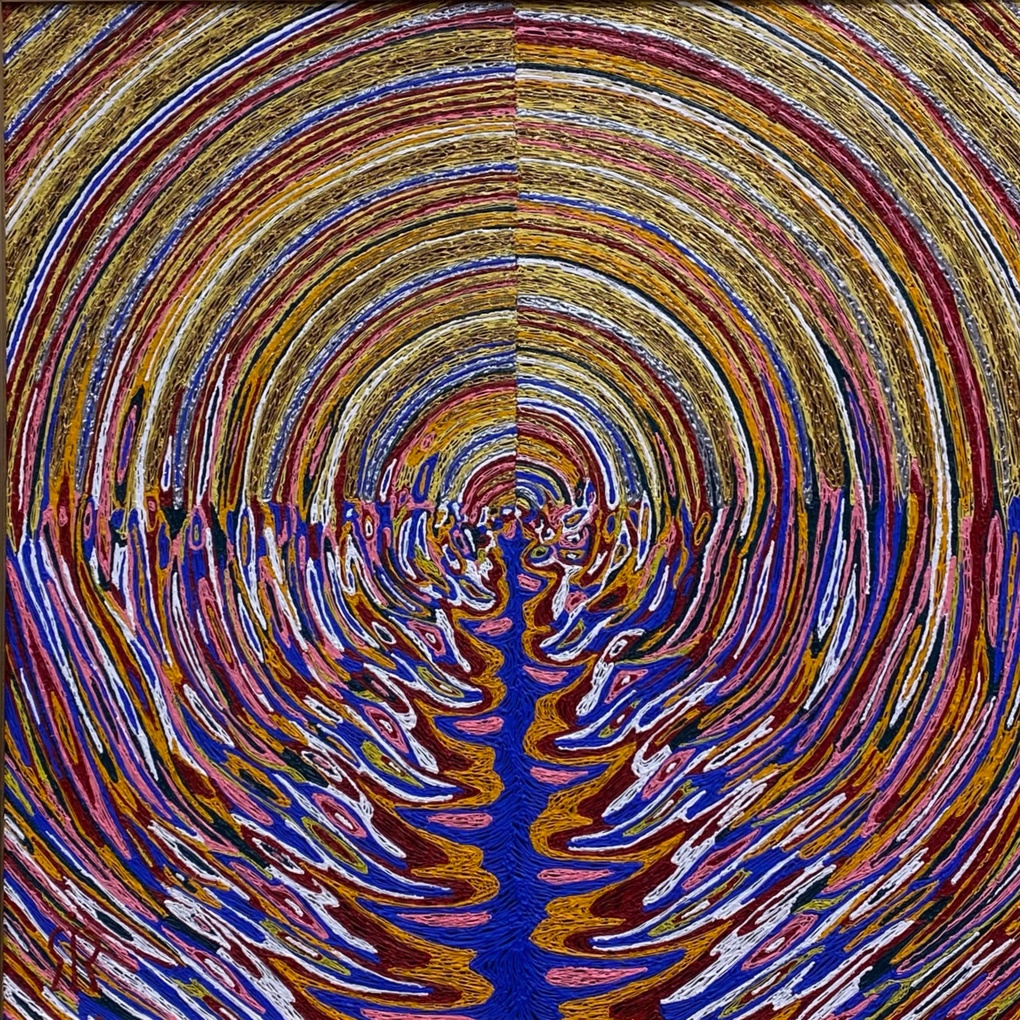
Igor RyazantsevIgor Ryazantsev’s painting Dawn is executed in the filumism technique: acrylic paint is extruded with a syringe onto a black‑primed canvas in the form of thin threads, forming a relief image with the effect of an acrylic tapestry. Through the interweaving of threads, the artist embodies his key idea of the interconnectedness of all things — the threads symbolise invisible links between people, events, past and future. Vivid shades of yellow, red and лазуритовый (lazurite/azure) convey the atmosphere of morning light breaking through the darkness, while the black background enhances the expressiveness of the colour threads. The relief surface gives the work a tactile appeal and creates a sense of movement: layers of paint form a dynamic composition, visualising the transition from darkness to light, from chaos to order.
The Nutcracker: Sentinel Dream
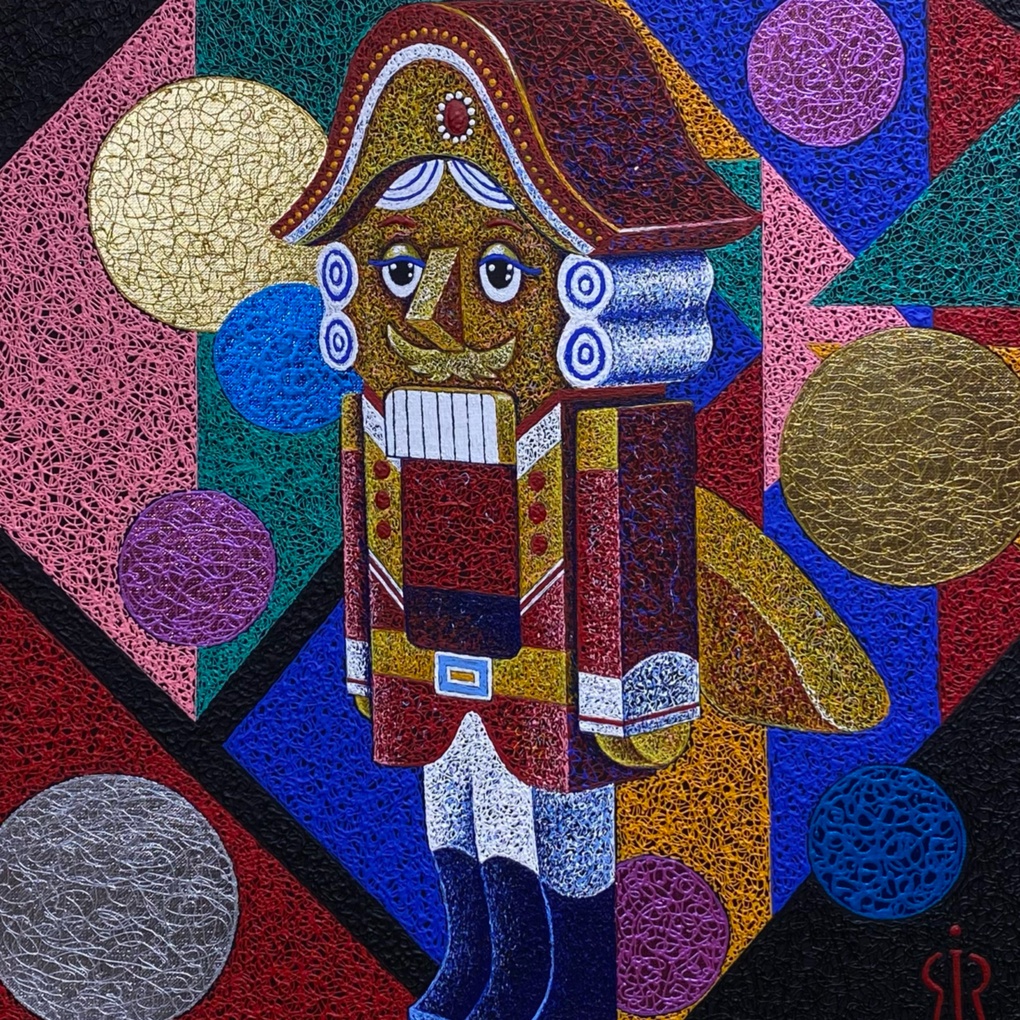
Igor RyazantsevIgor Ryazantsev’s painting The Nutcracker is a pictorial interpretation of E. T. A. Hoffmann’s famous tale and P. I. Tchaikovsky’s ballet, likely executed in oil or acrylic on canvas in a vertical format. The central focus of the composition is the transformation of the Nutcracker from a wooden toy into a noble prince, with young Marie standing beside him, frozen in admiration. The composition follows a diagonal structure: the viewer’s gaze moves from Marie in the lower left corner to the Nutcracker in the upper right, creating an upward movement that symbolises spiritual elevation. The colour scheme is based on a contrast between warm golden‑red hues (Christmas tree lights, Marie’s dress) and cool blue‑violet tones (the Nutcracker’s cloak, the background), while shimmering highlights and a light halo around the Nutcracker enhance the sense of magic. The painting technique combines smooth brushstrokes in depicting fabrics and hair with more textured, relief‑like strokes in rendering details, and the interplay of light and shadow adds dramatic tension. Through symbolic elements — the Christmas tree as an image of Christmas miracle, the faint outlines of the mouse army in the background, and a nutshell at the characters’ feet — Ryazantsev conveys the idea of transformation: faith in wonder and purity of heart have the power to change the world. The work resonates with the traditions of “fairy‑tale painting” by Russian masters such as Viktor Vasnetsov and Mikhail Vrubel, yet it is given a contemporary interpretation: it is not merely an illustration, but a reflection on the magic of childhood and the power of imagination.
Dream
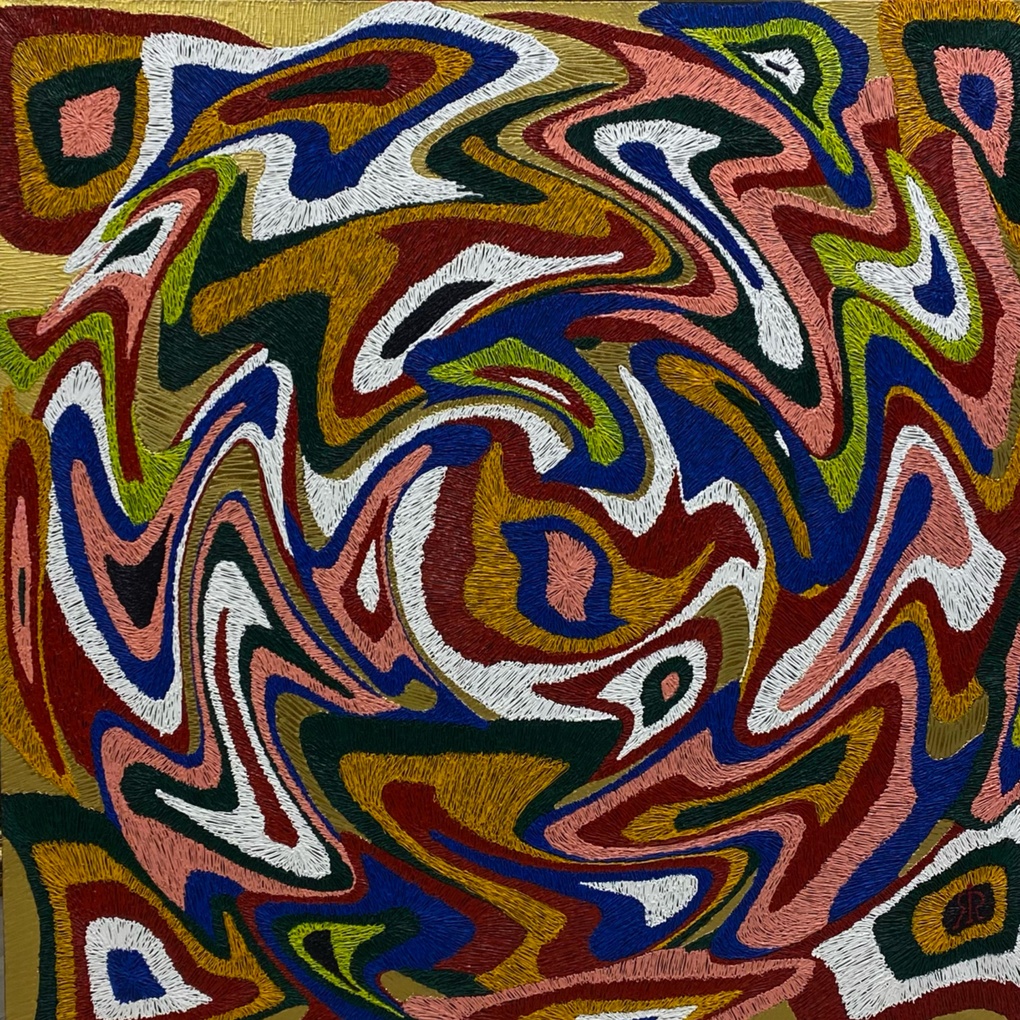
Igor RyazantsevThe painting captivates with its dynamic movement. At its core is a play of coloured patches that resemble islands — they contract and expand again around a certain centre, creating the impression of a map of sea currents. At first glance, the abstract forms appear similar to cross‑sections of living tissues or fragments of a mosaic. One can discern elements of folk ornaments in them, but it’s important to understand that this is not merely an illustration. The artist skillfully balances between decorative beauty and emotional depth. The distinctive feature of this work lies in its materiality. Thanks to a special technique of applying paint, each stroke resembles embroidery. Here, colour becomes not just an optical effect but a genuine material object. This creates an unusual tactile sensation — something particularly rare in abstract art. The painting’s colour scheme is built on the contrast of rich cobalt, ocher, and terracotta tones with white “slits”. This contrast establishes a special rhythm that is perceived as a pulsation — like a heart beating in tune with the work’s own rhythm. For the discerning collector, this piece represents an outstanding example of abstract art. Its value lies in the impeccable craftsmanship and energetic composition. Such a work retains its relevance regardless of fashion trends. It fits seamlessly both in a modern interior and in an exhibition space dedicated to textile art or painting.
The place under the sun
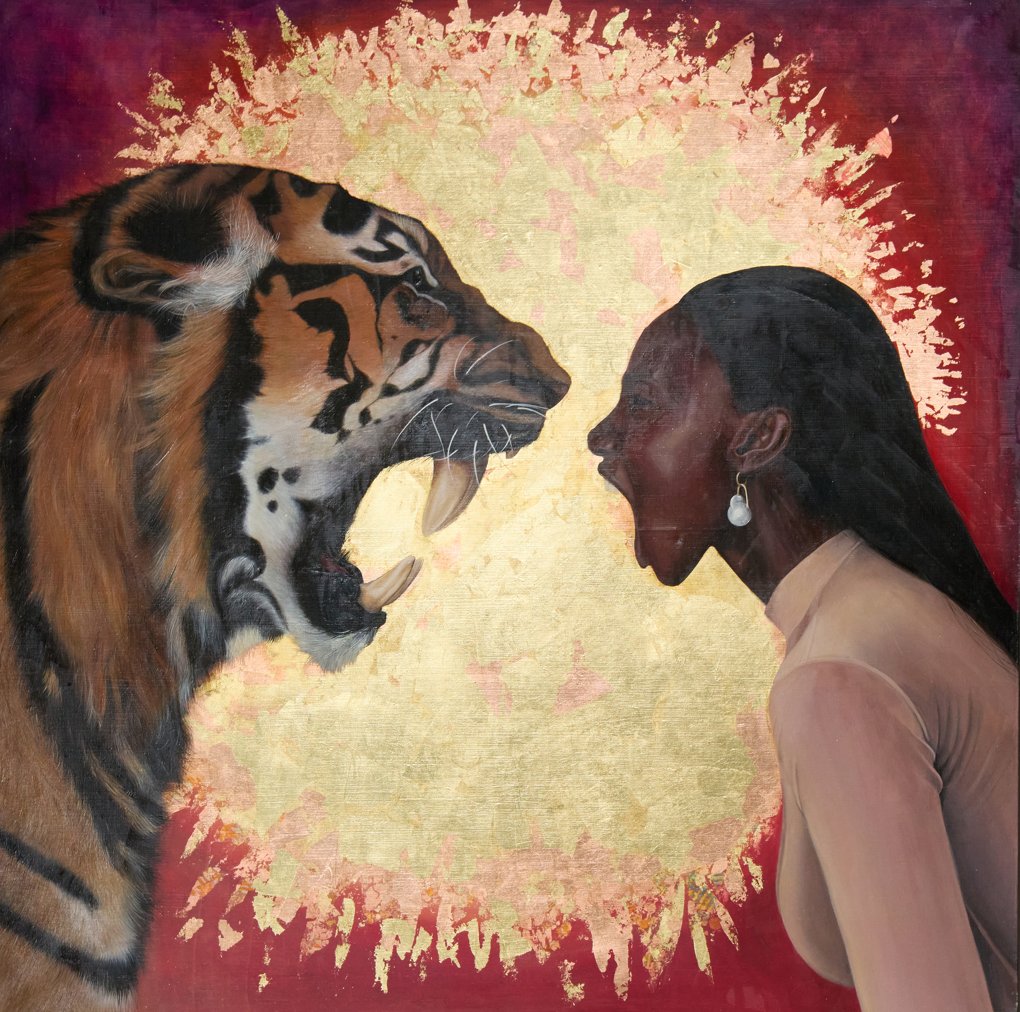
Anastasia ShchetkinaAnastasia Shetinina's 2020 painting is a striking example of contemporary art exploring the theme of human nature and animal instinct. The artwork features a woman facing a tiger, both with mouths wide open as if in a scream. This composition creates a tense sense of confrontation and inner strength. The use of a golden and red background adds drama and symbolism, possibly alluding to conflict and struggle. Shetinina employs bold contrasts and textures to highlight the differences and similarities between human and animal. Technically, the painting is executed with great skill, showing attention to detail and strong emotional impact.
Christmas
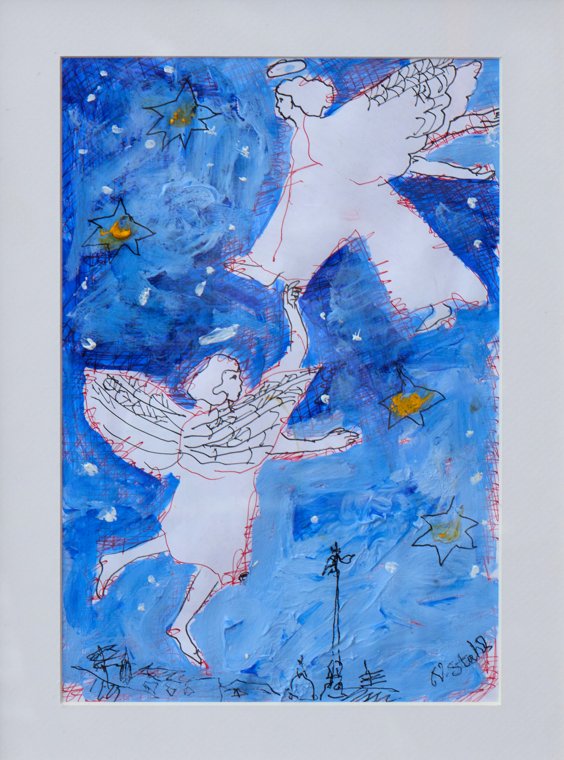
Natalia ShtalThis work by Natalia Shtal is a captivating depiction of two angels soaring through the night sky. The artist employs deep blue hues in the background, creating a sense of infinity and tranquility. The angels, rendered with delicate and graceful lines, contrast against the deep blue sky, standing out with their lightness and transparency. White and golden stars scattered across the canvas add a touch of sparkle and mystery to the composition. Natalia Shtal, known for her unique style, adeptly combines simplicity and complexity in her works, making them both attention-grabbing and memorable. This painting could be a valuable acquisition for collectors seeking art that merges spirituality with contemporary aesthetics.
All 7 paintings loaded