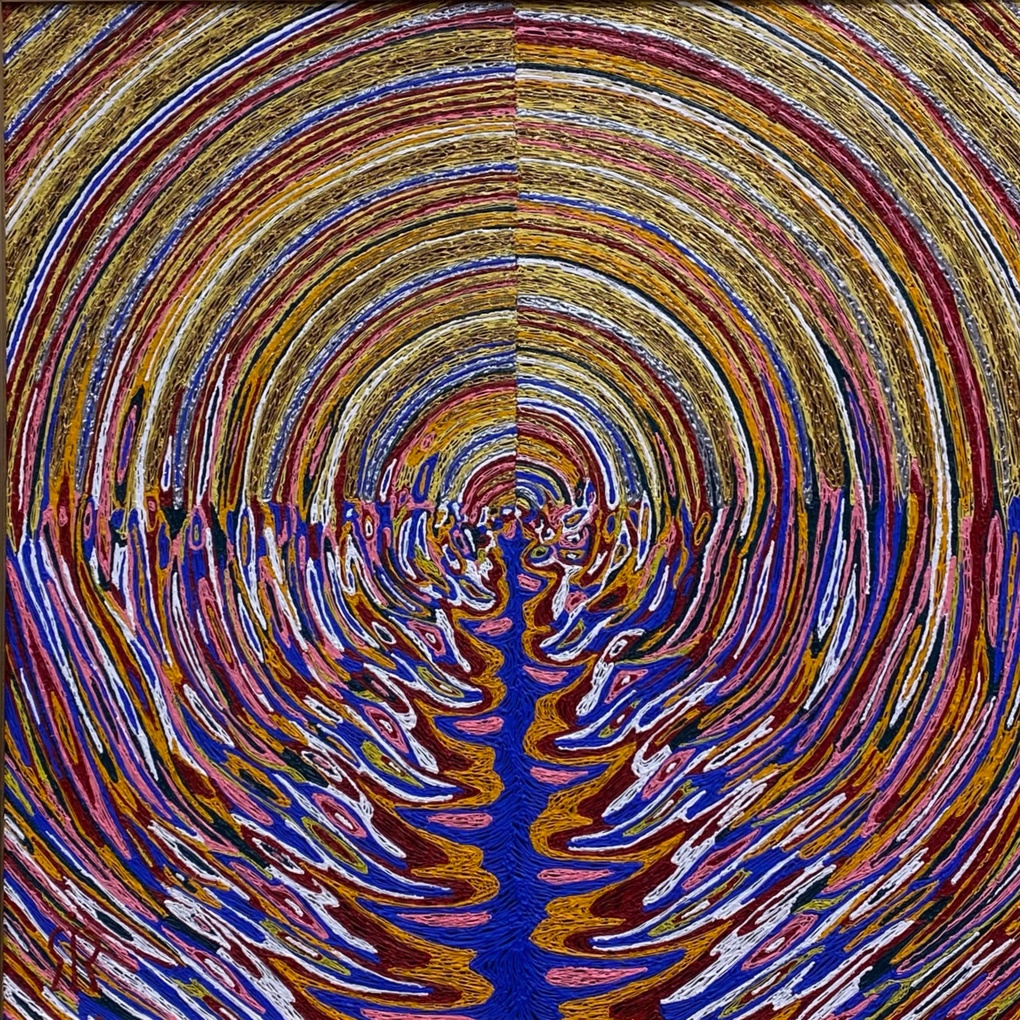
Dawn
Igor RyazantsevIgor Ryazantsev’s painting Dawn is executed in the filumism technique: acrylic paint is extruded with a syringe onto a black‑primed canvas in the form of thin threads, forming a relief image with the effect of an acrylic tapestry. Through the interweaving of threads, the artist embodies his key idea of the interconnectedness of all things — the threads symbolise invisible links between people, events, past and future. Vivid shades of yellow, red and лазуритовый (lazurite/azure) convey the atmosphere of morning light breaking through the darkness, while the black background enhances the expressiveness of the colour threads. The relief surface gives the work a tactile appeal and creates a sense of movement: layers of paint form a dynamic composition, visualising the transition from darkness to light, from chaos to order.
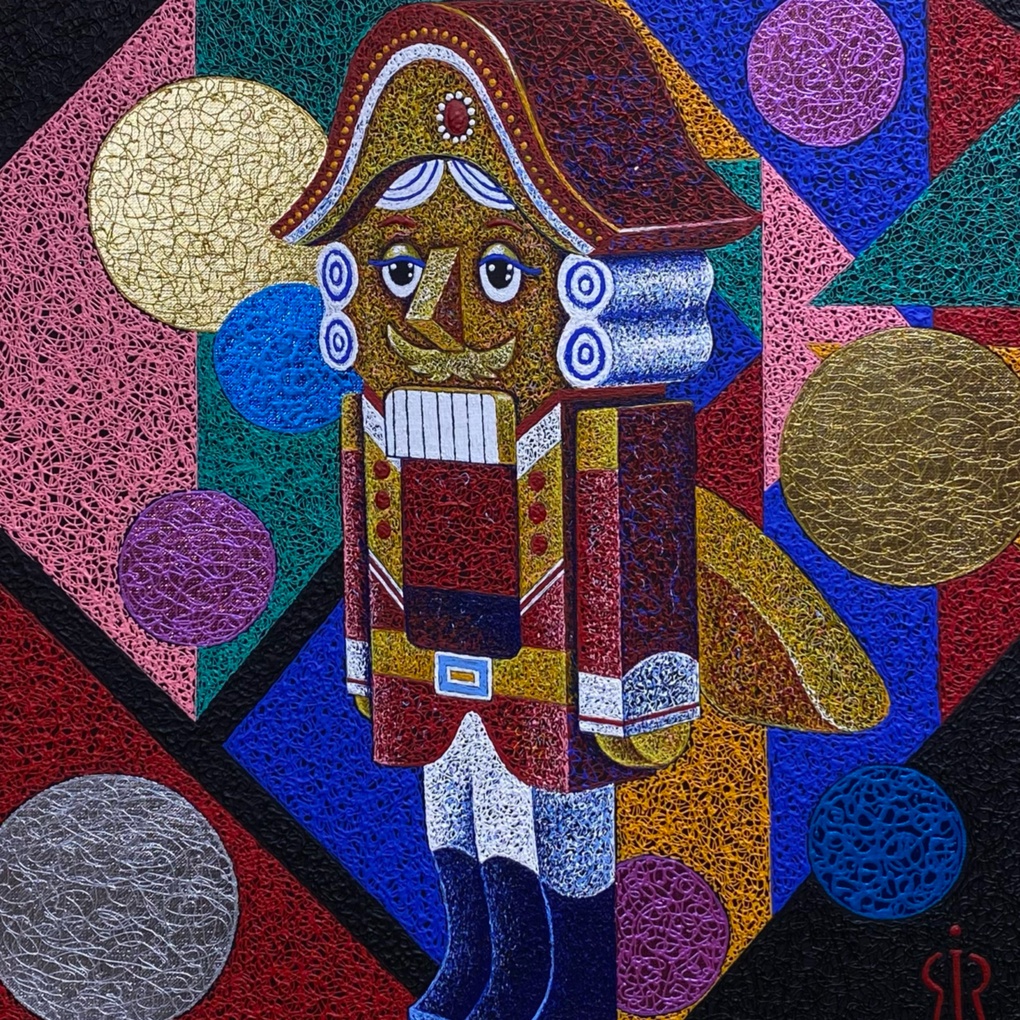
The Nutcracker: Sentinel Dream
Igor RyazantsevIgor Ryazantsev’s painting The Nutcracker is a pictorial interpretation of E. T. A. Hoffmann’s famous tale and P. I. Tchaikovsky’s ballet, likely executed in oil or acrylic on canvas in a vertical format. The central focus of the composition is the transformation of the Nutcracker from a wooden toy into a noble prince, with young Marie standing beside him, frozen in admiration. The composition follows a diagonal structure: the viewer’s gaze moves from Marie in the lower left corner to the Nutcracker in the upper right, creating an upward movement that symbolises spiritual elevation. The colour scheme is based on a contrast between warm golden‑red hues (Christmas tree lights, Marie’s dress) and cool blue‑violet tones (the Nutcracker’s cloak, the background), while shimmering highlights and a light halo around the Nutcracker enhance the sense of magic. The painting technique combines smooth brushstrokes in depicting fabrics and hair with more textured, relief‑like strokes in rendering details, and the interplay of light and shadow adds dramatic tension. Through symbolic elements — the Christmas tree as an image of Christmas miracle, the faint outlines of the mouse army in the background, and a nutshell at the characters’ feet — Ryazantsev conveys the idea of transformation: faith in wonder and purity of heart have the power to change the world. The work resonates with the traditions of “fairy‑tale painting” by Russian masters such as Viktor Vasnetsov and Mikhail Vrubel, yet it is given a contemporary interpretation: it is not merely an illustration, but a reflection on the magic of childhood and the power of imagination.
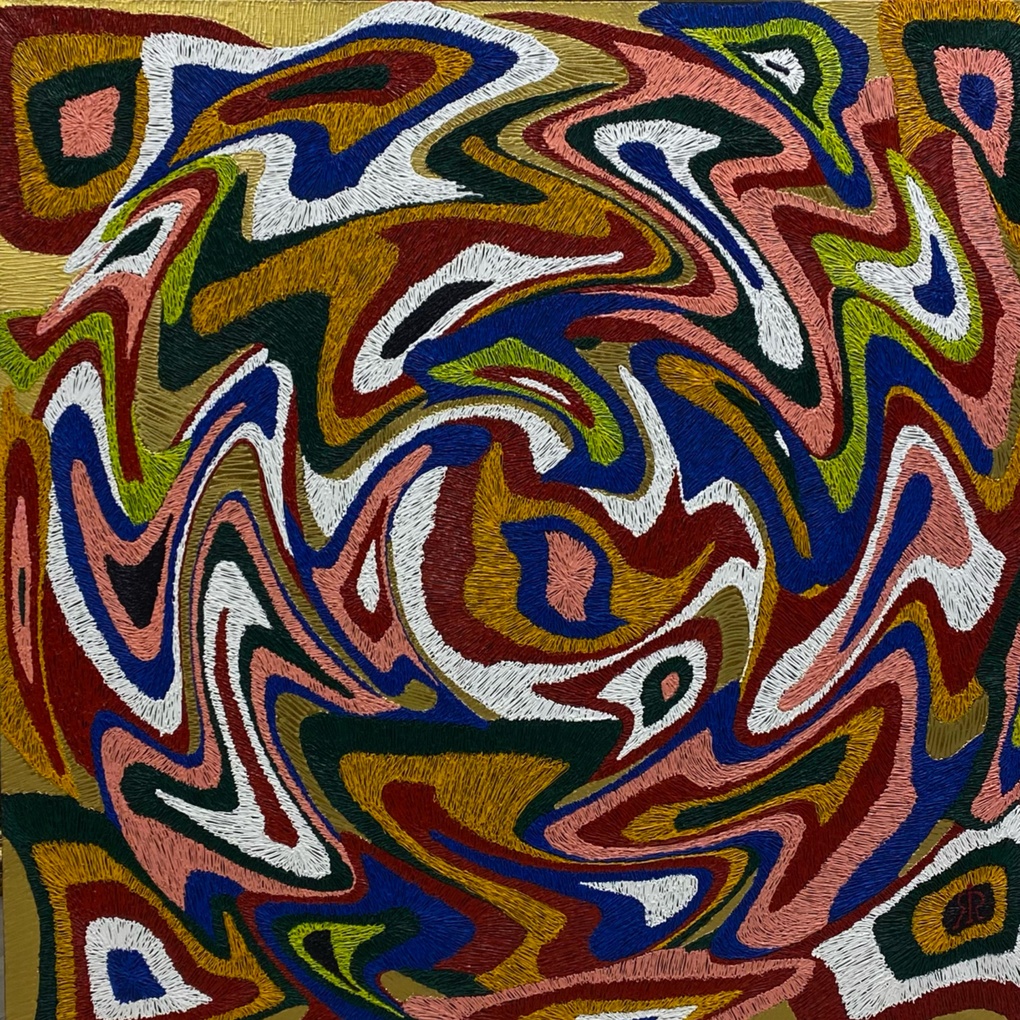
Dream
Igor RyazantsevThe painting captivates with its dynamic movement. At its core is a play of coloured patches that resemble islands — they contract and expand again around a certain centre, creating the impression of a map of sea currents. At first glance, the abstract forms appear similar to cross‑sections of living tissues or fragments of a mosaic. One can discern elements of folk ornaments in them, but it’s important to understand that this is not merely an illustration. The artist skillfully balances between decorative beauty and emotional depth. The distinctive feature of this work lies in its materiality. Thanks to a special technique of applying paint, each stroke resembles embroidery. Here, colour becomes not just an optical effect but a genuine material object. This creates an unusual tactile sensation — something particularly rare in abstract art. The painting’s colour scheme is built on the contrast of rich cobalt, ocher, and terracotta tones with white “slits”. This contrast establishes a special rhythm that is perceived as a pulsation — like a heart beating in tune with the work’s own rhythm. For the discerning collector, this piece represents an outstanding example of abstract art. Its value lies in the impeccable craftsmanship and energetic composition. Such a work retains its relevance regardless of fashion trends. It fits seamlessly both in a modern interior and in an exhibition space dedicated to textile art or painting.
All 3 paintings loaded