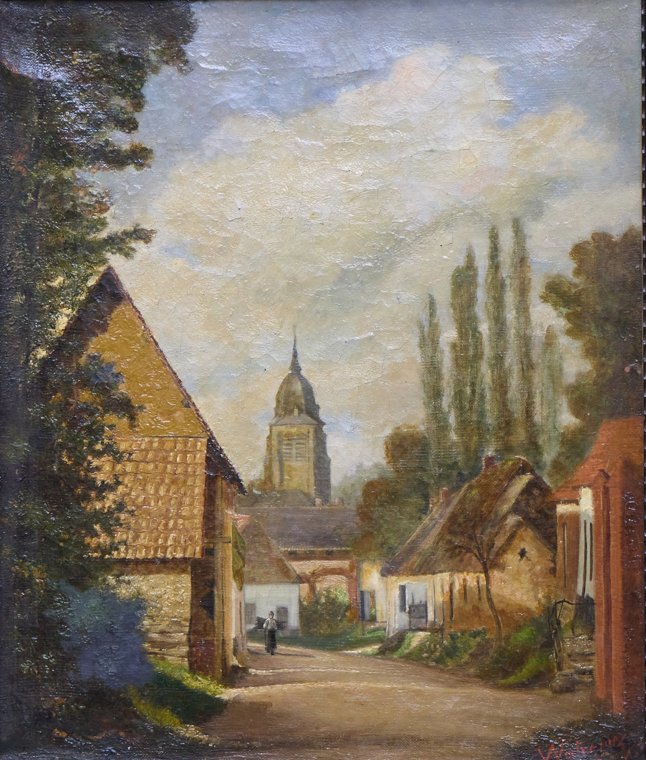
Village Street with Church Tower
This intimate rural view is composed as a quiet theater of everyday life, with the curving lane guiding the eye toward a church tower that serves as both compositional anchor and symbolic axis. Low cottages, tiled roofs, slender poplars, and diffused daylight evoke a settled world in which architecture and landscape remain in delicate balance. The painter works in a restrained range of ochres, greens, and muted blues, activating the surface through visible brushwork and a softly veiled sky. Its appeal lies not in spectacle but in attentive observation: the subject is less an event than the enduring rhythm of village life, the memory of place, and the poetry of the ordinary. For collectors, the painting benefits from its broadly legible European pastoral iconography, intimate mood, and the market resilience of authentic village scenes with ecclesiastical presence. Particularly successful are the sense of recession, the tonal harmony, and the atmospheric calm that gives the work a lasting decorative and emotional value.